Skip to main content Skip to footer site map

Platypus

Ornithorhynchus anatinus

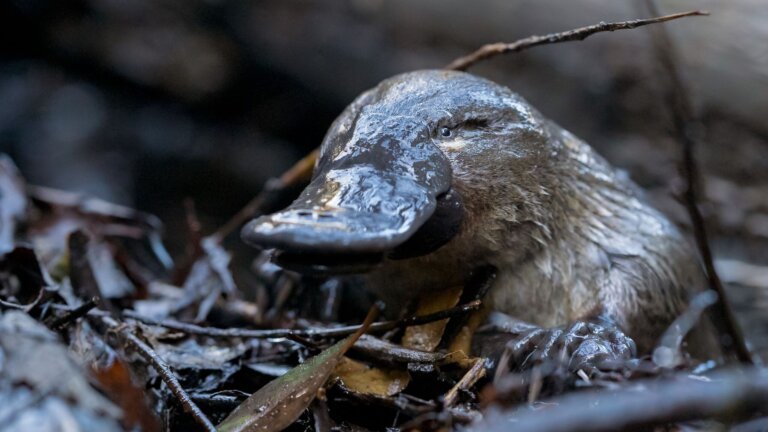
The platypus (Ornithorhynchus anatinus) is a semiaquatic, egg‑laying mammal (a monotreme) endemic to eastern Australia, including Tasmania. It is the sole living member of its genus (Ornithorhynchus) and family (Ornithorhynchidae). Adapted to life in freshwater rivers and streams, it forages underwater with its eyes, ears, and nostrils shut and relies on a bill packed with sensors, including electroreception that detects weak electrical signals from prey. Adult males have venomous ankle spurs connected to venom glands, thought to be used mainly in competition with other males during the breeding season (and capable of causing severe pain in humans). Females produce milk but do not have nipples; milk is delivered via skin patches and lapped up by the young. The platypus is listed as Near Threatened on the IUCN Red List, with major risks linked to freshwater habitat change, including altered river flows from drought and water extraction, plus pollution and accidental drowning in nets/traps.
The platypus (Ornithorhynchus anatinus) is a semiaquatic, egg‑laying mammal (a monotreme) endemic to eastern Australia, including Tasmania. It is the sole living member of its genus (Ornithorhynchus) and family (Ornithorhynchidae). Adapted to life in freshwater rivers and streams, it forages underwater with its eyes, ears, and nostrils shut and relies on a bill packed with sensors, including electroreception that detects weak electrical signals from prey. Adult males have venomous ankle spurs connected to venom glands, thought to be used mainly in competition with other males during the breeding season (and capable of causing severe pain in humans). Females produce milk but do not have nipples; milk is delivered via skin patches and lapped up by the young. The platypus is listed as Near Threatened on the IUCN Red List, with major risks linked to freshwater habitat change, including altered river flows from drought and water extraction, plus pollution and accidental drowning in nets/traps.