Skip to main content Skip to footer site map

Fungi

Mycota

Fungi are eukaryotic organisms distinct from plants and animals, best known as molds, yeasts, and mushrooms. Most fungi are heterotrophs that digest food outside their bodies by secreting enzymes, then absorb the dissolved nutrients; many grow as microscopic filaments (hyphae) that form a network called a mycelium, while yeasts are single-celled. Fungal cell walls typically contain chitin (and glucans), unlike plant cell walls (cellulose). Fungi commonly reproduce by spores, produced asexually and/or sexually depending on the species and conditions. Ecologically, fungi are major decomposers that recycle nutrients, and many also form key symbioses or act as pathogens. Evolutionarily, fungi are generally supported as being closer to animals than to plants (Opisthokonta). Estimates suggest total fungal diversity may be up to four million species.
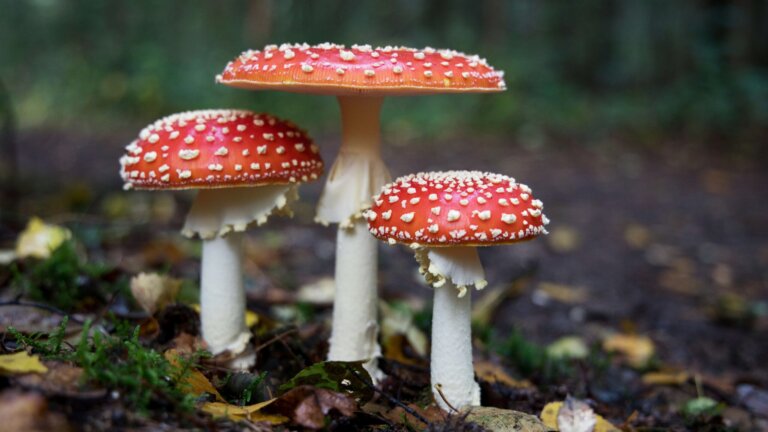
Fungi are eukaryotic organisms distinct from plants and animals, best known as molds, yeasts, and mushrooms. Most fungi are heterotrophs that digest food outside their bodies by secreting enzymes, then absorb the dissolved nutrients; many grow as microscopic filaments (hyphae) that form a network called a mycelium, while yeasts are single-celled. Fungal cell walls typically contain chitin (and glucans), unlike plant cell walls (cellulose). Fungi commonly reproduce by spores, produced asexually and/or sexually depending on the species and conditions. Ecologically, fungi are major decomposers that recycle nutrients, and many also form key symbioses or act as pathogens. Evolutionarily, fungi are generally supported as being closer to animals than to plants (Opisthokonta). Estimates suggest total fungal diversity may be up to four million species.