Skip to main content Skip to footer site map

Octopus

Octopoda

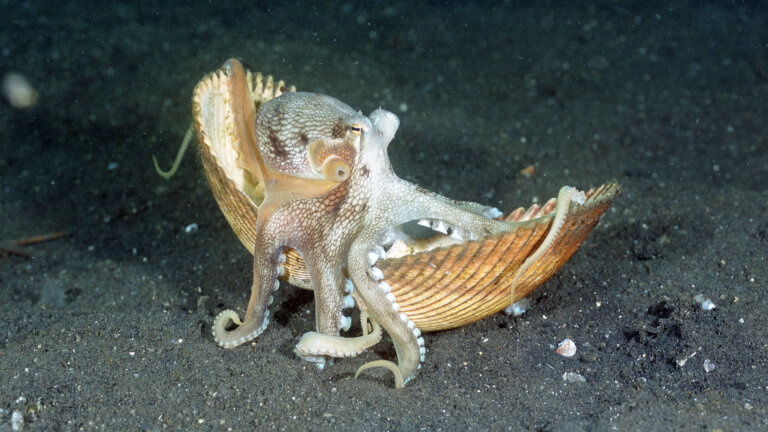
Octopuses are eight-armed cephalopod mollusks in the order Octopoda, with a soft, sack-like body, large eyes, and eight muscular arms lined with suckers. Their mouth contains a hard beak and a radula for feeding. They are active predators that commonly feed on crabs and lobsters. Many can rapidly change appearance (camouflage) using skin pigment cells (chromatophores) and, when threatened, most can eject dark ink to confuse predators while escaping. Octopuses have three hearts (two pump blood through the gills; one circulates oxygenated blood through the body) and blue blood that uses the copper-based oxygen carrier hemocyanin. Their nervous system is unusually distributed: about two-thirds of their neurons are in the arms, supporting high dexterity and complex behavior. Many octopus species are semelparous: females guard their eggs, often stop eating, and die around the time the eggs hatch.
Octopuses are eight-armed cephalopod mollusks in the order Octopoda, with a soft, sack-like body, large eyes, and eight muscular arms lined with suckers. Their mouth contains a hard beak and a radula for feeding. They are active predators that commonly feed on crabs and lobsters. Many can rapidly change appearance (camouflage) using skin pigment cells (chromatophores) and, when threatened, most can eject dark ink to confuse predators while escaping. Octopuses have three hearts (two pump blood through the gills; one circulates oxygenated blood through the body) and blue blood that uses the copper-based oxygen carrier hemocyanin. Their nervous system is unusually distributed: about two-thirds of their neurons are in the arms, supporting high dexterity and complex behavior. Many octopus species are semelparous: females guard their eggs, often stop eating, and die around the time the eggs hatch.