
Cameraman and producer Filipe DeAndrade shares the challenges and triumphs behind “Jaguar Beach.” Over two years of filming on Costa Rica’s Pacific coast, the crew faced extreme conditions. But for Filipe, the project became more than a film; it was a mission to protect the wildlife he came to know so intimately.
Features
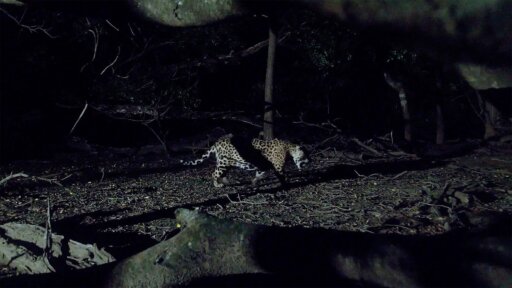
How Filmmakers Used Camera Traps to Film Wild Jaguars
Go behind the scenes with “Jaguar Beach” cameraman and producer Brian Moghari.
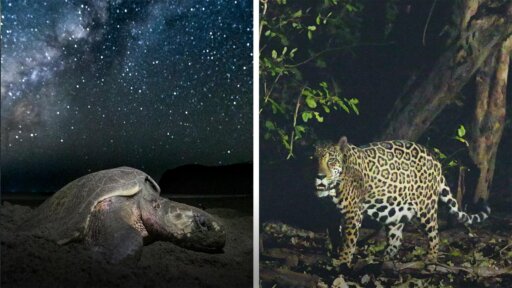
How Jaguars Are Saving Sea Turtles
On Costa Rica’s coast, jaguars are doing more than hunting. They’re helping sea turtles survive.
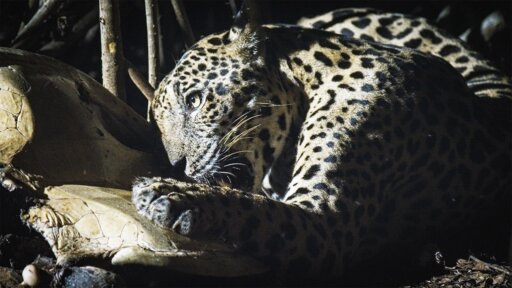
How a Jaguar's Hunt Feeds a Forest
A jaguar’s midnight hunt becomes a feast that feeds the forest.
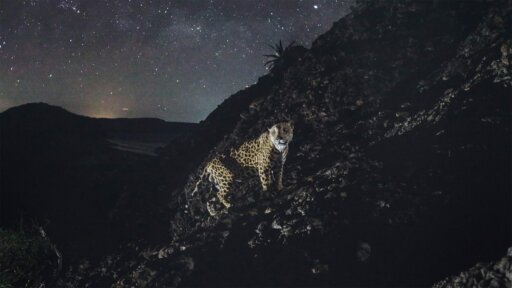
A Jaguar Love Triangle Caught on Camera
Meet Alonzo, Amanda, and Jorge: three big cats whose lives intertwine in unexpected ways.
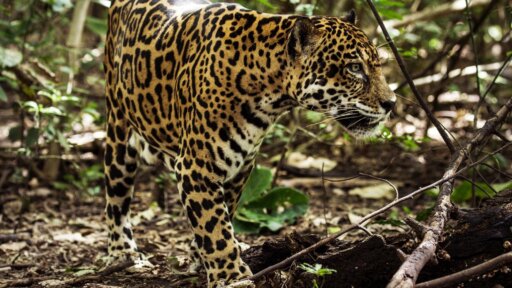
Jaguar Beach
On Costa Rica’s Pacific coast, turtles and jaguars collide in unexpected ways.
TRANSCRIPT
- I am pretty sure that filming wildlife is the single greatest job on the planet.
When I think about the most beautiful, the most interesting animal that I could possibly film or be around, it's the Jaguar.
So even though being around Jaguars and trying to film them sounds glorious and is nothing short of extraordinary within its own right, it's probably the hardest thing I could ever imagine doing as a filmmaker.
You're trying to take all of your equipment that you need to film and live with over several weeks through intense conditions.
The trucks could barely make it through some of the conditions, we were having to hike ridge lines up and down mountains, completely exposed in the heat of the day with everything that we needed to live for weeks at a time, including our camera gear.
And then on top of that, to even see the jaguar, you're having to walk sometimes over 15 miles a day up and down beach line with all of your camera gear, deep into the night, and then you may only end up with tracks.
So that's the Olive ridley sea turtle that a jaguar killed last night.
And there's three tracks leading back to this area.
So we're gonna put two camera traps here.
It's Christmas Eve.
That would be a Christmas miracle.
We use camera traps, which allows us to kind of like have an insight into the more intimate areas of their lives when we weren't able to be around.
But then once you have an idea of where they're moving, then you have to just be out there and there's no replacing waiting for them, sometimes up to 12 or 16 hours straight on a remote beach.
All of the technology that we have are super sensitive, low light cameras, but because we have these beautiful, small, compact, lightweight Sony cameras, we can literally see at night.
So we really have been relying on the power of the moon in order to give us a little bit of kick light.
In the thousands of hours and two years of trying to film them, I've probably spent around four hours or less actually in front of the jaguar.
Jaguars greatly depend on sea turtles because they're an easy prey, and they can feed on them throughout most of the year.
And when sea turtles aggregate their nesting period, that just means that jaguars have a lot of food to choose from.
The arribada is finally happening.
There are olive ridley sea turtles everywhere, and I'm going to see just how many they are.
(inspiring music) The arribada is one of the most important things on the planet, and these turtles survived with the dinosaurs, they were around over 100 million years ago.
That's why they started doing this, is to overwhelm predators.
Think of a place with so many predators that turtles had to overwhelm themselves to give not only themselves, but their hatchlings a fighting chance.
This behavior, I cannot think of anything else that's more of an honest interpretation of what nature should look like and can look like.
Nature, nature, nature.
Your Igaz make your everything.
I couldn't imagine a greater love than you.
I love you more than anything, nature.
I love you turtles, because you honestly, it's between us to feed everything around here, so thank you turtles from the Jaguars.
I would honestly say the thing I'm most proud of with this film is not only the fact that we were able to capture never before seen footage tell a beautiful story about these animals that we know so little about, but how we were able to help conservation.
The fact that this was not only a film but a project.
We were able to publish peer review scientific papers.
We were able to donate significant resources to the people preserving jaguars, more camera traps, more of an ability to track them on different beaches helped not only the animals, but the people working with the animals, which in turn means that we can protect the forest.
We created this beautiful art, but also helped the animals and the people on top of it.
And that's where I want to hang my hat as a wildlife filmmaker, is somebody that helps the animals and the people that I'm telling a story about.