
Filming “Parenthood” meant working with local trackers, scientists, and communities across the globe — from the Babongo people in Central Africa to conservationists in Patagonia.
Features
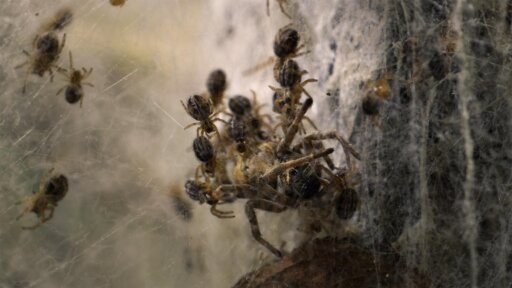
Spider Mother Devoured by Children
This spider mother provides one last meal for her brood: herself.
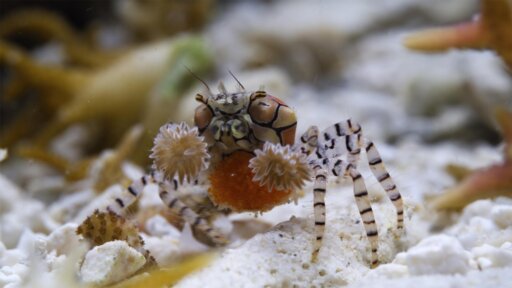
How This Crab Mom Fights With Living Weapons
A boxer crab mother relies on living anemones for defense.
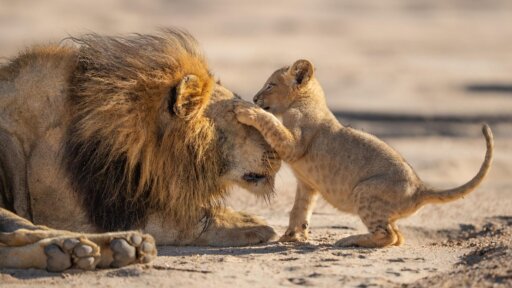
The Greatest Adventure | Parenthood
Parenthood is the ultimate journey, full of danger.
TRANSCRIPT
- [Narrator] The "Parenthood" team relied on experts all over the world.
- [Man] This shoot would've obviously been impossible for us without the help of all the amazing guides and trackers we had.
- For this project to succeed, we need to work together with the Babongo.
- [Narrator] It is Babongo tracker's carefully crafted relationship with the gorillas that is key.
(man speaking in foreign language) - [Narrator] The "Parenthood" crew traveled to South Africa's Malgas Island to film the remarkable parenting story of the endangered Cape gannet.
- But you could clearly see what it used to be like.
This was all nest right up until the house.
And now, the colony starts way back there.
The single largest threat to the Cape gannet is the decline of food resources.
There's not enough fish.
And what some seals have now learned is that the gannets carry fish in their stomach.
In a day, just one day, we can have 100 or more predated out at sea.
- [Narrator] As the climate heats, rainfall is becoming less reliable everywhere.
There is often too much or too little, and at the wrong time, a significant challenge for the "Parenthood" crews while filming the series.
East Africa was in the grip of a historic drought, and the consequences for both wildlife and people became clear.
- We've just been filming a group of elephants and they just ran into a big herd of cattle.
- [Woman] How do you deal with 10,000 cattle as an elephant?
It's a whole level of parenting skills that they're not equipped to deal with.
- [Narrator] The lack of fresh water and grass has put both people and elephants under immense pressure.
We have the power to help nature recover.
And sometimes it's the simplest changes that can have the most profound impacts.
In the vast grasslands of Patagonia, the "Parenthood" team are here to record the story of adult guanacos and their calves.
Soon, the issues facing guanaco parents became clear.
It's estimated that fences are responsible for the deaths of at least 30,000 guanaco in Patagonia every year.
- If they just made them a tiny bit lower for such a simple solution, and it'd make the world of difference, I think.
- If there is no guanacos, the ecosystem will collapse.
(gentle music) I have a complete hope, and I'm very optimistic of the capacity of nature to recover.
- [Narrator] While the climate changes and resources dwindle, every community can find ways to support the natural world.
It's up to us to ensure that they and generations to come will have the planet worth inheriting.