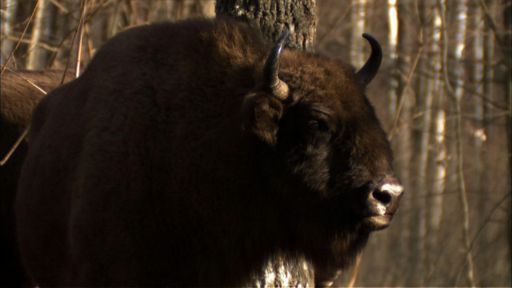
What happens to nature after a nuclear accident? And how does wildlife deal with the world it inherits after human inhabitants have fled? The historic nuclear accident at Chernobyl is now 25 years old. Filmmakers and scientists set out to document the lives of the packs of wolves and other wildlife thriving in the “dead zone” that still surrounds the remains of the reactor. Buy the DVD. This film premiered on October 19, 2011. (Video limited to U.S. & Territories.)
50 Responses to “Full Episode”
Leave a Reply
Please note that the THIRTEEN editorial staff reserves the right to not post comments it deems to be inappropriate and/or malicious in nature, as well as edit comments for length, clarity and fairness. No solicitations or advertisements will be allowed. Users may link to other Web sites relevant to discussion, but most often links to commercial Web sites will not be permitted.


Pretty amazing that animals and nature came back from the brink after humans left the radioactive. Thank you for showin us this PBS.
no you dont understand the reason they tell us every thing is all right with the wolves is so we dont get pissed of they like to hide the truth after all there just animals they can kill them if they want it dont hurt them so why should they care what happens to wild life , what they dont understand is if the wild life goes we go if our enviroment dies we die .
also interesting http://www.youtube.com/watch?v=FPmV6QszyGc
And another on Youtube http://www.youtube.com/watch?v=I3pZ0NaKDq8&feature=related
This was sort of a sad program. It’s a shame that all those people had to leave their homes and farms and have to make a brand new life for themselves in a strange place. Still, I am glad that there is a safe place for our wildlife to flourish, which is also important. I hope that those people were able to get safe homes and good jobs. Thanks again, PBS.
Maude Post & Harvey Reading,
Thank you Maude & Harvey, and I AGREE. Now I’ll have to watch it, in memory of our own money pit,…Marble Hill.
Sell your big screen TV people, buy a solar panel ( …and I do not mean those ridiculous solar path lights that result in our precious silicone ending up in a landfill).
Pretty sure all of you Pro-Rad commenters are missing the main idea of this whole episode.
A fascinating program, but one that studiously avoided the obvious question of how native animal populations are thriving in an area poisoned by radiation levels that would kill human beings. Needs a sequel.
Those giant catfish are coldblooded; are coldblooded creatures effected differently than warmblooded birds and mammals? Also, even if younger catfish are damaged by radiation, is it possible that some number of catfish can avoid problems so they become giants . . . while radiation is damaging most of the younger ones? Also, if there are damaged young catfish in a large number, is it possible the bigger ones grew so big faster because of feeding on a ready supply of smaller radiation-disabled fish that are easy to catch? Have they checked this? Or is there already scientific research that answers this?
The falcons . . . how many generations have been there before producing those youngies? Are the “thriving” falcons second and third and fourth generation that have been in the radiation area? Or, do the babies grown there get unhealthy and then new adults come in from nonradiation surrounding areas? After all, the surrounding areas could have an overflow of healthy birds who move into the danger area. So, if you have young apparently normal babies, how many in-radiation generations gave rise to them? Have they dealt with this, there or elsewhere?
For those who think this is all just lovely, brace yourselves and then Google “Chernobyl mutations.” Then read “First Debris, Possibly Radioactive, Reaches West Coast From Japan” http://www.readersupportednews.org/news-section2/338-177/8928-first-debris-possibly-radioactive-reaches-west-coast-from-japan
If it benefits animals in any way, I’m all for it. If it causes humans to suffer, then I couldn’t care less. Actually, I’d rejoice in it. The only way I’m against this is if it hurts the environment and its animals.
I enjoyed this episode as I enjoy all Nature programs. It was interesting to see what they are discovering about the after effects of a nuclear disaster. Those involved with the current events with the plant disaster in Japan will do good to take notes. Long live nature as it does it’s best to reclaim itself despite the ignorance of human beings.
I just watched a replay of this magnificent episode “Radioactive Wolves” on PBS ch 16 in my area–and I STILL find it as amazing as the first time I watched it!~ Now that all the info + images have “had a chance to sink in”, I could sit back and watch the images of all the wildlife species–and just ENJOY seeing them in my living room!
Average life expectancy of wolves in the wild is 8 years. Cancer development, after exposure to radiation, can take as much as 20 years in humans, depending on the isotope, and the intensity. What is the gestation period for cancer in exposed wolves?
Although early in the piece researchers were wearing masks to prevent breathing in radiated hair, later the researcher named Vadim was not wearing a mask when handling wolves in the zone. We should check back with him in 20 years to see how he’s doing.
I didn’t like the condescending tone of the narrator “the paw caught in the trap appears to be fine…”
I would have preferred not to have seen the footage of the drugged semi-conscious wolf with it’s tongue hanging out.
This program shows explicitly that Life is tenacious. The things scientists used to do to each other as jokes. I don’t won’t 100% safety. Nature is beautiful.
Why is this suprising that mother nature thrives? I live 20 miles from an equally contaminated site. Only the contamination is from nerve gas chemicals and precursors and will never be fit for man to occupy. Trophy deer, bald eagles, migratory water fowl thrive here. With no ground disturbing activitiesthese poisons are sequestered same as Chernobyl. The name of the place here in Denver is called the Rocky Mountain Aresenal. and these chemicals are not like gasoline leaking from a buried tank. They are every bit the most toxic and stable every made by man. 20 miles from this sitethere may be similarly lightly sequestered plutonium that might make Chernobyl look like a good place to live. Oh, this site is called Rocky Flats. Nature is more resilient than we humans can comprehend. We’ve not controlled our environment only managed to hold it at bay. It will kick our butts back to the stone age. Just a matter of time.
this was a very good episode im going to recomend it to all my friends
Amazing Episode.
They tried to squeeze too much information into a small amount of time without leaving room for explanations to tie finding together or back their conclusions sufficiently, thus,the study seems inconclusive.
One of Benjamin Franklins more famous quotes was, ” We re all born ignorant, but one must work hard to remain stupid, ”
The subjective comments that are left by some are unreconcilable.