Radioactive Wolves
Introduction

What happens to nature after a nuclear accident? And how does wildlife deal with the world it inherits after human inhabitants have fled?

In 1986 a nuclear meltdown at the infamous Chernobyl power plant in present-day Ukraine left miles of land in radioactive ruins. Residents living in areas most contaminated by the disaster were evacuated and relocated by government order, and a no-man’s land of our own making was left to its own devices. In the ensuing 25 years, forests, marshes, fields and rivers reclaimed the land, reversing the effects of hundreds of years of human development. And surprisingly, this exclusion zone, or “dead zone,” has become a kind of post-nuclear Eden, populated by beaver and bison, horses and birds, fish and falcons – and ruled by wolves.

Access to the zone is now permitted, at least on a limited basis, and scientists are monitoring the surviving wildlife in the area, trying to learn how the various species are coping with the invisible blight of radiation. As the top predators in this new wilderness, wolves best reflect the condition of the entire ecosystem because if the wolves are doing well, the populations of their prey must also be doing well. Accordingly, a key long-term study of the wolves has been initiated to determine their health, their range, and their numbers.

Radioactive Wolves examines the state of wildlife populations in Chernobyl’s exclusion zone, an area that, to this day, remains too radioactive for human habitation.

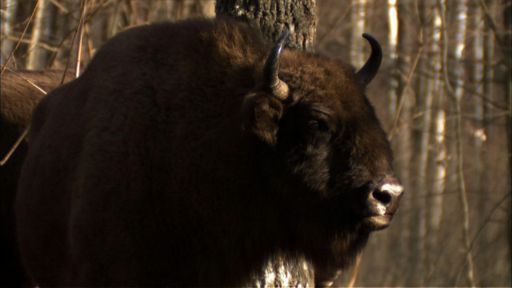
Radioactive Wolves premiered Wednesday, October 19 at 8/7 c.

44 Responses to “Introduction”
  1. beerwisdom says:

    I just watched it and it is amazing to hear Belarusian language and see beautiful Belarus sitting here in Canada.The most incredible thing that the nature is having healthy life in the shadow of nuclear disaster.
    Unbelievable.
    Thanks to Americans and Belarusians who made the movie live.

  2. sabotabi says:

    Have you guys seen this film: http://www.youtube.com/watch?v=c-UOHn9PvJ0
    It’s called “Chernobyl Reclaimed: An Animal Takeover “

  3. Catherine says:

    What an amazing opening show to the new season~!! I will admit I have seen this episode TEN separate times FANTASTIC the wildlife filming is magnificent–what a beautiful country~ I guess it just goes to show what can
    happen when nature has a chance to re-take the land…..certainly took over after that nuclear accident!! how grateful I am that mother nature won this one. Thanks again of course to PBS and all those responsible for
    bringing more beautiful images of natures wondrous creatures in to my home. HAVE GOT to love beavers–in the show called “Europes largest rodent”–now that is engineering in its finest form! and any footage of wolves in the wild I can watch I am grateful for. Hat’s Off to a brand new season of fantastic wildlife programming on Nature

  4. Julia Orr says:

    Albeit amazing, I have to say I find this disturbing. First, we humans use a un biodegradable, totally toxic form of energy that goes horribly wrong – no surprises there- and then we “use” the animal kingdom again to experiment on and ultimately determine when it will be safe for humans to return resulting in the eradication of the wildlife because it’s dangerous, unsafe, disease ridden etc etc. Presumably rebuild some toxic energy plant whether it be nuclear or otherwise and round the merry go round we go again. It’s the same old use, abuse, use system that will ultimately be our demise but hopefully not the demise of the entire eco system.

  5. Chris says:

    Another great Nature episode! I was blown away by the scientists’ understanding of the wolves. I was disappointed, though, that the effects of radiation on the animals were hardly discussed at all. What doses are these animals living with? Are they actually any more likely to die due to the radiation?

    @Julia, I don’t understand why you consider it abuse to reintroduce and track endangered species. As the program showed, the species thrive, meaning they were put in a relatively safe place compared to their native habitats. Also, the experiments are not for determining when it’s safe for human individuals- we already have better ways of knowing that. The experiments are most important for determining what’s safe for animal populations.

  6. westmatt says:

    It’s encouraging that the man-made environment melts into the landscape so soon. We have the impression that we’re far more important than we really are.

  7. Tia says:

    i love this show. i wish i could help the wolves with out money.

  8. Heya i am for the primary time here. I found this board and I find It really helpful & it helped me out much. I’m hoping to offer one thing back and aid others like you aided me.

  9. affairs says:

    I’m now not positive the place you’re getting your information, but great topic. I needs to spend a while learning much more or figuring out more. Thanks for fantastic information I used to be looking for this information for my mission.

  10. Hackear Wifi says:

    THis is the most amazing program I have ever seen on television. It is like an epic story from some ancient text of destruction and redemption.

    http://www.hackearwifi.org

  11. Martha Collins says:

    I live in Montana. I liked the program on Radioactive wolves. But the scene with the biologist checking the pups was fake. It bothers me that Nature would stoop to this low of created scenes. The den was not a real wolf den, the pups would not be sitting at the entrance. I can not believe that the rest of the film is real. These kind of recreations need to be posted in the beginning of your films.
    You have lost credibility with your created films.
    Martha Collins
    Biologist
    Bozeman, MT

  12. eloise lanum says:

    Want to buy this so I can pass it out among friends/family. Even if people don’t survive after nuclear war, the earth & living beings will go on! I was brought up in the era when it meant the TOTAL end of everything – ‘get under your desk’ and all that.
    Wolves have one of my favorites. They are necessary in the chain of things, yet people single them out & want to wipe them ALL out.

  13. katesisco says:

    2011 tuna with radioactivity from DaIchi found off west coast US. High levels indicate high initial dose. Tuna are meat predators and previously had been found to expend radioactivity in the swimming muscles. These top predators have high energy expenditures in hunting food, in the same way the top predators of Chernobyl do.
    A wolf in a zoo cage will not survive radioactivity.

  14. katesisco says:

    2011 Tuna from Japan have been discovered to have high levels of radioactivity from Daichi in the waters off the west coast of US. Tuna are top predators requiring meat for their high metabolism expenditure. Radioactive food sources are concentrated and are also expended. This high was much higher than expected for the high metabolism in tuna. Which meant that they had amassed an extremely high level of radioactivity to evince such after a energy expensive cross ocean swim.

    The Chernobyl wolves are also top predators. They are eating radioactive food, and expending energy to find and consume same. Their high level of activity bleeds of radioactivity. A wolf in a zoo cage experiencing this level of radioactivity would die.

Leave a Reply

Please note that the THIRTEEN editorial staff reserves the right to not post comments it deems to be inappropriate and/or malicious in nature, as well as edit comments for length, clarity and fairness. No solicitations or advertisements will be allowed. Users may link to other Web sites relevant to discussion, but most often links to commercial Web sites will not be permitted.

Produced by THIRTEEN    ©2013 Educational Broadcasting Corporation. All rights reserved.