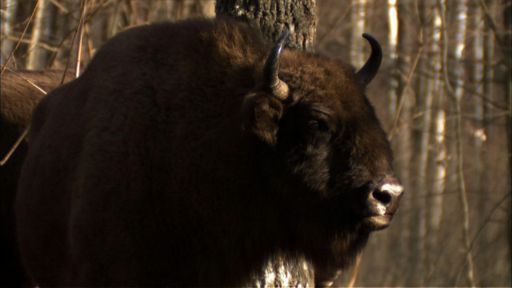
The Chernobyl exclusion zone was established shortly after the 1986 nuclear disaster, closing off areas declared unfit for human occupation. To this day, the zone is restricted from the general public. While the original zone was about a 2900 square-kilometer/1100 square-mile radius area surrounding the plant, the borders of the zone have since been adjusted to better reflect the geographical points that show the heaviest contamination levels. When the Soviet Union collapsed in 1991 and the republics of Belarus and Ukraine declared independence, the zone was divided in two, with each country monitoring the section that falls within its border.

4 Responses to “The Exclusion Zone”
Leave a Reply
Please note that the THIRTEEN editorial staff reserves the right to not post comments it deems to be inappropriate and/or malicious in nature, as well as edit comments for length, clarity and fairness. No solicitations or advertisements will be allowed. Users may link to other Web sites relevant to discussion, but most often links to commercial Web sites will not be permitted.


Another great offering by PBS Nature. This program is a great motivator for my AP Environmental Science students who were amazed how organisms adapt to sudden shifts in the environment. It will be interesting in a few years when the NATURE crew visits the exclusion zone around the damaged reactors in Japan and whether an equally hopeful direction for her native species comes about.
What a terrible waste of natural resources. When will mankind learn that they’ve been given everything they need, and shouldn’t be making things like nuclear plants that will never be 100% guaranteed beyond failure or mishap. Just look at the graphic in this article and compare the contaminated area to the ‘clean’ area….What a waste.. and for decades/centuries to come.. sigh.
You can watch it online at
http://www.pbs.org/wnet/nature/episodes/radioactive-wolves/full-episode/7190/
It’s a great story of nature’s ability to adapt to its environment.
Get out of here S.T.A.L.K.E.R.