


 |
Start date: 2003
Length: 300 miles
Official purpose: Prevention of foot-and-mouth disease
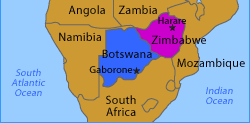
One of the last African countries under white rule, Rhodesia was a British colony until 1970 and was led by the white-minority government of Ian Smith through the 1970s. In 1980, the Zimbabwe African National Union (ZANU) and its leader, Robert Mugabe, won elections after years of civil strife; the new independent nation became the Republic of Zimbabwe. President Mugabe was widely praised in his early years, and he was often cited as a leading figure in African democracy.
But recent years have seen conflict, particularly over land. The white minority (less than one percent) owned the majority of the country’s arable land, and in 2000 Mugabe instituted a policy of land reform that resulted in the seizure of white-owned farmland. With the landowners gone and no workable system in place, food production dropped, the agriculture industry faltered, and Zimbabwe suffered an economic crisis. Meanwhile, the economy of Botswana, Zimbabwe’s neighbor to the east, is comparatively strong. Desperate Zimbabweans flooded Botswana in search of work, but they were officially unwelcome; with unemployment above 20 percent, Botswana does not want its citizens to lose jobs to foreigners.
In 2003, Botswana began building a 300-mile-long electric fence along its border with Zimbabwe. The official reason for the fence is to stop the spread of foot-and-mouth disease among livestock; in 2003, Botswana lost 13,000 cattle to the disease, which the government claims was brought across the border from Zimbabwe by infected cattle. Yet Zimbabweans argue that the height of the fence — originally set at 4 meters (13 feet) and only reduced to 2.4 meters — is clearly intended to keep out people. Botswana has responded that the fence is designed to keep out cattle, and to ensure that entrants have their shoes disinfected at legal border crossings. Botswana also argued that the government continues to encourage legal movement into the country. Zimbabwe was unconvinced, and the barrier remains a source of tension between the two nations.
