


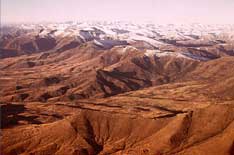
Lesotho’s highlands were largely not accessible before construction of the Water Project began, and many are concerned about social problems that might result in the wake of new infrastructure. Photo: Theiler, Donald / Africa Focus |
In 1986, the Lesotho Highlands Water Project Treaty was signed between the governments of Lesotho and South Africa, initiating Africa’s largest infrastructure project ever. Lesotho is a tiny, land-locked country, surrounded on all sides by South Africa. Replete with natural resources, Lesotho is one of the poorest countries in Africa. South Africa, where water demand is increasing, is the continent’s economic powerhouse. Planners hope the cooperative dam project will satisfy the needs of both. When completed, the $8 billion Water Project will include a hydroelectric station and a series of dams and tunnels to transport water from Lesotho’s highlands to Gauteng Province, the industrial center of South Africa. The first dam, Katse, is the size of a 52-story building, making it the largest dam on the continent. Construction of Katse and the second dam, Mohale, has already been completed.
The Economics
First conceived in 1954, the Lesotho Highlands Water Project went into effect in 1986, through a treaty signed between South Africa’s apartheid government and Lesotho’s military regime. Recent charges of corruption in the project’s contracts have raised questions about the involvement of the World Bank, which approved and supported the project, and the bank’s business associations. In 1999, a civil case brought in Lesotho against Masupha Sole, the water project’s former chief executive, snowballed into a criminal trial that implicates 12 of the world’s largest construction firms. So far, Acres International, a Canadian engineering consulting firm, and Lahmeyer International, a German engineering consulting firm, have been convicted of bribing Sole to give them favorable contracts. In August 2003, Acres International lost an appeal of its bribery conviction. The World Bank claims it will reexamine the evidence submitted during the trial and reevaluate whether Acres should be banned from receiving World Bank-sanctioned contracts. Masupha Sole is currently serving a 15-year prison sentence.
Human Displacements
In August 2003, the BBC reported that 30,000 Lesothians had been relocated to make way for the water project. Those affected by the project’s first two dams have lost their homes, farm land, or communal grazing space, and reports from the country suggest many are unhappy with the relocation and compensation plans the water project has implemented so far. Dam proponents, however, point to the improvements in infrastructure that the project has brought — roads, electricity, and telecommunications. Some 20,000 people have arrived to work in the once-isolated highlands region, as well as new homes and businesses. But, according to the International Rivers Network, with the new arrivals came more than economic growth: shanty towns, litter, and an increase in HIV/AIDS rates.

Basotho people from Lesotho demonstrate in Johannesburg, South Africa to protest their relocation from traditional farmland to make way for the Water Project. Photo: Lori Waselchuk / Galbe.Com |
Environmental Concerns
Lesotho’s highland watersheds make up 40 percent of the country’s total land area. Only around nine percent of the country’s land is arable, and with the creation of the project’s dams, much arable and grazing land will be lost. (Critics have said that adequate water conservation measures could have postponed the need altogether to build Mohale for an estimated eight to 20 years.) There are also concerns about the impact downstream on South Africa’s Orange River. Critics say the dams could divert nearly half of the river’s flow, potentially affecting a number of endangered species that live in the area, including the Maloti minnow, rock catfish, and the bearded vulture, among others. Meanwhile, the reservoirs created by the steep nature of the Lesotho highlands are deep with a relatively small surface area, resulting in a lower loss of water through evaporation than usually occurs through damming.
