


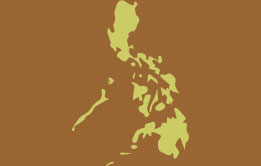
Map of the Philippines |
The Philippines has a vibrant and outspoken press, and constitutional guarantees of its freedom. Yet, in recent years, the country has proven to be one of the most dangerous places in the world to practice journalism: Seven killings last year made this country second only to Iraq in number of journalist deaths. The targets are generally provincial journalists working in radio or at local newspapers who are outspoken critics of local politicians and corruption. Many of the killings have taken place on the island of Mindanao, where Islamic rebels have long fought the control of the national government. Thus far, not one of the killings has led to a conviction.
The murder of Edgar Damalerio in Pagadian City, about 500 miles south of the Philippine capital, Manila, in May 2002, is typical in many ways. Damalerio was an award-winning, outspoken voice against local police corruption, working in radio, television, and print news. He was shot by a gunman on a motorcycle in broad daylight across the street from the local police station. Witnesses say they got a clear view of the perpetrator who is a known criminal as well as a local police officer. Yet, despite national and international calls for justice and the willingness of witnesses to come forward, the case remains unsolved.
In areas far from the national capital, the justice system breaks down in the face of a system of secret alliances, warlord politics, and corruption. In the years since the end of the Marcos dictatorship and restoration of democratic governance in 1986, the Philippines has seen more than 40 murders like Damalerio’s, each of which is still in prosecutorial limbo. Though central government officials, press advocacy organizations, and friends and family of slain journalists call for change, the killers remain free. All too often the surviving family members live in fear of more revenge killings, or must move to other areas. Perhaps President Arroyo’s offer in late 2003 of monetary rewards will lead to the capture of some of these killers. But there is often little that can be done in the face of close-knit criminal and political networks that hold sway in provincial areas.
- Previous: North Korea
- Next: Russia
