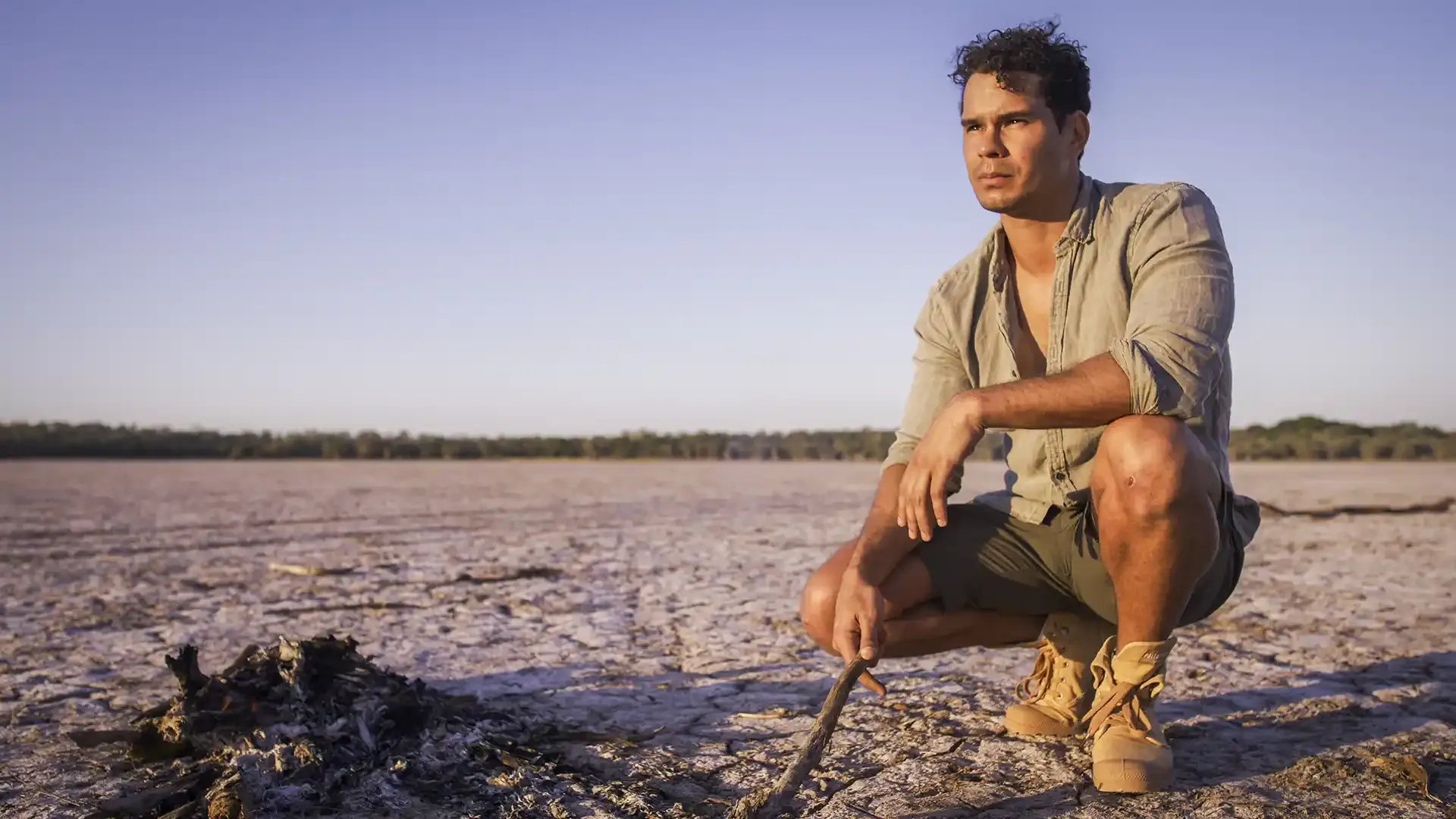
The aboriginal people living in Australia’s remote northwest are descendants of the first living culture on Earth. With a deep appreciation for their surroundings and an ancient connection to the jaw-dropping landscapes and iconic creatures found nowhere else on earth, the First Nations people continue to call this region home. Learn more about First Nations and how they have been guarding and sustaining the remarkable biodiversity of the region for thousands of years.
Watch “The Kimberley: Australia’s Wild West” for even more exciting adventures.
Residing in Country
Within the unique and rugged landscape in north-western Australia lies a tropical wilderness spanning over 150,000 square miles. “The Kimberley” has an extreme climate, harsh terrain, and remarkable biodiversity.
Though remote and sparsely populated, the Kimberley is home to the world’s oldest continuous living culture. For First Peoples, this land is a living, breathing entity called Country, and they’ve been caring for it for over fifty thousand years.
For the regional groups whose spiritual connection goes back to the beginning of time, Country contains a unique cultural heritage.
A Brief History
Long ago, First Nations lived off the land and sea and along this tumultuous coastline. They built mangrove rafts, paddled their way through Country, and passed down everything they learned throughout generations.
A result of their long history and deep connection to the Kimberley is a profound sense of respect and obligation to the natural world. They do not believe that anyone owns Country, but rather that First Peoples belong to it and care for Country, and that it is integral to their survival.
In the days of the European invasion in the 19th and 20th centuries, many aboriginal people were driven from their homelands, killed, or forced into missions as slave labor. The path back to self-determination has been long and difficult for the First Peoples.
Today, First Nations rangers and other community organizations are recovering the right to practice their cultural obligations to Country, and in the process, healing both the land and its people.
Support your local PBS station in our mission to inspire, enrich, and educate.
The Dreaming of Existence
Though First Peoples have an epic history stretching over thousands of years, the deep time story doesn’t begin with dates; their journey is a living narrative.
Lalai is “The Dreaming” or creation, their way of life. More than a set of beliefs, it is the foundation for who the First Nations people are and the laws by which they live.
Woongudd are the essence of all living things. Together with other Lalai beings, like the Wandjina, Crocodile and Jimbiddidj, Woongudd carved out the land, formed waterways, and created the islands, sea, and the heavens throughout the dreaming.
To this day, Country is honored as a dynamic, evolving entity of land, sea, and sky associated with deep cultural significance.
Deep Spirituality
With a strong sense of place and spirituality, First Nations feel their ancestors guide them. The art, songs, and stories not only define who they are, but connect the First Peoples to all the other creatures who together share Country.
Liyan is the Nyikina word for spirit or intuition, and it is listening to the sounds of Country and the ancestral entities it embodies.
First Peoples feel a strong reciprocity with Country. With Land and Sea providing their identity, Traditional Owners have the responsibility to look after and care for this deeply sacred landscape inhabited by their ancestors’ spirits and their bones.
Historic Identity
Language and identity are complex for First Nations. Historically, regional groups spoke many different languages, though countless dialects have been lost to time.
Worrorra and Nyikina are some of the languages spoken in The Kimberley region today. These names refer to both a way of speaking and a larger area of Country, as well as the people associated with it.
Today, First Peoples continue fostering their diverse cultures, languages, and identities, passing along the knowledge to younger generations.
Caring for Country
In Country, all of the land, sea, and islands are significant, and have remained relatively untouched by humans. First Nations are custodians of Country, passing down ancient wisdom of its natural, human, and spiritual history across the ages.
The “old people” had a sense of caring for Country long before the science of it was explained. There was a perceptiveness of knowing what to do in order for the world to keep moving forward and in unison.
First Peoples have been raised to believe that when they embrace the land, the land will embrace them.
Defining Six Seasons
Combining their ancient wisdom with observations of the natural world, First Nations people define three main seasons and three transition seasons as they track the course of a year in the Kimberly.
Lalin is hot and dry before the sweltering heat of the transition season of Jirrbal arrives.
After months, torrential rains come during Wilakarra and Wila — the vital Water — begins seeping its way through the landscape.
Once the rain finally stops, the transition season of Koolawa brings shifting tides, and cooling temperatures. As the air cools, the cold, dry season of Barrkana is upon Country.
Soon the winds shift and the temperatures begin to rise during the transition season of Wilbooroo. The increasingly hot and dry conditions mean water is becoming scarce and once again facing its driest conditions as the season of Lalin returns.
The differences between the seasons are dramatic and the landscape experiences remarkable transformations. Traditional Owners recognize the shifting weather patterns and use them to aid in how they look after Country.
The Role of Dambimangari and Unguu Rangers
The spectacular landscapes of remote Land and Sea Country, as well as the unique species living within, are being looked after by Dambimangari and Unguu Rangers. The rangers regularly work with scientists and conservation organizations to help study and protect the important art and creatures within the Kimberley.
There are hundreds of ancient rock art galleries in the complex sandstone of the region. These paintings offer meaning to the art, songs, and stories that date back thousands of years, connecting Traditional Owners with all the creatures who share Country.
Working together to watch over and tend to thousands of the most extraordinary art and cultural sites on Earth, the Kimberley’s magnificent creatures, and the resting places of their ancestors’ spirits, the rangers ensure they continue to look after Country.
Respecting Wildlife
Worrorra People have a long relationship with many animals who are woven into the art and songs of their creation stories. They believe the animals keep Country alive.
The Wijingarri, or northern quoll, is a central figure in the Dambi people’s dreaming and one of their most sacred animals. The quoll are facing extinction, and it’s a crushing loss for Dambimangari People, who say without them there is no Country.
Humpback whales — mundumbun in Worrora — are a respected species. These annual visitors arrive at their foraging grounds off the coast of the Kimberley during the cool dry season, from June to November, to breed and raise their babies.
In many First Nations cultures, the Crocodile is a revered spirit of the riverways. It plays a vital role in the ecosystem and symbolizes the raw power of nature.
The various creatures found within Country are an integral part of the ecological network that the First Peoples rely on, as well as revered spiritual beings that are interlaced with their history in the Kimberley.
Indigenous Managed Wildfire Practices
Traditional Owners use ancient knowledge and burning methods that are passed down to preserve the ecosystems of Country.
The Wanjina Wunggurr Law dictates the right way to burn the land according to cultural wisdom. A conversation occurs between the people and Land, with the wind, soil, animals, and trees informing when and how burning occurs.
By controlling low fires during the cool dry season, it helps preserve the food, nesting trees, and shelter that so many threatened creatures depend on. Carefully creating a patchwork of firebreaks slows the spread of catastrophic wildfire sparked by lightning strikes later in the year.
Today, First Peoples work closely with ecologists to combine modern technology and traditional fire management practices on a larger scale to help reduce dangerous wildfire risks. The rewards are seen throughout the Kimberley.
Significant Landmarks
Within the landscape of the Kimberley lie a multitude of significant landmarks that have been sustaining life and assuring communities for countless generations.
Fitzroy River (Murtuwarra)
One of the last great free-flowing river systems on earth, the Fitzroy River — or Murtuwarra — flows uninterrupted through pristine deserts, savannahs and mountain ranges. From its headwaters in the central Kimberley, it winds its way west through remote Country for over 450 miles, to King Sound, where the fresh water meets the salt water.
Martuwarra is a sacred Being — a literal ancestral entity that enables life and activities. Many communities use Martuwarra as an economic, social and spiritual resource. Their legal systems, art and song, medicine, and food are all tied to the river and its mythical history.
The Martuwarra has sustained people for tens of thousands of years. The many Nations that make up the length of the river have a cultural obligation to protect these waters for future generations.
The Horizontal Falls (Garaan-ngaddim)
Along the Kimberley coastline, some of the world’s largest tidal movements — rising and falling over 30 feet per day — push violent currents through two narrow cliff passages creating an illusion of a sideways waterfall. Though breathtaking, these waters are incredibly dangerous.
Garaan-ngaddima, also known as Horizontal Falls, is a powerful, sacred place for Woorora People. They believe it was formed by the great spiritual snake Woongudd as she slithered along, modifying Country in her wake.
There’s also a significant marvel happening here, where the base of marine food chains is formed. The volatile waters mix nutrients from the depths of the ocean with those running off the land to fuel the growth of microscopic plants. The minuscule vegetation is eaten by planktonic animals, which in turn feed huge schools of fish, and so on, as millions of seabirds and marine mammals take advantage of the ocean’s bounty.
Montgomery Reef (Yowjab)
Montgomery Reef, or Yowjab, is one of the Kimberley’s most outstanding geological marine features and another of the Dambi people’s most sacred sites.
Located roughly 15 miles off the mainland shore, this ancient natural wonder was formed some 1.8 billion years ago and contains over 100 square miles of living coral.
For a few days every month, when the full moon pulls the tide away from the shore, the phenomenal Yowjab emerges from the sea. Water levels drop sharply, by as much as 33 feet, and the sandy islets, shallow lagoons, and central mangrove island within the terraced reef becomes visible. At high tide, the spectacle is entirely submerged.
The hallowed reef has deep cultural significance for the Dambimangari people, who believe the tidal movements are the tears of a Wanjina woman and the eyes of the creator snake. This important cultural site is featured in First Nations creation stories and held in high reverence. A display to behold, this beautiful area draws both animal and human visitors to its wondrous reveal.
Mitchell Falls (Punamii-Uunpuu)
There exists a meeting point of waterways called Punamii-Uunpuu, or Mitchell Falls, in the traditional lands of the Wunambal Gaambera people.
The area is renowned for its rich biodiversity thanks to its elaborate geology and year-round water. Made up of ancient sandstone, the streams and waterways of the Mitchell Plateau provide an invaluable refuge for animals, some found nowhere else on Earth.
The dreaming story says three Wunguur snakes traveled from inland, creating winding creeks and waterholes where the crocodiles and fish now live, along with the serpent, Uungud, who can be seen in the Fall’s rainbow. As they cut through the cliff edge they formed Punamii-Uunpuu, and their presence remains to this day.
For countless generations the Traditional Owners have been holding the responsibility of passing on the natural and spiritual history of this powerful and sacred place.
Upholding Traditions
Among the stunning biodiversity of the Kimberley is this diverse cluster of First Peoples who continue to help preserve the beauty and marvels of the past while looking forward toward an enduring presence. The vision they hold for the future is to continue witnessing the natural world that exists today.
The Traditional Owners are living out the laws passed on from The Dreaming and the wisdom of previous generations as they strive to take care of Country and the bounties she offers.
From culturally significant stories to sacred landmarks, and all of the extraordinary species found within, the Kimberley is a unique environment that First Nations call home.
With the belief that they belong to the land, and the land belongs to them, the First Nations have been creating a deep sense of responsibility to Country since the beginning of time.
The PBS ‘What to Watch’ Weekly Newsletter
What to Watch delivers the best shows and content PBS has to offer each week.