The story of the American Revolution is often framed as a heroic win over the British government. Brave colonists persevered through horrors like the Boston Massacre to overcome the tyrannical King George III — right?
That’s certainly one perspective on the Revolutionary War. However, as Lucy Worsley discovers, there’s another way to look at the story. While American colonists saw a government treating them unfairly, the king may have seen his relationship with the once-loyal colonies turning into a messy divorce.
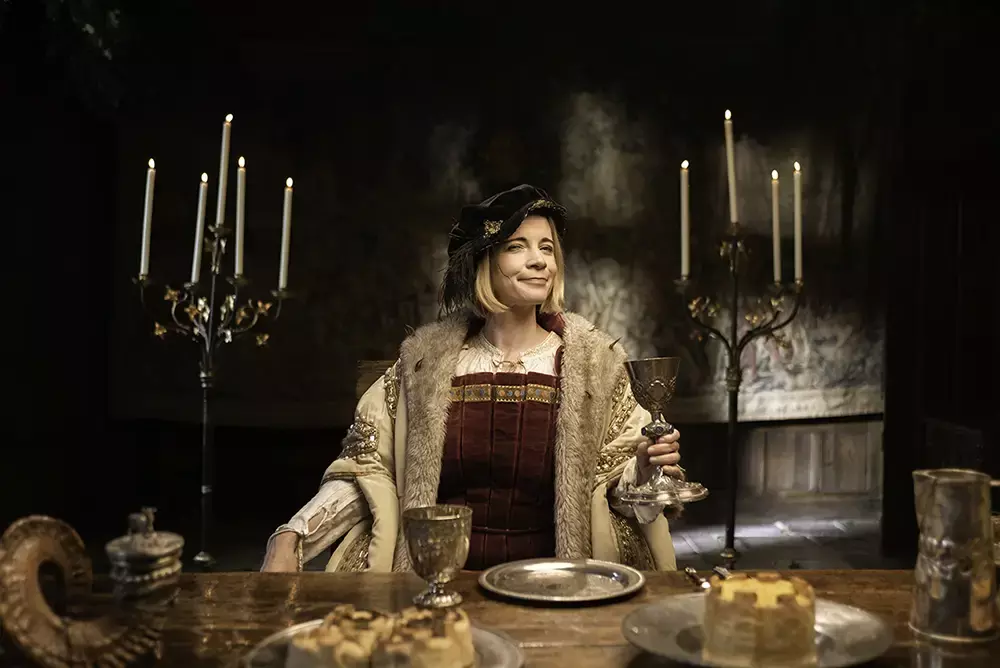
In “Lucy Worsley Investigates: The American Revolution,” Lucy explores the war for independence, how it shaped two nations and why the truth isn’t as simple as it seems.
Series Trailer
A Fractured Relationship: Before the American Revolutionary War
Before the war, Great Britain and the not-yet United States had a strong connection. The American colonies saw themselves as part of the British Empire and were even proud of their identities as English citizens. Across the pond, King George III was just as interested, poring over hundreds of books so he could learn about his colonies — everything from their tax laws to their native birds.
So, what turned this relationship sour? As Lucy tells us, “George had never actually been to America. Not once. His relationship with his colonies there was entirely theoretical.”
This distance — both literal and figurative — may have been the beginning of his troubles. But did those troubles have to turn into a split between the nations? Instead of asking if the resulting American Revolution was inevitable, Lucy wants to know if there could have been a different outcome.
Growing Apart: American Colonies Want Autonomy
Although each colony had its own local assembly and capital in the 1760s, all 13 still answered to the British government in London. As life in America grew more complicated, the colonies wanted more say in their day-to-day lives, especially when it came to finances and lawmaking.
The colonists sent Benjamin Franklin to represent their interests in Great Britain. As Lucy describes it, he ended up playing the role of a “marriage counselor,” trying to maintain a relationship that benefitted both sides.
Unfortunately, there was more at play than bruised egos. Britain’s victory in the Seven Years’ War (1756-1763) left a lot of high costs in its wake — a deficit the colonies would surely help with. This was the expectation behind the Stamp Act, which the British Parliament adopted in 1765.
Stamp Act Suffering
The Stamp Act imposed a tax on legal documents, affecting all commercial transactions in British America. The problem is that the American colonies already had their own taxes supporting local governments.
As Lucy discovers, the colonists responded by invoking their rights as Englishmen, which included “no taxation without representation.” They boycotted British and Irish imports with such tenacity that Parliament eventually abolished the Stamp Act in 1766, all without collecting a single cent. Parties, fireworks and wild celebrations lit up the 13 colonies.
This might have been the end of the story — no American war, no British troops, no reason for anyone to know the names “Paul Revere” or “Benedict Arnold” hundreds of years later. But that’s not what happened.
Instead, as Lucy finds, the British government remained obsessed with having the colonies pay their fair share toward the national debt. More acts and laws came across the Atlantic, including tariffs on things like paper, paint, glass and tea, and the celebrations stopped.
The Boston Massacre: Murder or Misunderstanding?
The colonists didn’t hide their distaste. They protested, demanding the right to make their own laws. Nonetheless, they still didn’t see themselves as rebels. As Lucy explains, “They still wanted to be part of the British Empire — just on more equal terms.” Even some London politicians thought the colonies deserved more independence.
King George III disagreed. He sent 3,500 British troops to Boston, a city with only 16,000 inhabitants, to keep the peace during tax protests. Unfortunately, those redcoats weren’t paid well and ended up competing with the locals for work. The result was growing tension that exploded on March 5, 1770.
The event, later called “The Boston Massacre,” started with young people throwing snowballs at a guard. To this day, no one knows who yelled “fire” (or why), but 11 shots went off. When the smoke cleared, three people were dead and two were dying. The British government had just turned its guns on its own people.
Newspapers on both sides tried to control the narrative. Americans implied that a cowardly captain hid behind his troops and ordered them to kill colonists; meanwhile, the British cited actual testimonies from the captain, saying he wouldn’t have given that order.
The Trouble With Tea
The Boston Massacre was complicated, but it wasn’t the official beginning of the war. Tensions went on rising, especially when England enacted further taxation over the next few years.
On December 16, 1773, colonists dumped 342 chests of British tea into the Boston Harbor to protest. The entire East Coast followed this Boston Tea Party with rebellion and protests.
The pressure kept building. When King George III eventually sent troops to Lexington to arrest some troublesome traitors, perhaps hoping to stop the chaos, the powder keg finally exploded. The British force got into a battle with the locals, who refused to give up the rebels’ locations — and so began the American Revolution.

The PBS ‘What to Watch’ Weekly Newsletter
What to Watch delivers the best shows and content PBS has to offer each week.
The War Begins: Key Events in the American Revolution
As the war ignited, King George III promised one thing: “America will be brought to submission.” His decisions over the next several years were meant to make this happen, but in reality, things got a lot messier.
The British Perspective: Key Moments in an American War
By the end of 1775, disagreements over taxes and laws had turned into the first spark of American independence. The colonists even created the Continental Union Flag. However, it still featured the British Union Jack in the top left corner. As Lucy explains, this was a sign that they didn’t want to stop being British — “they just wanted a different relationship with Britain.”
But the king wasn’t interested in compromise. After America declared independence in July 1776, his army advanced on New York City, where the Battle of Long Island would have 20,000 British troops facing 10,000 Americans led by George Washington. Despite what initially looked like an English victory, the surrounded the Continental Army managed to slip away.
Even so, the Americans were on the back foot. By December, Washington’s army was running out of time, money and resources, pursued across New Jersey by a superior British force. A few surprise attacks on Trenton and Princeton allowed the colonists to leverage guerrilla tactics, but their numbers had shrunk from 10,000 to just 3,000. Local knowledge wasn’t enough.
Fortunately for the Americans, they didn’t have to rely on their own tactics. As Lucy uncovers, support against the British army came from new directions in 1776:
- Thomas Paine: Englishman Thomas Paine crossed the pond and wrote “Common Sense,” which told the Americans that “we have it in our power to begin the world over again.” The notion of complete independence from the monarchy spread like wildfire.
- John the Painter, AKA James Aitken: A Scottish man, claiming he’d been radicalized by witnessing the Boston Tea Party, landed multiple attacks on naval depots in Britain. This was the lifeline for every British soldier on American soil — and a sign that sympathy for the colonies was getting closer to home.
- France: In a desperate effort to regain ground, the Americans called Britain’s oldest enemy: France. Ironically, King Louis XVI was helping dismantle the monarchy, perhaps in an effort to reset the balance of European power.
On February 6, 1778, France signed a formal alliance with the colonists. Now, Lucy realizes, Britain had to fight two wars at once: “one over the sea in America and another much closer to home.” This only got more tense when:
- Benjamin Franklin encouraged Ireland to push for political power, like free trade, while the British government was busy in America throughout 1778.
- The six-day Gordon Riots broke out on English soil, leading to 500 deaths and extensive destruction.
- Spain joined the war against Britain in 1779.
Things were looking grim for the British Empire.
Britain’s Perspective on American Independence
At this point, it might have made sense for the king to let go of the United States. His original strategy, which was to isolate the rebellion in New England and stamp it out before it could spread, led to major losses. Considering the lack of progress in America and the growing unrest at home, Britain might have been better off calling it quits.
However, King George III had a powerful motivation to keep his hold on the colonies. He believed that losing the 13 colonies would be the beginning of a domino effect that might eventually lead to Britain losing all of its power. He couldn’t allow the mother country to become what he called “an isolated state.”
In the end, this may have been the theme of all his fatal errors. His determination to maintain total control destroyed any chance of a compromise, which the colonists were initially open to. It also created new tensions with neighbors such as Spain and France, especially because the latter was still reeling from the Seven Years’ War.
“But,” says Lucy, “I don’t think that George III was a tyrant. I don’t think he had enough power for that. I do think he was led by ministers who were obsessed with debt and control.” This presents the possibility of a different perspective on a familiar story — one that frames this revolution as a complicated relationship instead of just a revolt against an unfair king.
The Messy Divorce: Ending the Revolutionary War
In August 1781, British General Charles Cornwallis brought his troops to a highly strategic spot in Yorktown, where he intended to wait for support from the Royal Navy. Unfortunately, the French occupied the waters and George Washington was closing in on land. Cornwallis was outnumbered about two to one and was forced to surrender.
In the end, the British could have continued fighting a little while longer — but as Lucy discovers, this defeat at Yorktown felt decisive to most of the British government. The support from the French — including tactical education, new weapons and plenty of troops — made the Americans too big a threat to overcome.
King George III refused to accept his loss, even threatening to leave his mother country when Parliament wanted to end the war. However, by 1783, he’d apparently accepted the “divorce,” officially recognizing America as an independent nation.
Fortunately for him, his fears about losing Britain didn’t come true. Instead, both nations remade themselves. According to Lucy, “Britain didn’t fall apart — it burned, it bled, but in the end, George III survived by adapting to a new world.”
Support your local PBS station in our mission to inspire, enrich, and educate.
Learn More About British and American History
There are many ways to think about the Revolutionary War, especially when you take a closer look at how different countries viewed and reported on the conflict. 250 years after the Declaration of Independence, historians and explorers like Lucy Worsley are still finding new angles on the history that shaped both nations.
Want to join her? Learn more about British and American history as Lucy investigates historic documents and locations, talks to experts and pieces together perspectives you may not have considered before. Watch “Lucy Worsley Investigates: The American Revolution” on PBS!