From modern adaptations and medical-drama interpretations to comedies and children’s cartoons, Sherlock Holmes has taken on countless forms to face clever foes since his debut in 1887. But the brilliant detective’s greatest enemy may not be Professor Moriarty; as it turns out, his true nemesis was always his own creator, Sir Arthur Conan Doyle.
Despite Sherlock Holmes bringing him fame and fortune, Doyle had complicated feelings about his iconic creation. He even tried to kill off the famous character, only to resurrect him due to popular demand. But the truth behind this tumultuous relationship is even more thrilling than the ones you’ll find in your favorite Sherlock Holmes story — and to get all the answers, Lucy Worsley is on the case.
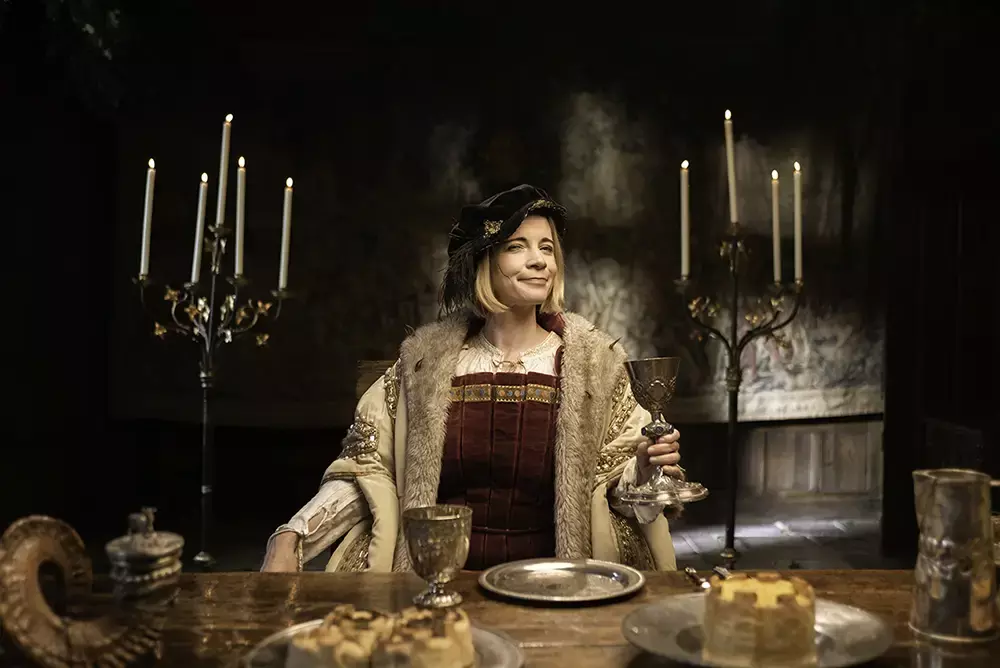
In “Lucy Worsley’s Holmes vs. Doyle,” you’ll get a closer look at how Doyle’s family, experiences, interests and finances shaped one of the world’s most iconic characters. Don’t forget your magnifying glass — you may even uncover a new revelation or two!
Extended Preview
Support your local PBS station in our mission to inspire, enrich, and educate.
Arthur Conan Doyle: Biography of a Brilliant Mind
Sir Arthur Conan Doyle grew up in Edinburgh, Scotland. While his father struggled with alcoholism, the future author watched his mother hold the family’s precarious finances together. From his mother, Mary Doyle, he learned the importance of good money management — and also a deep respect for historical fiction.
Despite his humble beginnings, Doyle went on to study medicine and become a somewhat successful family doctor. Along the way, he met Dr. Joseph Bell, who diagnosed patients through the power of observation — something that would spark the first flames of Sherlockian inspiration.
“If a scientific man like Bell was to come into the detective business, he wouldn’t do these things by chance, he’d get the thing by building it up, scientifically,” Doyle said in a 1928 interview.
Bell was a surgeon, but he was also known for his showmanship, often impressing students with his ability to diagnose diseases before patients had time to say anything at all. He could also often guess their nationality, occupation and more, all by using his observation skills. To top it all off, the doctor was a tall, dramatic figure — which is a key aspect in many descriptions and visuals of Holmes.
Now, Bell may have been the beginning of Sherlock Holmes, but he wasn’t the only influence on Doyle’s writing. Other important interests throughout his life included:
- Sports such as soccer (“football” in the UK).
- Spiritualism and the occult.
- Showmanship that would lead to befriending Harry Houdini.
- Highbrow historical fiction.
One notable example of real-world impact on Doyle’s fiction is his service through multiple wars, including the Boer War and WWI. Lucy Worsley discovers the connections:
Arthur Conan Doyle Creates Sherlock Holmes
Although he was respectable as a family doctor, Doyle seemingly couldn’t help himself from crafting a story based on some of his other interests. In “A Study in Scarlet,” he introduced his now-famous detective — a vibrant combination of passions like science, medicine and showmanship.
But the tale that welcomed us into the world of Dr. John Watson, Mrs. Hudson and the one-and-only Sherlock Holmes wasn’t an immediate bestseller. In fact, when Doyle submitted it to the highbrow “Cornhill Magazine,” he was promptly rejected — and even when the novel did find a home in “Beeton’s Christmas Annual,” editors called it cheap fiction.
After an equally lukewarm reception for the second Holmes story, Doyle decided to try something new. He moved to London, got a literary agent and pitched the idea of a short story series instead of novels. Fortunately for Doyle — and generations of people who love Sherlock in all his forms — it worked. Holmes found a home in “The Strand” magazine.
The best of PBS, straight to your inbox.
Be the first to know about what to watch, exclusive previews, and updates from PBS.
Progress and Prosperity in the Holmes Era
Half a million people per month were reading “The Strand,” and their love for Sherlock made Doyle a highly popular British author for his time. This helped him achieve one of the goals he inherited from Mary Doyle: financial security. The second, however, would prove more elusive: literary respectability.
As Worsley discovers on her investigative journey, Doyle still wanted to be known for the kind of historical fiction his mother loved. While he enjoyed his club memberships, fancy house and glamorous home life, the author still craved recognition. Unfortunately, his historical novel “The White Company” was overlooked in many ways, and readers still wanted more Holmes — which Robert Louis Stevenson called “the class of literature that I like when I have the toothache.”
It was comments like these that made Doyle begin to resent his most famous creation, despite all the detective had done for him.
Arthur Conan Doyle vs. Sherlock Holmes
After years of having his aspirations all but ignored, even to the point of receiving fan mail asking for Sherlock’s autograph instead of his own, Doyle turned his frustrations on the character. As he wrote in later memoirs, “I believe that if I had never touched Holmes, who has tended to obscure my higher work, my position in literature would [...] be a more commanding one.”
In “Holmes vs. Doyle,” Worsley gets the chance to speak with Doyle’s step-great-grandson, Richard Pooley. Together, they read letters in which the author says he “thinks of slaying Holmes” because the character “takes my mind from better things.”
Thanks to Mary Doyle, Holmes didn’t meet his end just yet. Instead, “The Strand” magazine requested 12 more stories, and when Doyle demanded what he thought was an impossible fee — 1,000 pounds — the publishers paid up.
But Holmes had escaped the frying pan only to end up in the fire — or, more accurately, in Reichenbach Falls.
Arthur Conan Doyle Kills Sherlock Holmes
“Killed Holmes.”
This was Doyle’s triumphant diary entry after “The Final Problem” came out in 1893 — a short story in which the famous detective apparently plummets to his watery death when fighting Professor Moriarty. Doyle called the moment “justifiable homicide in self-defence, since if I had not killed [Sherlock Holmes], he would certainly have killed me.”
Just six years after the first Sherlock story was published, our hero was finally gone. Or was he?
A Global Breakdown: Audience Responses to Sherlock’s Death
While Doyle moved on to write an intellectual novel based on his life, try his hand at politics, go to war and even be knighted, fans — including his own mother — mourned the detective as if he were a real person. Newspapers even ran obituaries for poor Sherlock Holmes. People everywhere theorized that he wasn’t really dead because the body had never been found.
The Triumphant (and Reluctant) Return of Sherlock Holmes
Doyle eventually released another Holmes story set cleverly before Reichenbach Falls. But it wasn’t until 10 years after the detective’s “death” that Sherlock returned properly, helped along by a somewhat unrealistic self-defense strategy allowing him to climb up the waterfall’s cliff face.
What had lured him back to life? As Lucy Worsley sleuths out, it was likely Doyle’s need for money. An American publisher paid the modern-day equivalent of $1.6 million for 13 new Holmes stories, making Doyle one of the highest-paid authors in the world.
The author went on to give desperate fans more of the detective they craved. Sherlock eventually jumped off the page and onto the stage and screen, where he remains today. And what did Doyle have to say about the whole business?
“Please grip this fact with your cerebral tentacle:
The doll and its maker are never identical.”
Learn More About Sir Arthur Conan Doyle
From Sherlock’s first appearance to his “death” and miraculous return, Lucy Worsley has brushed up on her Arthur Conan Doyle knowledge. Join her as she learns more about the man behind the detective — not just a writer, but a doctor, researcher and hero of many kinds.
Grab your deerstalker hat and watch “Lucy Worsley’s Holmes vs. Doyle” on PBS.org and the PBS app.