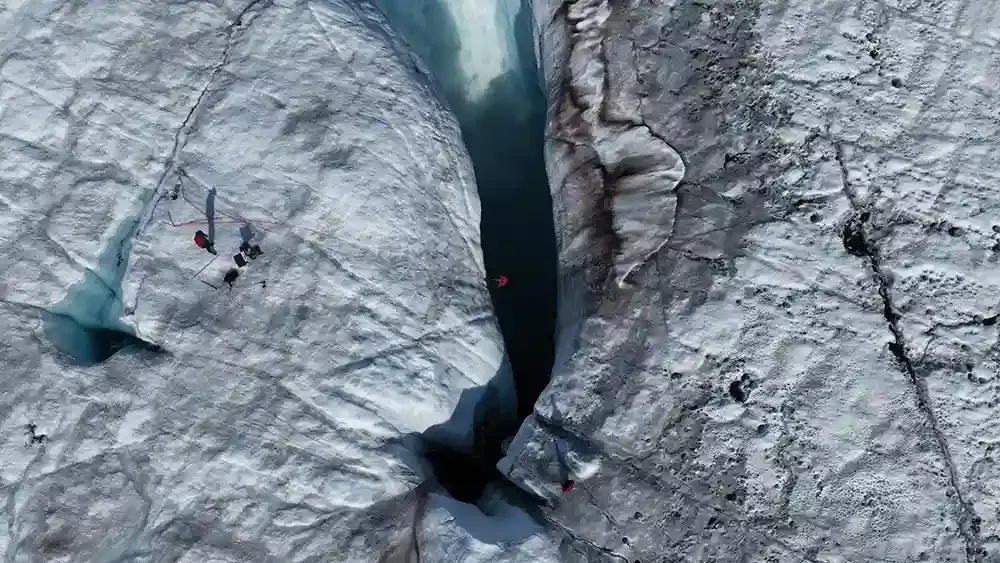
From above, the Arctic seems like the quietest place on the planet. Wind, ice, and not much else. Put a microphone under the surface and it turns into one of the noisiest environments in the ocean, full of knocking, trilling, moaning, and song. Headphones recommended for this one!
Want to learn more about polar science and the amazing animal species that thrive in the Arctic? Check out “Ages of Ice,” now streaming on PBS.
A Noisy Place
Sound moves through water roughly four and a half times faster than it moves through air, and it keeps going much farther before it fades. In the cold, deep, layered water of the polar oceans, a call can travel for miles.
That reach is getting longer. Climate change is thinning and melting the sea ice, raising sea levels, and eating away at the foundations of the glaciers that feed into these waters. As the ice cover breaks up and the water beneath it warms, sound carries farther through the Arctic than it used to.
Farther is not better however. The same open water that lets the call of a seal travel also lets the low-frequency drone of propellers and engines reach into places that were effectively sealed off a generation ago. That noise sits in the same range animals here rely on. For a seal or a whale trying to be heard across miles of ocean, a passing vessel does not just compete with the call, it completely overshadows it.
So here is what is at stake. These are three of the sounds the Arctic makes right now, recorded before the sounds of shipping lanes take their place.
Support your local PBS station in our mission to inspire, enrich, and educate.
Arctic Biophony
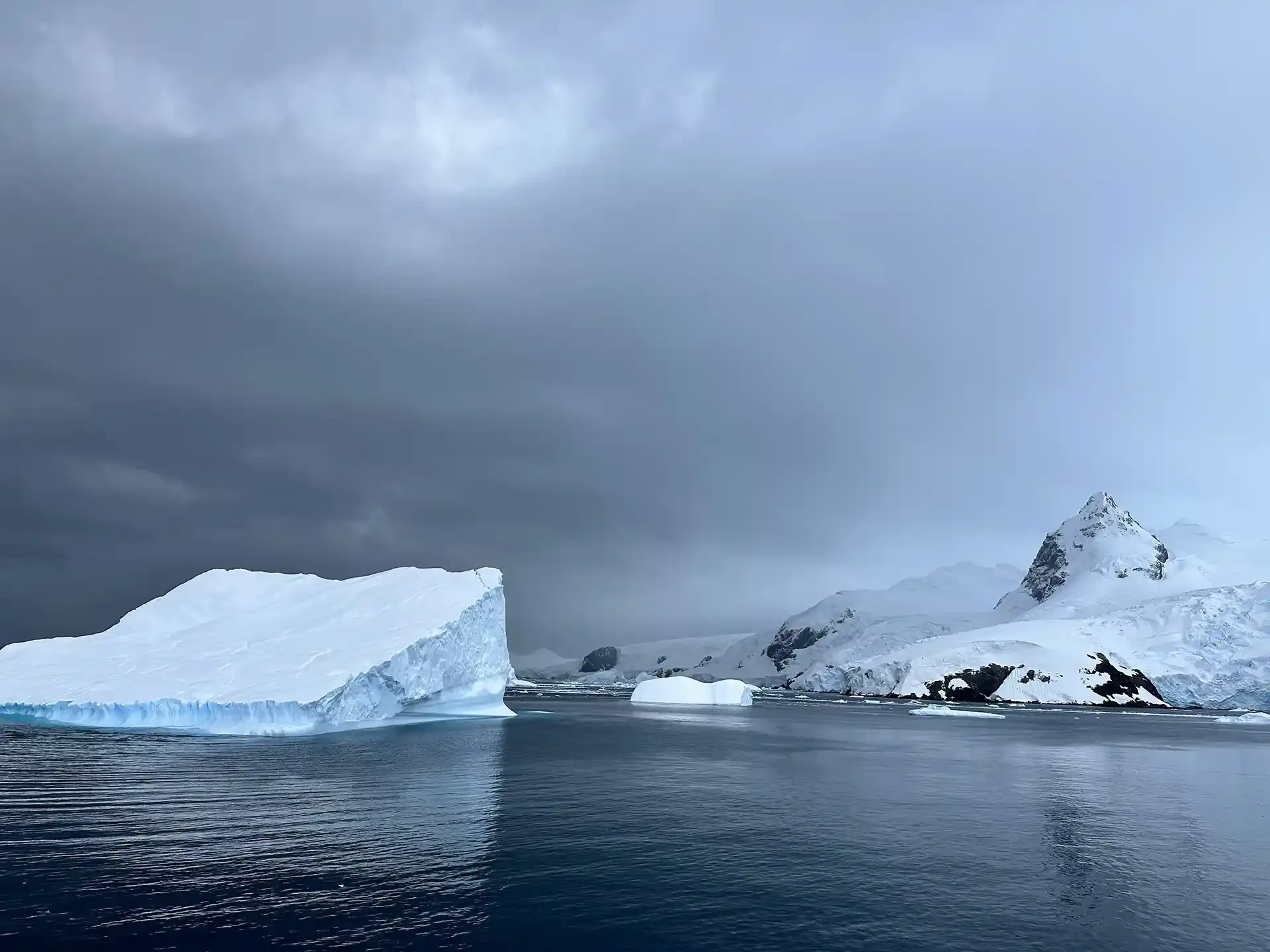
Biophony is the term for the combined sound of every living thing in one habitat, all of it at once. You might expect the Arctic version to be sparse. It is anything but. Hearing the underwater chorus can almost be overwhelming, with all the different animal voices being broadcast at the same time.
Animals are only part of the song too, glacial ice pops and crackles as ancient air bubbles escape from it. The sea ice itself groans and cracks as it shifts. The resulting sound produced from this is akin to a haunted house.
Click “play” below to hear the biophony of the underwater Arctic:
Walrus
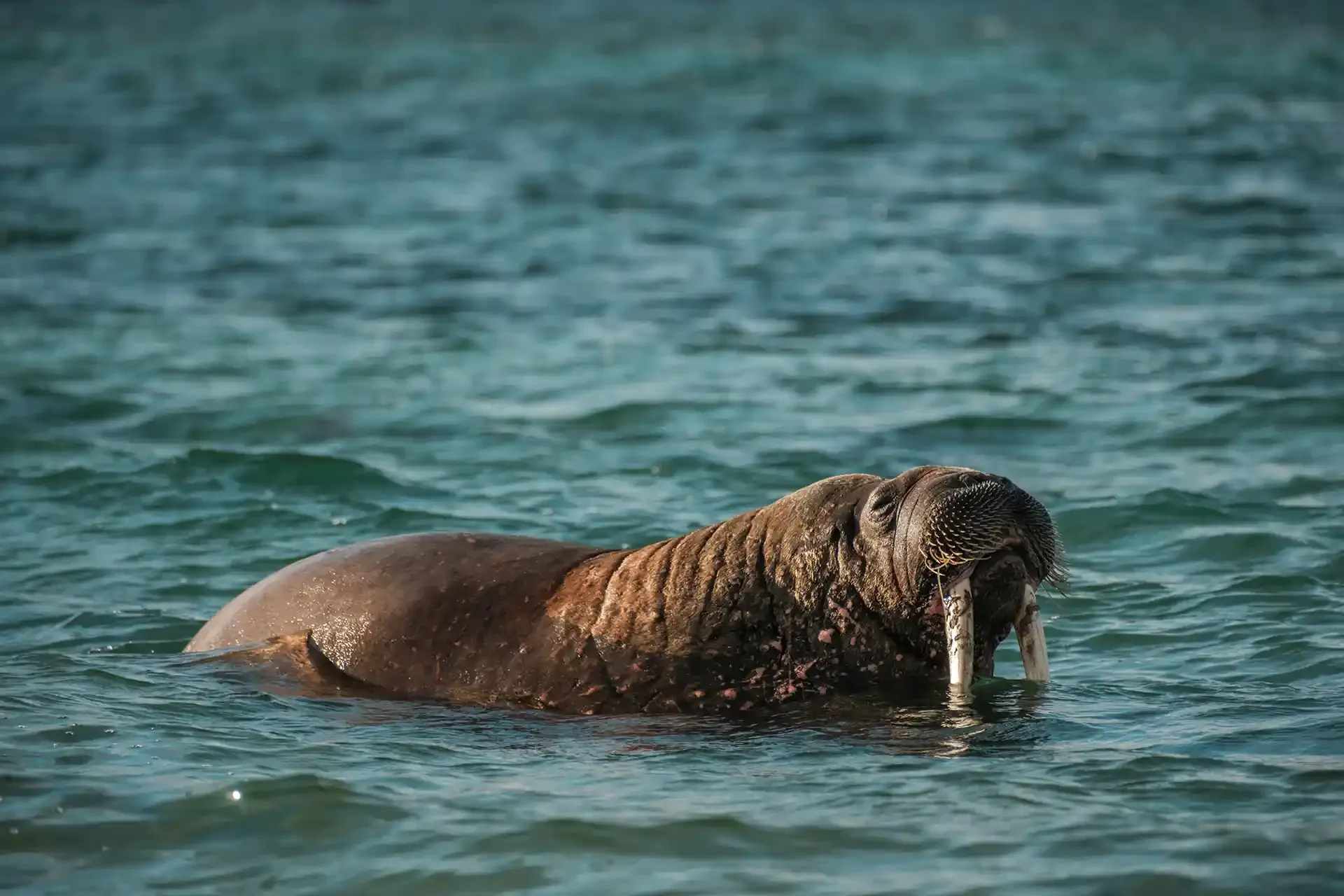
On land, walruses are not graceful. They sit on the ice, sunbathing like a pile of sausages, flipper to flipper, stewing in each other’s heat. The deep roars walruses make on land is perfectly fitting for a lumbering Arctic behemoth.
Click “play” below to hear the sound walruses make on land:
Underwater they are a different animal entirely, and they come with an instrument.
A walrus can force a burst of air into a pair of balloon-like sacs in its throat, turning its own neck into a resonating chamber. The result is a bell-like metallic knocking, closer to someone tapping a submarine hull with a teaspoon than to anything you would expect from a two-ton mammal.
Click “play” below to hear the knocking sounds that walrus make underwater:
Bearded Seal
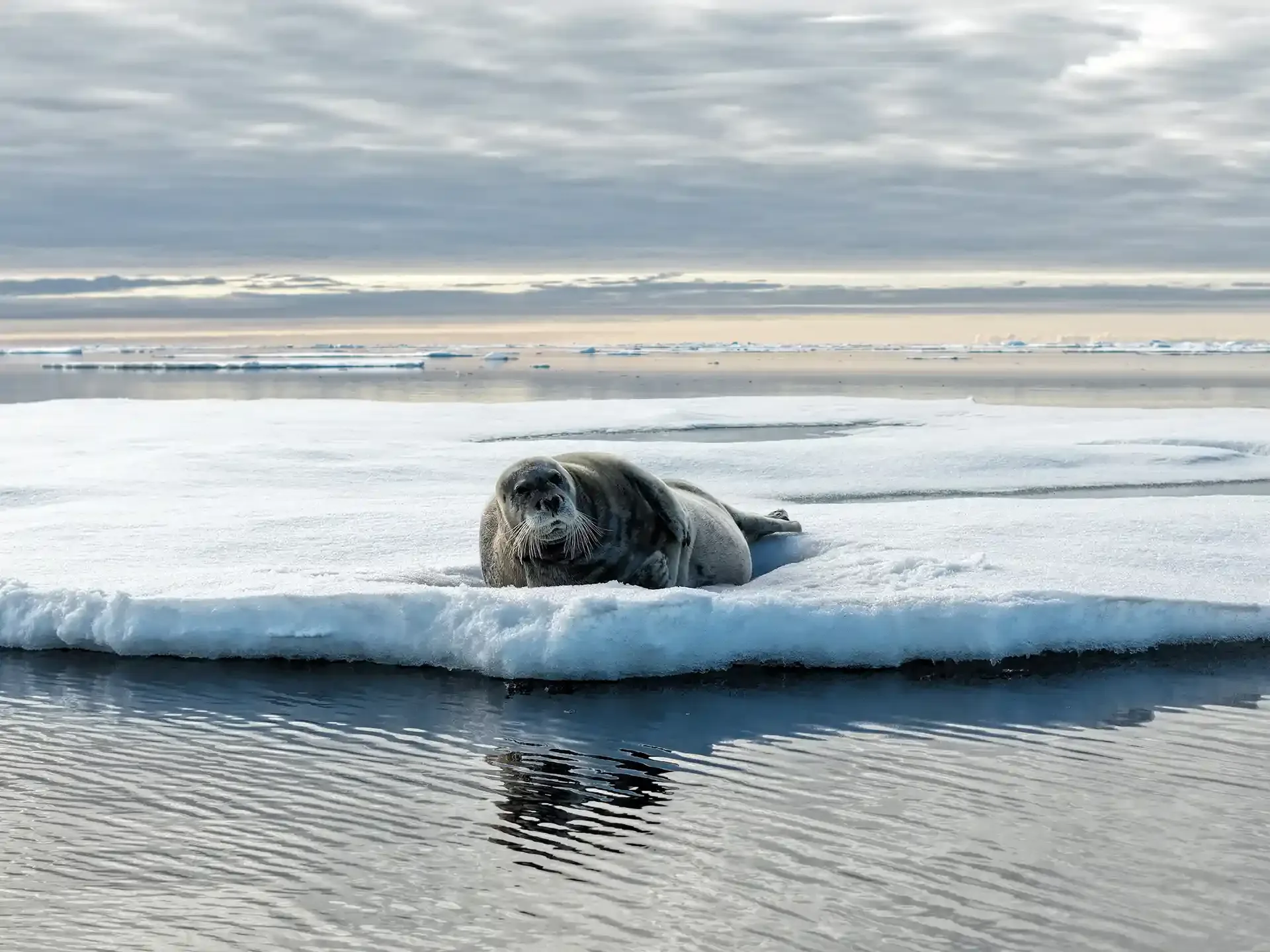
A male bearded seal produces a long, warbling trill that spirals steadily downward in pitch. It is one of the most elaborate and beautiful calls made by any Arctic animal, and, in good conditions, it carries for miles under the ice.
The purpose of this alien-like call is reproductive. Males will stake out a patch of water near breathing holes and broadcast, with the calls being so distinctive that individual animals can be identified by their sound alone.1
Click “play” below to hear the warbling call of the bearded seal:
What’s Drowning It Out
Everything you just heard exists because of the ice. Sea ice is what kept this ocean quiet enough that a seal could be heard from miles away and a walrus could get away with sounding like a teaspoon on a hull. Take the canvas away and while you don’t lose the animals, you do lose the silence they are singing into.
That canvas is slipping. The Arctic is warming several times faster than the rest of the planet, and summer sea ice has fallen more than 40% since satellite records began. Ships are moving into the gap, with traffic up nearly 40% in a single decade and a direct route over the North Pole possibly opening within ten years.
A handful of ships can double or quadruple the noise in a stretch of water. The bearded seal’s mile-wide broadcast shrinks. The walrus knocking gets buried under an aquatic engine. The biophony is still down there, with a constant cacophony parked on top of it.
More to Discover
Almost nobody has heard what the Arctic actually sounds like, and the window to record it as it has been for thousands of years is narrowing. To hear the sounds of the arctic for yourself, watch “Ages of Ice” and turn the volume up.
You can stream “Ages of Ice” on PBS.org and the PBS app.
RESOURCES:
1(Charrier, I., Aubin, T. and Mathevon, N. “Bearded seal males perceive geographic variation in their trills.” Behavioral Ecology and Sociobiology, 2013.)

The PBS ‘What to Watch’ Weekly Newsletter
What to Watch delivers the best shows and content PBS has to offer each week.