There are two great ice sheets on Earth, located over the polar regions of Antarctica and Greenland. These powerful systems reflect heat, store water, and help keep the world’s climate in balance.
As scientists explore their surfaces, they are finding signs of black carbon — the residue of fossil fuels that have burned far away and are carried by the wind across the expansive ice.
Interested in learning more about the science of ice and how polar science is being impacted by climate change? Check out “Ages of Ice,” now streaming on PBS.org and the PBS app.
Add to your watchlistWhere Does Black Carbon Come From?
Black carbon, commonly known as soot, is a component of fine particulate air pollution formed by incomplete combustion. Natural causes, like wildfire, as well as human production, such as diesel engines burning fossil fuels, contribute to the creation of soot.
How Does Black Carbon Travel?
Having floated into the air, black carbon glides on the jet streams sweeping air currents around the globe for days. Even in the far-reaching corners of the planet, where it’s so remote that no human activity is present, traces of the industrialized world are found high in the atmosphere.
Even worse, in the time that black carbon particles are afloat, they can cause even greater warming effects than carbon dioxide.
Soot lingers high above the Earth until it begins falling out with precipitation, settling on surfaces around the world. Soot’s ability to absorb visible and infrared radiation means black carbon can warm the atmosphere as it begins darkening the surfaces it falls on.
Support your local PBS station in our mission to inspire, enrich, and educate.
What Happens When Black Carbon Accumulates?
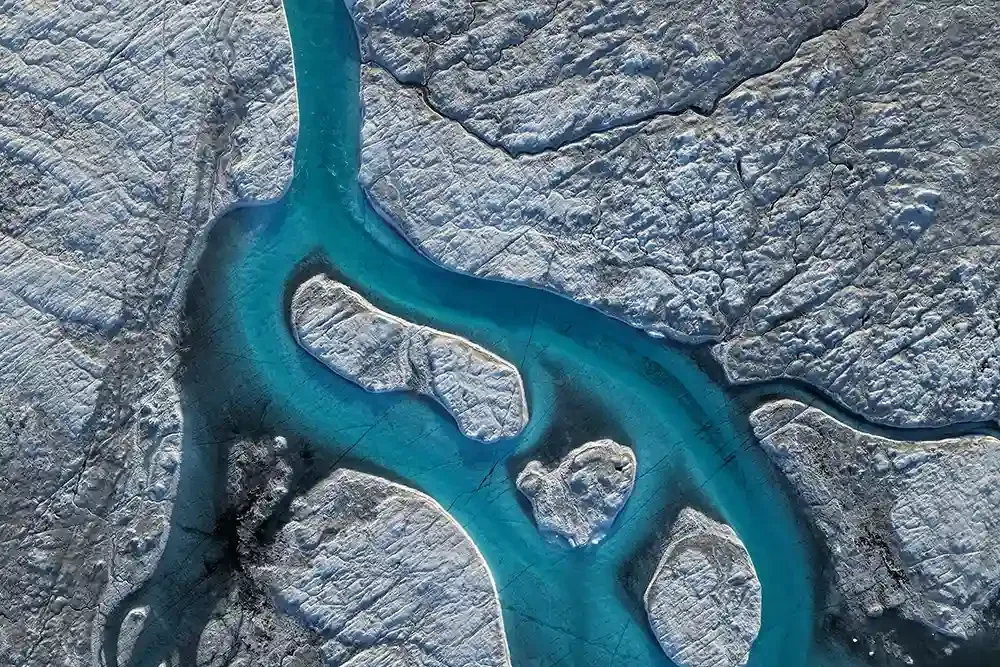
As observed on ice sheets, even just a few trace amounts of black carbon — in the range of parts per billion — can dim the surface of the snow’s natural brightness enough to cause additional warming. Theoretical calculations indicate even seemingly small amounts of soot can decrease the reflectance of snow between 1 to 5 percent.
The black carbon allows less of the sun’s radiation to reflect back into space. And when it is dispersed across a pristine snowpack, the reflectivity of the snow begins dropping, the black carbon absorbs more solar radiation, and the effects trigger entire areas to warm… causing even further melting.
How Does Black Carbon Impact Climate Change?
Black Carbon causes a trickle effect, as more solar radiation gets absorbed and reflected in the areas keeping the climate of the Earth in balance.
Researchers are warning that climate change is being driven by carbon dioxide and other greenhouse gases increasing in the atmosphere, causing a rise in temperature.
Add to that the component of black carbon, and it’s an alarming trifecta driving climate change.
What Does It Mean For The Future?
Never in geologic history have we seen such a temperature rise in such a short amount of time. The Earth has previously seen higher amounts of carbon dioxide and it has led to mass extinctions. But those occurred over thousands of years of adaptation and change versus what we’re observing now on a scale of just a few hundred years.
That rate of change in temperature rise is the concerning difference for our world. There hasn’t been a time where humans have lived where it’s been ice free, and scientists wonder if that is even possible.
As the emission rates of black carbon are increasing with the burning of diesel, coal, and biomass, scientists worry about the consequences of these world-travelling particles on polar ice melt. Soot is becoming more of a driver of climate change and impacting every corner of the planet. As ice loss accelerates, any small change that speeds it up matters.
Interested in learning more about polar science? Be sure to check out “Ages of Ice,” streaming on PBS.org and the PBS app.
Add to your watchlist
The PBS ‘What to Watch’ Weekly Newsletter
What to Watch delivers the best shows and content PBS has to offer each week.