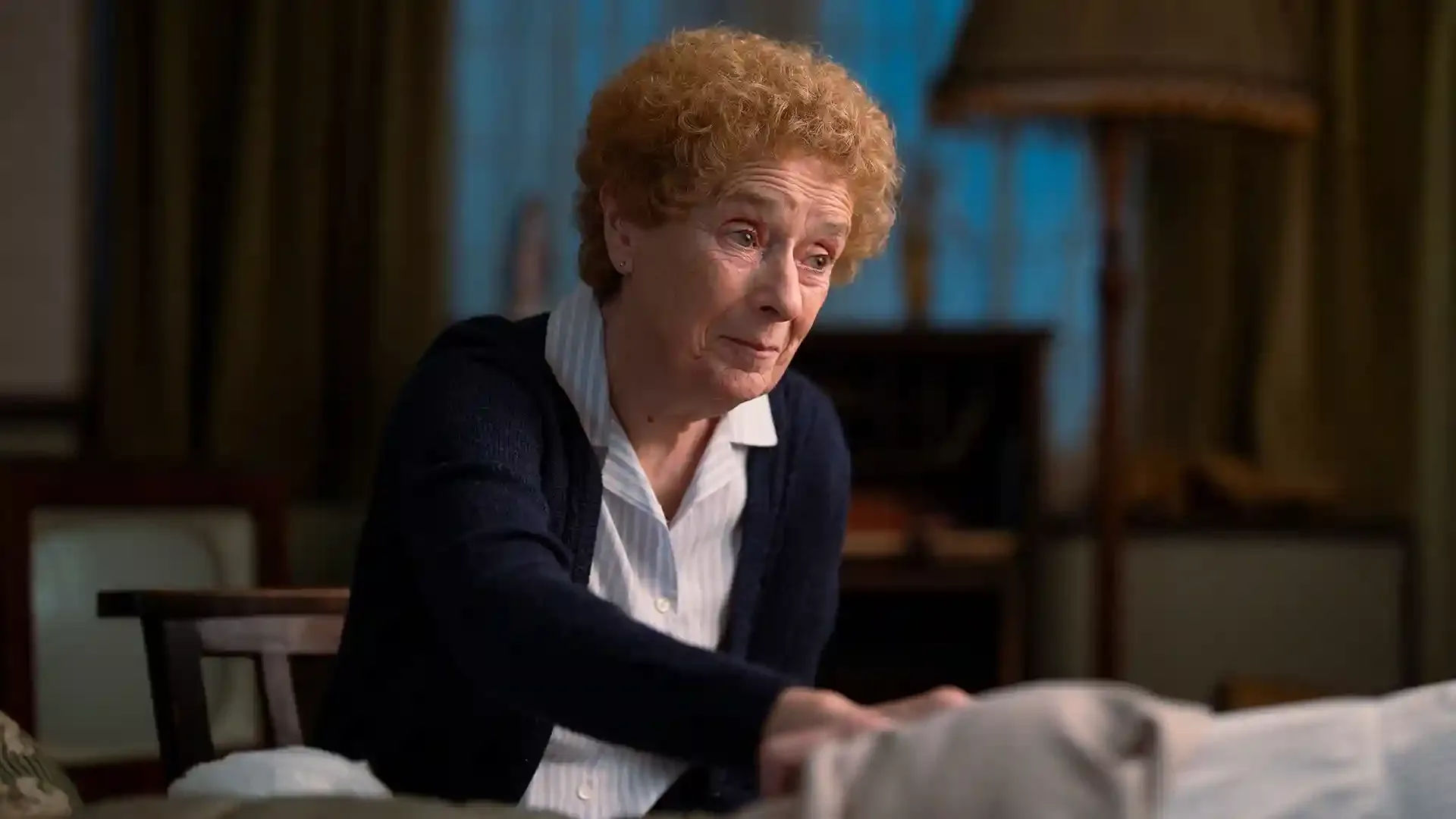
One of my favorite things about Call the Midwife has always been the clear comparisons and stark contrasts of past and present midwifery practice. In the 1971 Poplar, we see the ongoing “modernization” of healthcare, bringing along some amazing advances in health care, but the worry remains that some of these technological advances could start to replace the humanity found in midwifery care. As I settled back in to watch the season 15 premiere of Call the Midwife, I couldn’t help but see the mirror to our modern world.
I was thrilled to see the midwives leaning into the feminist movement — fighting for bodily autonomy, equal pay, and equal rights. Even Phyllis, who originally dismissed the women’s liberation movement, realized how important it was to embrace the changes that feminism demands. Women all over the country went on strike, calling attention to how much invisible work women do on a daily basis. I loved seeing Dr. Turner and Teddy realize that with Shelagh, Angela, and May on strike, the household duties were left to the boys.
While the act of burning bras garnered a lot of attention, it remains a powerful symbolic ritual. Women were rejecting the restricting nature of societal expectations. Burning a bra was also burning down patriarchal beauty standards, the objectification of women, and the capitalist idea that women are always needing to buy products to “better” themselves.
The fight for women’s liberation is ongoing. It seems that our rights in the US are being rolled back with every passing month. From restrictive abortion bans varying from state to state, to trying to make it harder for women to vote with restrictive laws such as those proposed in the SAVE act, women’s rights seem just as much at risk now as they did in 1971.
If we want to take it further and tie this into health care, there is a staggering lack of research done on women’s health conditions, and a boatload of evidence to suggest that women are frequently dismissed and gaslit when seeking medical care. Talk to any woman in your life, and she will probably tell you about a time when she had a medical concern and her doctor told her it was probably anxiety. Or being overweight. Bonus points if it was a male doctor who told you these things!
Women take longer to be diagnosed with ADHD or autism, because the same symptoms or behaviors are interpreted differently in female children. She’s not avoiding eye contact, she’s just shy! She’s not having a sensory meltdown, girls are just dramatic. Women, especially Women of Color, are less likely to have their pain diagnosed and treated appropriately than their male counterparts. Women in labor can be treated the same way.
Several months ago, a video went viral showing a Black woman who was clearly in active labor being completely ignored by the triage nurse, who stared at her computer and continued asking asinine questions from a digital list. Anyone who has worked in labor and delivery for a shift or two would recognize that this woman needed immediate attention, and I also think even any layperson off the street would know something BIG is happening here and would rush to help her. This woman birthed just minutes later.
This event called attention to the ongoing implicit bias crisis in health care. As much as we are calling it out and forcing continuing education on the topic, nothing is going to change until we (health care providers) actively work to change our behaviors.
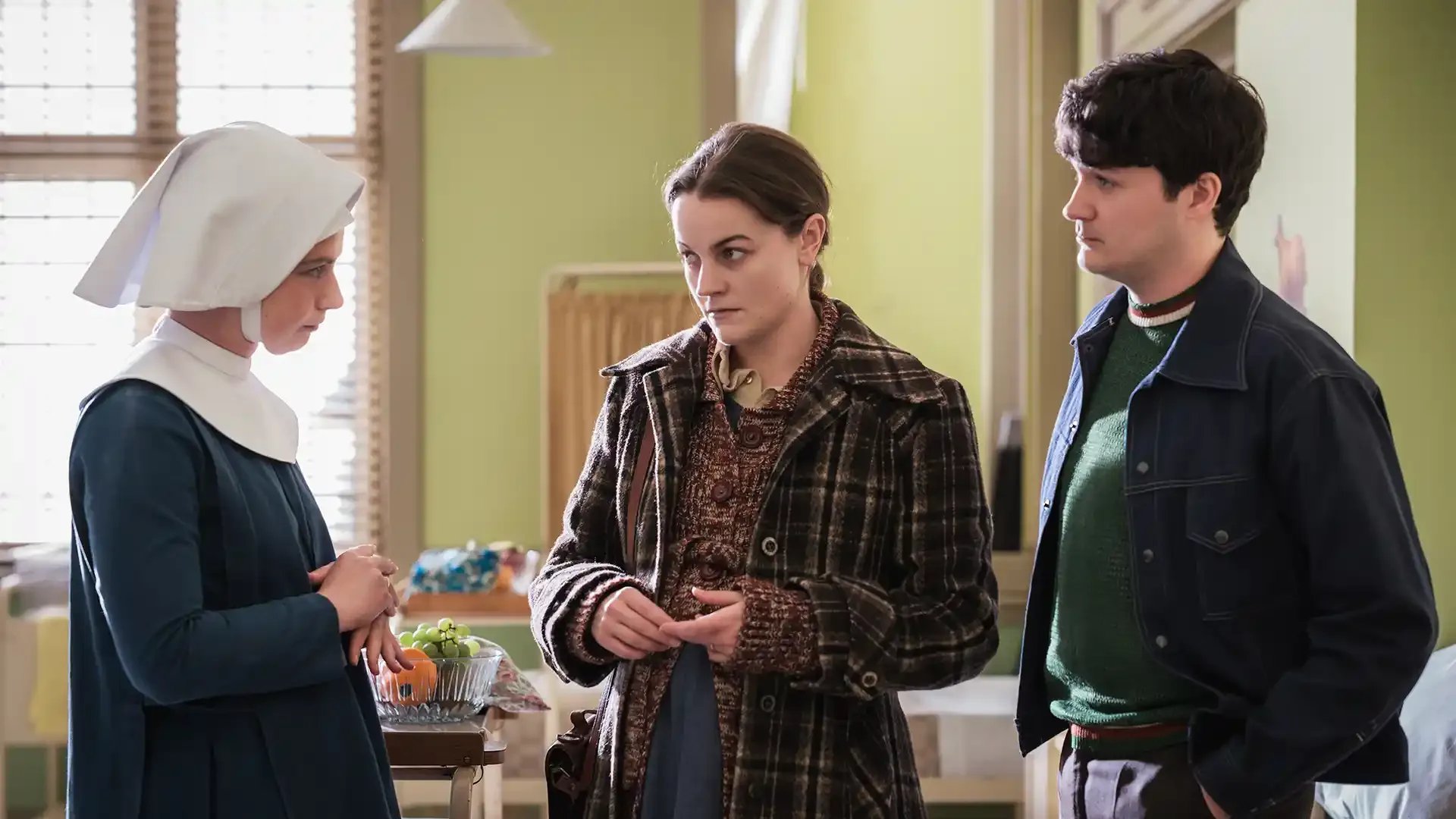
Another theme explored in the season opener of Call the Midwife was occupational trauma in health care. Sister Catherine passes her exams and is now a fully qualified midwife, able to practice independently! While this is an exciting day, things quickly shift when Sister Catherine is checking in on her hyperemesis gravidarum patient, Thelma Cutler. Thelma has been completely miserable for her entire pregnancy, dealing with intractable vomiting and hardly able to keep down any food or fluids on a daily basis.
While hyperemesis is physically and mentally one of the most challenging types of pregnancy complications for the mother, it also does increase her risk of preterm labor and delivery. Sister Catherine acknowledges that her abdominal pain might be due to contractions and tells Thelma they will have the doctor evaluate her. Before that call can be made, Thelma delivers her tiny, 28-week baby boy right into the toilet. Sister Catherine whisks him away, assuming because of the extreme prematurity, that he did not survive. However, the baby starts to cry, and she rushes him to the clinic for support while they wait for an ambulance to take him to the hospital.
As technology in health care advances, our limits of “viability” for babies continue to decrease. In 1971, it was uncommon for babies born at 28 weeks to survive. When I first started in nursing, 24 weeks was the hard line of viability, with some consideration of babies in the 23rd week “in case the dating was off.” Today, in some places, babies born as early as 22 weeks can survive. This isn’t to say that every baby born at an early gestation will survive without significant complications, but the idea that they can survive at all would be seen as a miracle back in 1971.
This was Sister Catherine’s first day as a fully qualified midwife, and it left her reeling. Had she missed something? Could she have prevented this birth? How can she help Thelma through the trauma of this birth, when she too is feeling overwhelmed? I could really feel for Sister Catherine in that moment because my first weekend “on my own” as a certified nurse-midwife certainly felt like trial by fire.
My first patient was a laboring woman at full term, coping beautifully with her labor. She had supportive family members present, soft, music playing, and the lights were low. We were in a birthing center within a hospital, so we had the safety net of a hospital there should we need them, but we were in the low-risk area.
Everything was calm until her water broke, and I saw meconium. I know what you’re thinking — meconium happens! But in this hospital birthing center, meconium was an indication for transfer over to the “regular” labor and delivery unit for continuous fetal monitoring unless the baby was imminently coming. I explained this and asked this woman if I could check her cervix to help us decide if we had time to move over to labor and delivery. Imagine my surprise when I checked her, and there was a LEG where I expected a head to be!
She was rushed into the operating room, where instead of a quick C-section (how most breech babies are born within the United States), my back-up attending physician assisted the resident through a breech vaginal birth.
After that birth, being chewed out by the in-house OB attending for not identifying a breech presentation prior to delivery, then being chewed out by the anesthesiologist who also thought I was an idiot (but most importantly, being supported by my own physician from the private practice I worked in, who assured me that every single person who works in OB has missed a breech presentation before, and it was just unlucky that this happened on my first ever shift), my next laboring patient of the night ended up having a baby with a face presentation.
Picture it: baby’s neck is extended, and so instead of the top of the baby’s head being born first, the face is trying to come straight out. I don’t know what the universe was trying to teach me that first weekend on call, but I definitely questioned whether or not midwifery was right for me!
While my hectic first weekend on call didn’t involve a true medical emergency like Sister Catherine’s, it did involve births that resulted in some trauma for the mothers. For the first one, going from a calm, peaceful birthing center to a bright operating room with no family present, and frantic medical staff rushing around you, had to be terrifying. The moments you imagined with your baby calmly snuggled skin to skin after birth, basking in the flood of oxytocin that occurs after birth were replaced by gazing at your baby across the room from you, in a bassinet, while people buzzed around the room, going about their daily tasks at work, forgetting that this is the most formative day of your life.
The second mom welcomed her baby via C-section, as the baby’s face was presenting in such a position that it couldn’t be born vaginally.
As I have grown and gained experience as a midwife, I have learned how to better support families who go through a traumatic birth or unexpected outcome. I have almost 14 years of midwifery experience to call on now. While it does help me to focus and support parents during difficult times, it doesn’t necessarily lessen the occupational trauma I experience. But I’ve also learned ways to support myself through these experiences.
I am grateful there is now a name for this type of secondary trauma, and there are resources available to help health care workers deal with some of the traumatic events we experience at work. Because it’s easy to see that a traumatic birth can lead to PTSD for the parents, but we have to acknowledge that it can also lead to similar symptoms for the health care workers who were involved in their care.
Our first episode of season 15 was a great reminder that progress in life is rarely linear. We tend to romanticize the past at times, and at other times, remove ourselves from the more unsavory parts of our history. It’s a double-edged sword: the “good ol’ days” are actually just as complex as the present, and we haven’t always come as far as we thought we did.
I can see myself at times in the resilience and empathy shown by the midwives of Nonnatus House, but I can also see the burnout and the uncertainty of the future. Midwifery is not an easy job, and Call the Midwife continues to teach us that the work of midwifery is never done. We will continue to advocate for a patient’s autonomy, protect vulnerable children, and care for those who seem to fall through the cracks of a broken health care system. It’s an uphill climb, but one that we continue to take on.
It’s critical that we continue to take care of ourselves on this journey so we can continue this necessary work.