SUMMARY
The world’s glaciers are receding at an alarming rate, losing more than a trillion tons of ice a year. Fueled in part by climate change, it’s driving sea levels higher, which could threaten coastal communities around the world. One man, alongside his family, has seen the melt firsthand every year for nearly half a century.
View the transcript of the story.
NOTE: If you are short on time, watch the video and complete this See, Think, Wonder activity: What did you notice? What did the story make you think about? What would you want to learn more about?
News alternative: Check our recent segments from the News Hour, and choose the story you’re most interested in watching. You can make a Google doc copy of discussion questions that work for any of the stories here.
WARM-UP QUESTIONS
- Who is Mauri Pelto and what is his profession?
- Where are the glaciers that Mauri and his family monitor?
- What has been a major contributor to the melting of glaciers worldwide?
- How many glaciers have completely disappeared from the area?
- How does Jill Pelto incorporate data into her art?
ESSENTIAL QUESTIONS
- In the video, glaciers are called "nature’s water towers." What do you think that their gradual disappearance means for our drinking and agricultural water supplies?
- Pelto has been monitoring the glaciers for decades. While he’s seen decline over time, why is it alarming that so much has come in the past few years? What challenges does the speed in which glaciers are shrinking present?
Media literacy: Look over this watercolor painting shown in the video. After, answer the following questions:
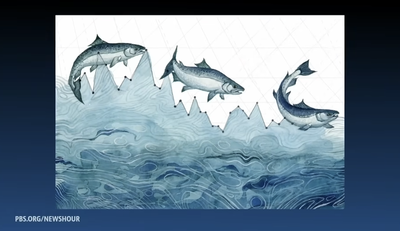
What does Jill say that is usually a barrier to communicating important glacier data with the public? How does her art work to combine data and emotion for the landscape?
WHAT STUDENTS CAN DO
Read over this page from the Environmental Protection Agency (EPA) on glacier ice melting, and look carefully at the images of McCall Glacier taken decades apart. After students are finished with the images and information, they should research and discuss other glacier sites around the world, with special attention to sites identified as shrinking quickly. Some guiding questions can be:
- How do glaciers (many of which are thousands of miles away in very cold places) affect weather patterns around the world?
- What does it mean for our environment and health that McCall Glacier and other sites have changed so much over time?
- What actions have you heard of that can help with greenhouse gas emissions and climate change?
Written by Alyssa Tinoco, News Hour Classroom intern, and PBS News Hour's Vic Pasquantonio
Sign up to receive our weekly newsletter with Daily News Lessons and community events.
To provide feedback on News Hour Classroom's resources, including this lesson, click here.