
Build a Dam and Explore Water Flow


Rivers, streams and creeks provide pathways for water to flow to the ocean. These waterways flow around rocks and boulders, plunge from big heights, and meander through lazy flat stretches of land. It’s fun to watch the water move — sometimes slow and sometimes fast. And it’s fun to see how the water finds its way over and around obstacles. Elinor and her friends run into a stream when they are out exploring. Without a bridge to cross, they decide to move rocks to create their own bridge so that they can walk across. When they return to cross back over, they find out that their solution had consequences.
In this activity, encourage your child to explore what happens to water in a stream when obstacles like rocks are placed in certain spots. As you play, help your child explore and observe how different materials change the flow and even stop the flow of the water. Make predictions about what will happen when you place bigger or smaller objects into the flow. What happens when you block the water completely? Learning through water play is so much fun. Let's get creative and get wet!
Materials
Directions
Let's be curious! Start by discussing different sources of water and their importance. Rivers, streams, ponds are all different bodies of water that come in many sizes and shapes. For example, a river is a body of water that is moving and flows into a lake or other river or stream. Sometimes, things like trees and rocks can fall into a body of water, like a river, and change or and block the moving water.
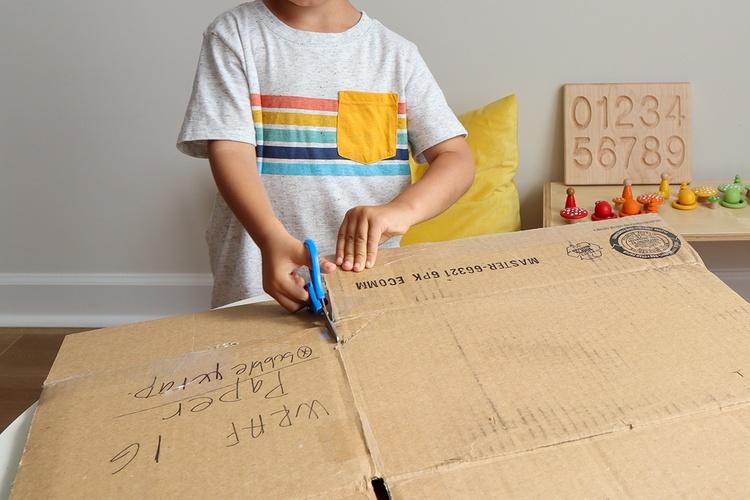
Let’s make a plan! Create your model river by using a long cardboard box or plastic container. You can also use a smaller cardboard box and create a long trough by breaking it apart on one side, laying it flat, and taping its sides together.
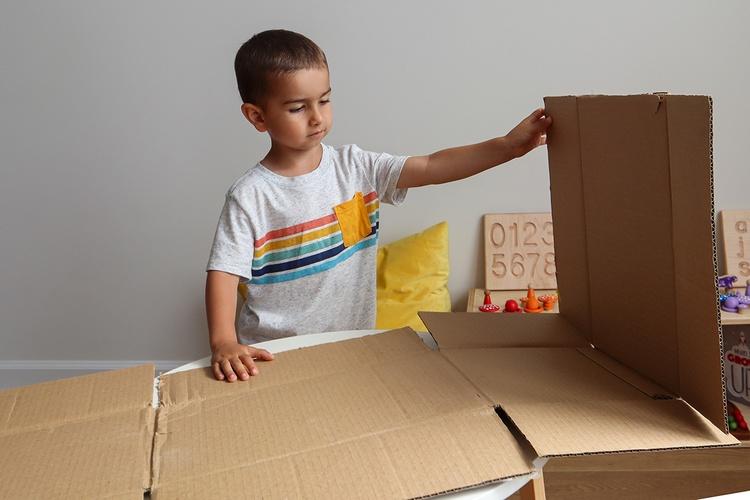
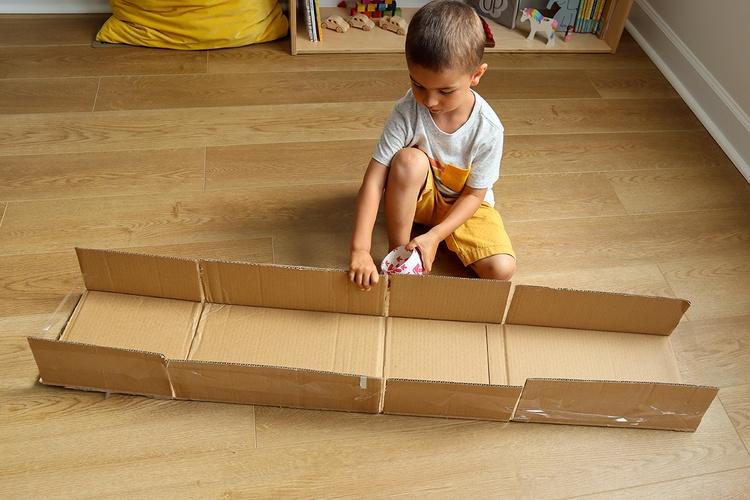
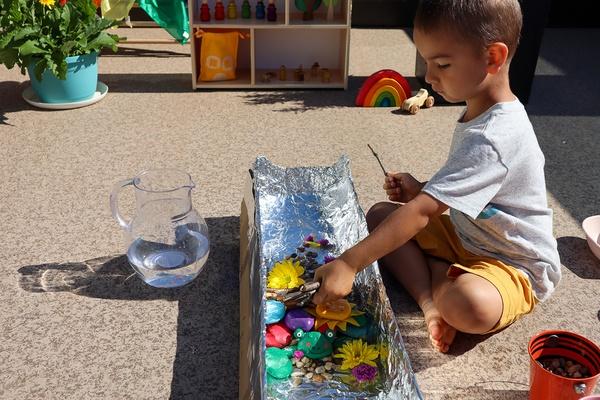
No matter where you live, or what you have at hand, you will be able to build your own river! For indoor or balcony play, use a long plastic container or a cardboard box covered with aluminum foil. If you want to play outside, any patch of dirt or sand can be used to make your river. Simply, dig a pathway for the river through the sand. Or, head to your local beach or water/sand area, and create a model river there.
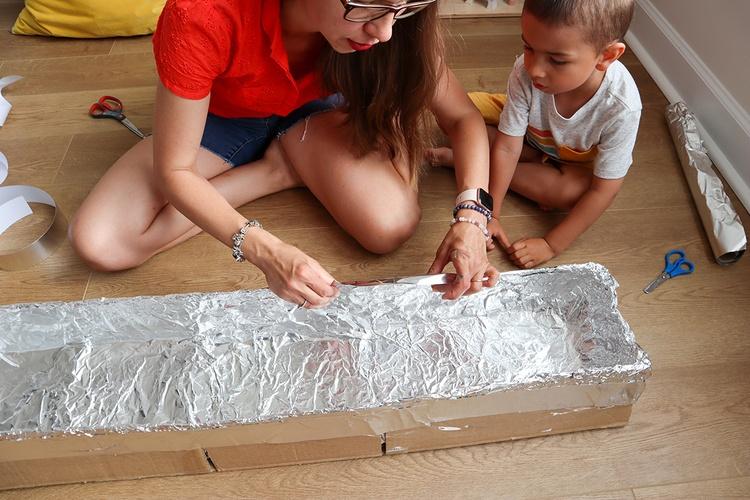
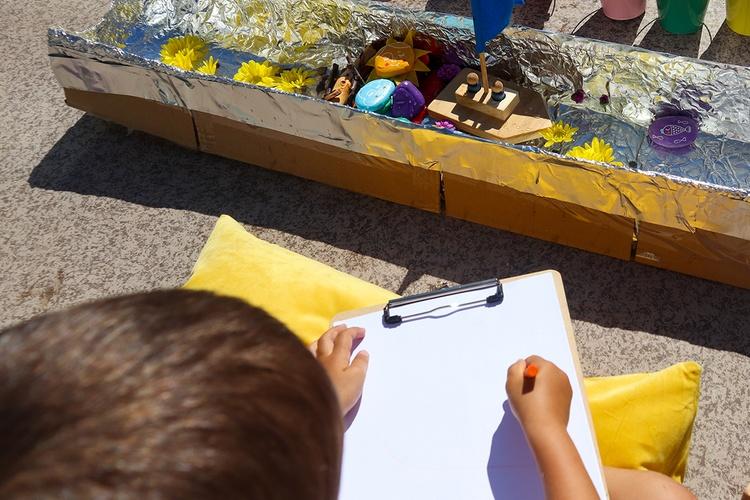
Once you have a long rectangular container ready, cover it with aluminum foil and tape it securely in place. This will allow water to flow in the container without getting the cardboard wet. Place a block or long plastic container under one side of the river so that one side is higher than the other. This will allow water to flow from one end to the other.
Let’s Explore! Now, pour some water into the model river. Your child can add a few fresh flowers or leaves into the river and observe how they flow and drift away. Ask your child what types of things might block the flow of water. Are the things from nature or from people or other animals?
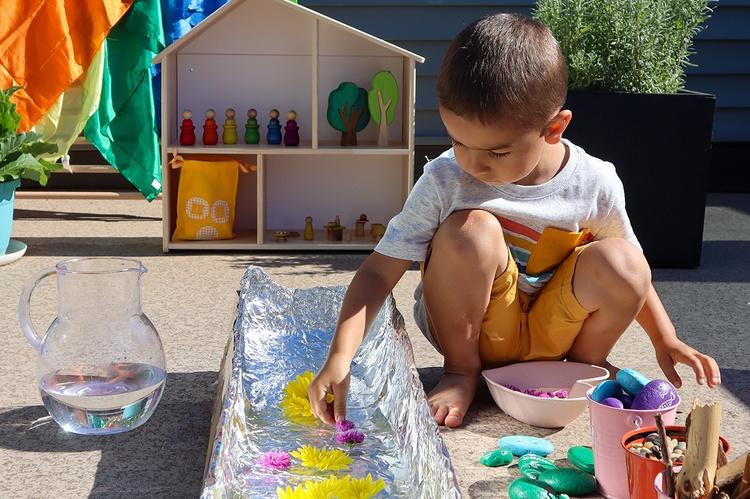
Your child can explore their river by splashing in the water, placing different natural objects in the water, and simply watching how the water flows from one end to the other. Follow your child's lead. For example, your child may decide to block the flow of the river completely with rocks. As they build a wall from rocks, they might observe that the water still passes through in some places or that it flows over the top. They may realize that there are gaps big enough for the water to pass. So they might remove the rocks and build a wall using sticks only. Encourage your child to use different materials and practice building barriers that might change or stop the water’s flow.
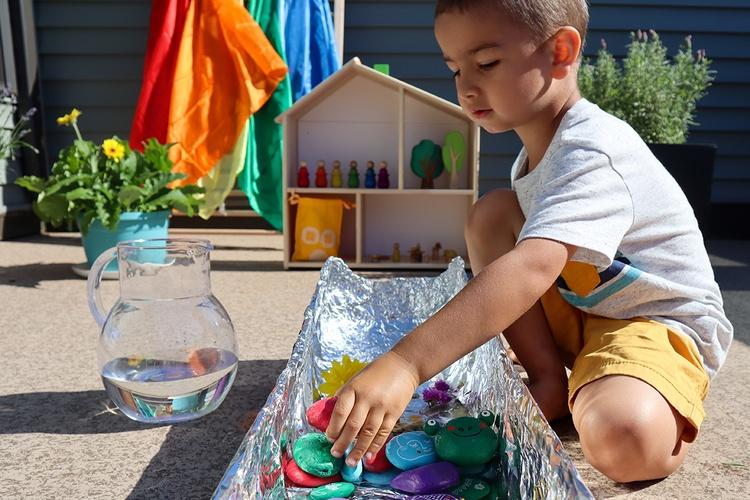
Make the most of water play. As your child adds different materials to the river, ask them questions, such as, “How are these objects different from each other? What happens to the flow when you put a big rock inside the river? Does it go over it or does the rock block the flow? Do some objects block the water flow better than others?”
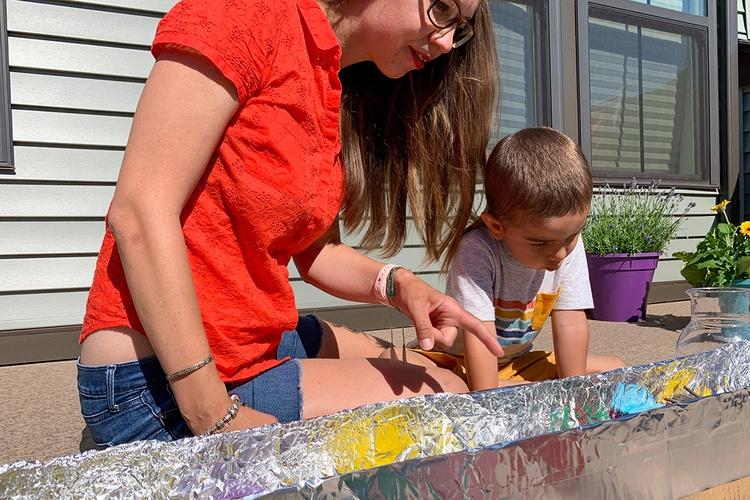
Help your child explore how mud or clay affects the barriers they built and pour water into the raised side of the structure. Talk with your child about their observations. For instance, “Was it possible to completely stop the flow of water with the barrier? What happens if no water can go through the barrier and more water is added to the dam? Where does the water go then?”
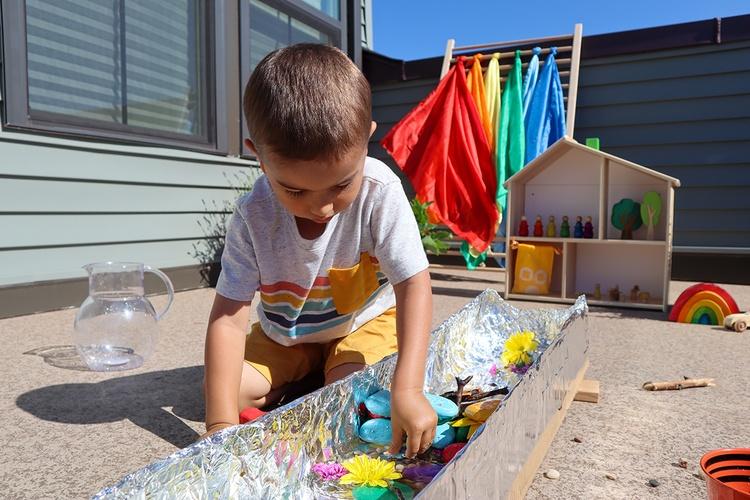
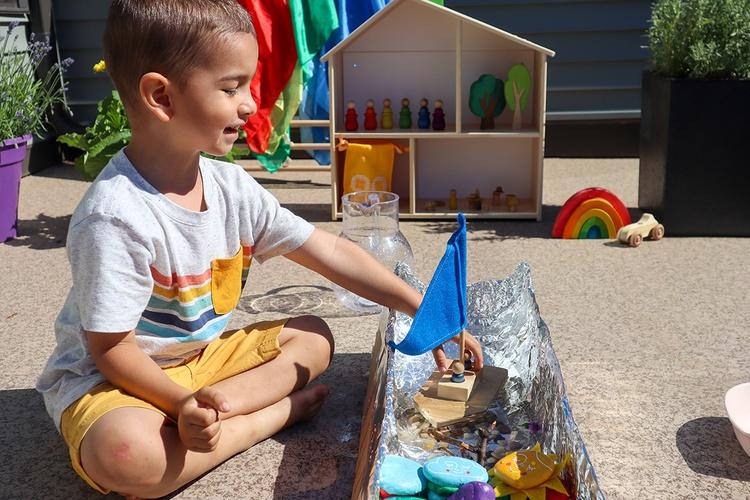
Observe some more! Look at the flow of the river and continue to ask your child questions such as, "Is the water moving or is it still like a pond? When it moves, do you notice if it pushes any little rocks or dirt?" Add a few flowers or DIY boats into the dam to better illustrate how the water moves or stops.
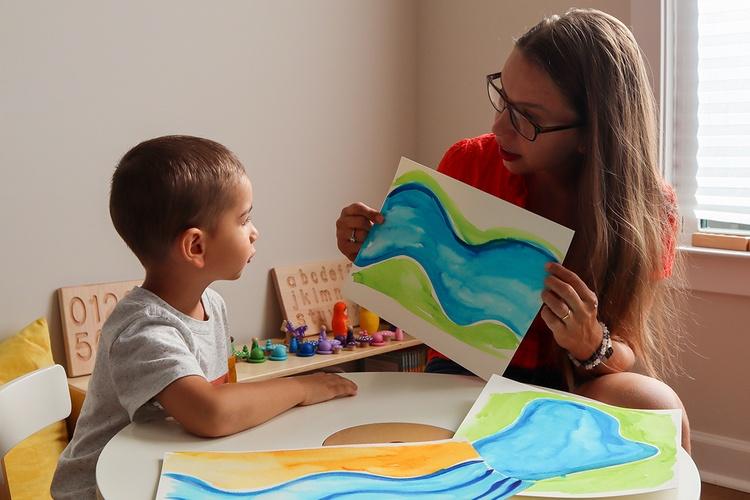
Let's share! Draw a picture of the river and how the obstacles changed the river flow. Send it to your friends and family to invite them to create one too. Did they notice the same things as your child? How did they change or stop the water? Compare the different river models — how was each person’s river the same or different?
Explore Further
Explore waterways in your neighborhood! Plan a trip to a river or creek in your community and search for impediments to the flow of water. Most likely you will come across accumulations of trees, branches or rocks. Make observations about it and compare it to what you did with the model river. Similarly, your child can even pay attention to the gutter systems of their street and rooftop when it rains. Have fun!
We hope you had fun together! Snap a photo of you and your child doing the activity and share it with us on Facebook, Instagram or Twitter. We’d love to see how it turned out!
Want more “Elinor Wonders Why” activities? Check out the Falling for Fun: Drop and Investigate experiment and the Observe With a DIY Magnifying Glass activity to continue the fun!
 Author:
  Science