

Friction Racing


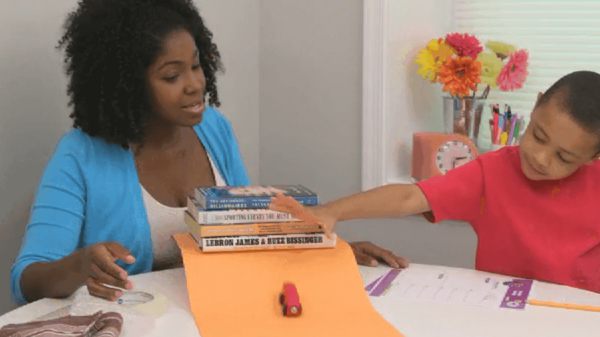
Friction is a natural, unseen force that slows things down. However, not all surfaces will slow objects at the same rate. If you roll a ball across gravel or a rough sidewalk, it will slow down sooner than if you roll it across a smooth floor or ice. In this activity, your child will build a ramp and then use a toy car to test which of two surfaces has the least amount of resistance or friction.
While You Play
Scientists conduct investigations and experiments to determine if a hypothesis or prediction is correct. In this experiment, your child will explore friction, the resistance that one surface or object encounters when move over another. Your child will test whether a smoother surface has less friction than a rough surface. First, your child will use cardboard or poster board to make a ramp that is relatively smooth. After testing the smooth ramp, your child will then test at least one other surface to determine if it has more or less friction than the original surface. With these observations, your child can determine whether a hypothesis was supported. As you complete this activity, ask your child to talk about each surface and predict how far the car will travel.
Materials
Directions
Before you begin, explain to your child you’ll be exploring friction. Talk about friction and what it means. Then feel each surface and ask your child to make a prediction: Will a toy car will travel farther on a rough or smooth surface?
Print out the Friction Racing Data Chart. Stack several books on top of each other. Place one end of a piece of the smooth cardboard or poster board across the the top of the book pile. Stack books on top of that edge so that the cardboard is held securely in place. Make a crease in the cardboard at the edge of the book pile so that the cardboard now forms an inclined plane (ramp) that reaches to the floor.
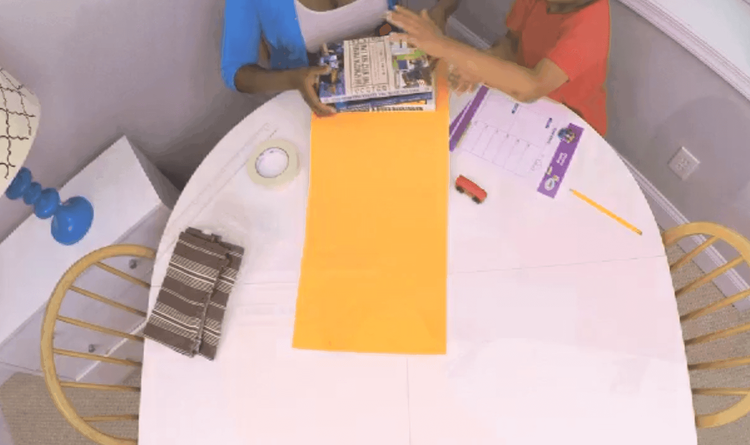
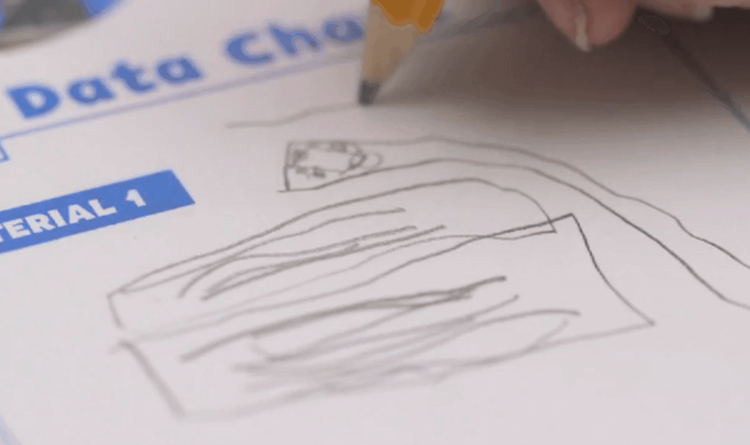
Draw a picture of your cardboard ramp in the materials column on your data chart, then make a prediction: how far does your child think the toy car will travel? Consider whether the cardboard surface is rough or smooth.
At the top of the ramp, release a toy car so that it travels down the ramp and potentially continues across the floor.
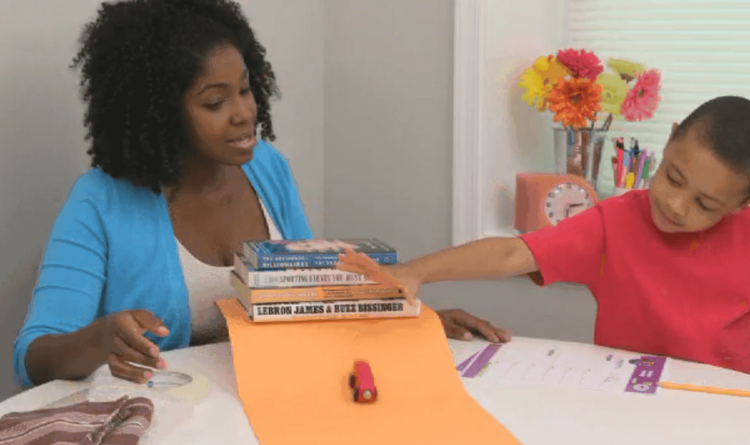
Using the ruler or a nonstandard measuring device, measure how far the car traveled from the top of the ramp to where it stopped. Record your measurement in the second column of your data sheet.
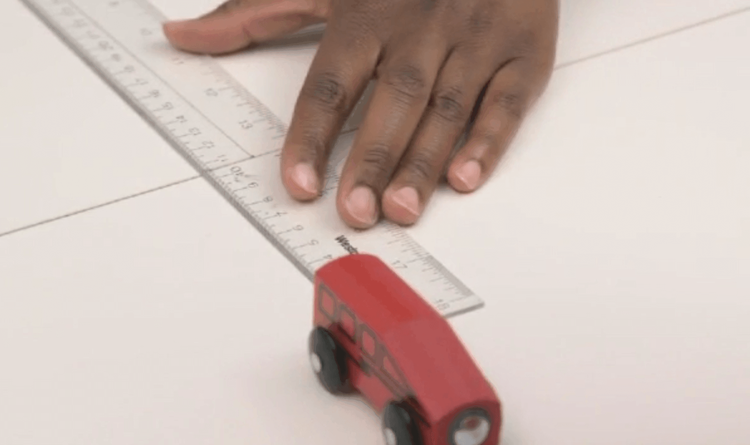
Repeat the experiment twice more on the cardboard, releasing the car at the same point each time. Record your results on your chart.
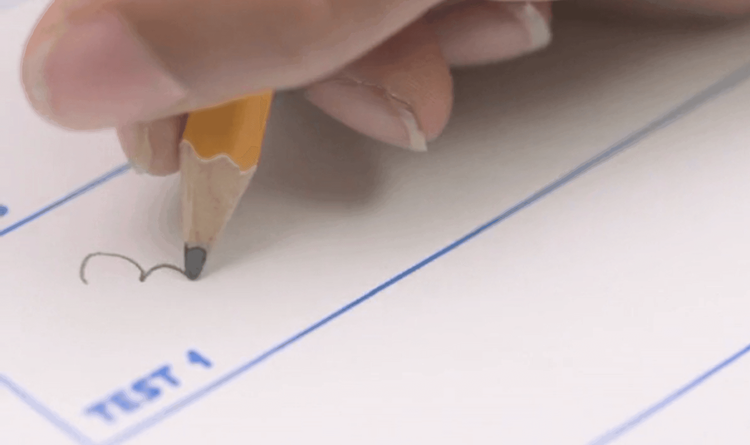
Use the masking tape to attach another type of surface, such as the dish towel, to the surface of the cardboard. Be sure to cover any areas where the car will travel. Is this surface rough or smooth? Draw a picture of the ramp as it looks now in the second part of the materials column on your data chart.
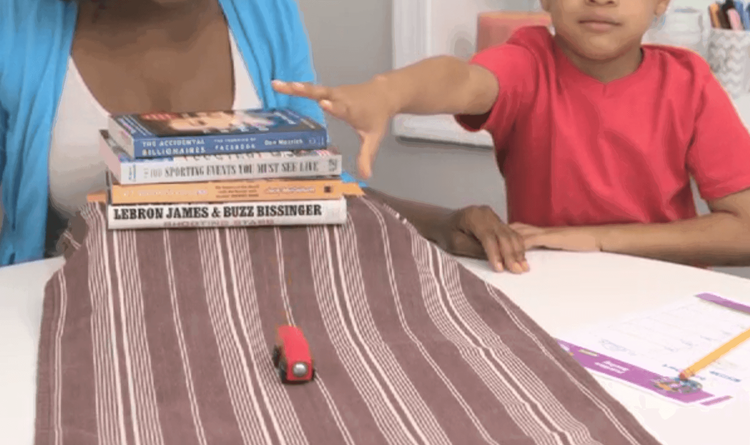
Perform the experiment three times on this new surface and record your results. You should now have raced the car down the ramp six times (three times on the plain cardboard and three times on your added material).
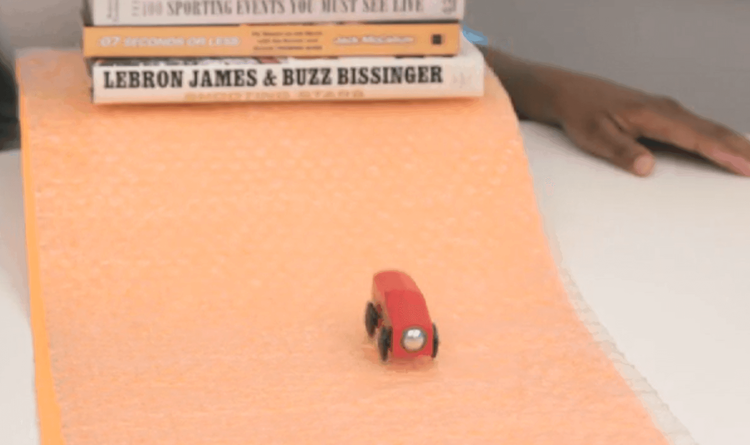
Compare your results. Did the car always go farther on one surface? Did it go a lot farther or only a little? Did the car go about the same distance on both surfaces? Why did it travel more or less?
Draw a conclusion. Since a car will likely go farther on a surface with less friction, based on your findings, which surface that you tested do you think has the least amount of friction?
 Science