

Grip Like a Gecko


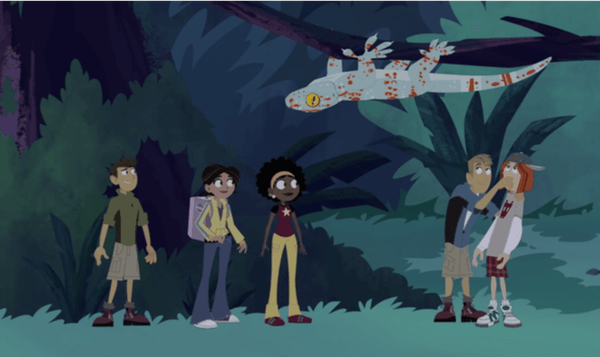
In 2002, scientists discovered that geckos use electrostatic forces in order to keep a firm grip when climbing on smooth walls and across ceilings. Conduct the balloon test with your child to explore electrostatic forces with this balloon test.
Before You Play
Explain to your child that each gecko toe has tiny hairs that branch out into hundreds of tiny endings. Each branch of the hair, called setae, attaches to the surface by a weak electrostatic attraction. A tokay gecko has 6.5 million setae that each branch into hundreds of ends— together these create enough electrostatic attraction to support the weight of two human adults! Gecko toes can detach in milliseconds, and don’t have any residue. Watch Gecko Power to learn more.
Materials
Directions
Have your child blow up the balloon and tie it off.
Your child should rub the balloon on her hair for 10 seconds (mark this time in the “Time Charged” column)
Have your child move to the wall or flat surface immediately after and try to suspend their balloon by placing it gently on the wall.
Measure the length of time the balloon stays suspended against the wall.
Continue the experiment varying the amount of time the balloons are charged by rubbing against the head.
Another option is to vary the surface to which the balloon is suspended. Try incorporating glass, a wall, a blackboard, a flat piece of wood. Encourage your child to seek out other options for the experiment and be sure to record all the results.
At the end discuss the results of the experiment. Ask your child:
- What variables resulted in the longest suspension of a balloon?
- Did the charge time make a different in the suspension time of the balloon?
- Did different surfaces make a difference in how well the balloon suspended?
 Science