
Popcorn Science: Which Popped More?


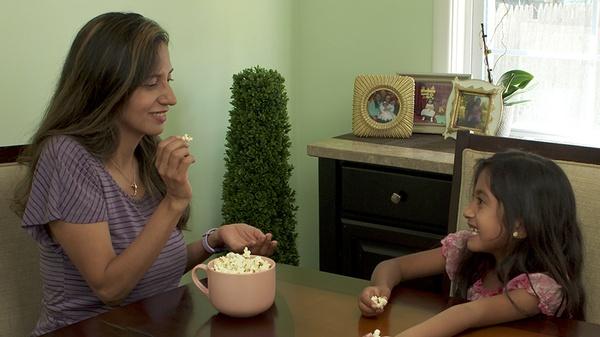
Ruff loves kicking back and watching a movie with a big bowl of popcorn. But he hates when there are unpopped kernels at the bottom of the bowl! He wants to know the best way to make delicious, fluffy popcorn. But, he’s also wondering how to make popcorn with the fewest unpopped kernels.
In this experiment, dig into popcorn with your child by preparing the kernels differently, observing and comparing the unique results, and drawing a conclusion about the best preparation method. While you play, ask your child, “What makes popcorn pop? Can you unpop popcorn?”
Materials
Directions
Find out what your child already knows about popcorn. Ask your child, "What makes popcorn pop?" Using the popcorn diagram, explain that popcorn kernels are dried pieces of corn. Each kernel has a tiny drop of water inside. When you heat up the kernel, the water inside gets hot, turns to steam, and — POP! — the kernel explodes and makes popcorn!
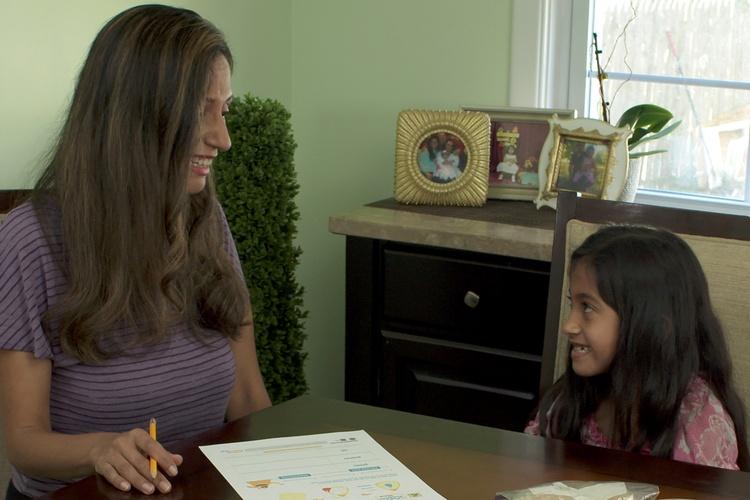
Invite your child to cook popcorn with you in 3 different ways! First, put 20 popcorn kernels each in 3 different bowls. Make sure each bowl has an equal number of kernels.
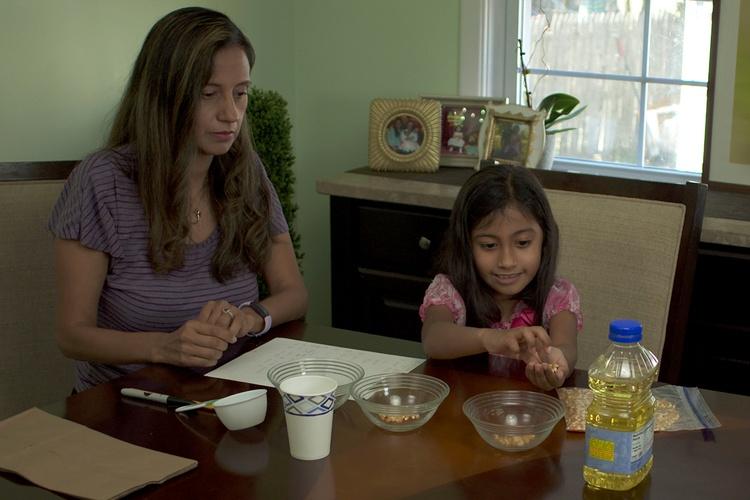
Add ½ cup of water to one bowl and ½ cup of oil to another bowl. Leave one bowl of popcorn kernels plain.
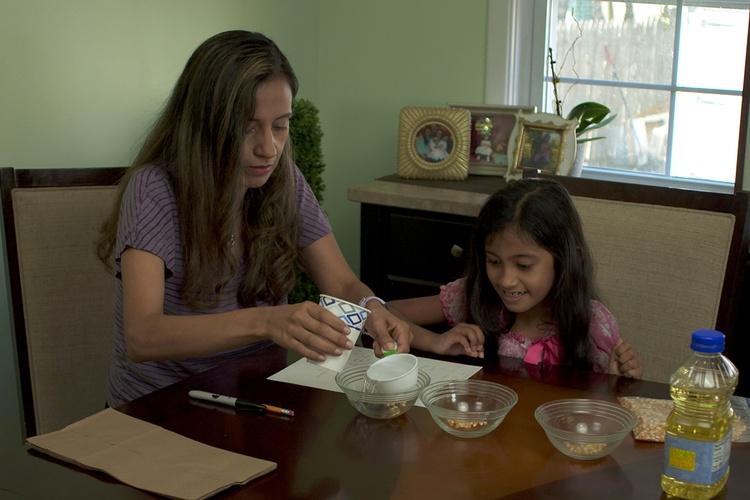
Let the kernels soak for 1 hour.
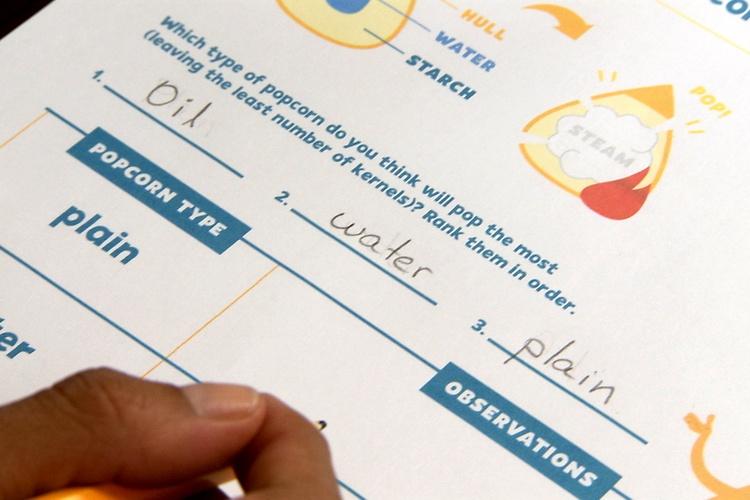
As you wait for the popcorn kernels to soak, talk to your child about what you both think might happen. Ask your child, "Which type of popcorn will have the most popped kernels? Which will taste the best?" Write down your predictions on the observation chart.
After the kernels have soaked for one hour, put the popcorn kernels into three separate brown paper bags labeled “plain,” “oil” and “water." Fold the tops of the bags and microwave each separately for three minutes.
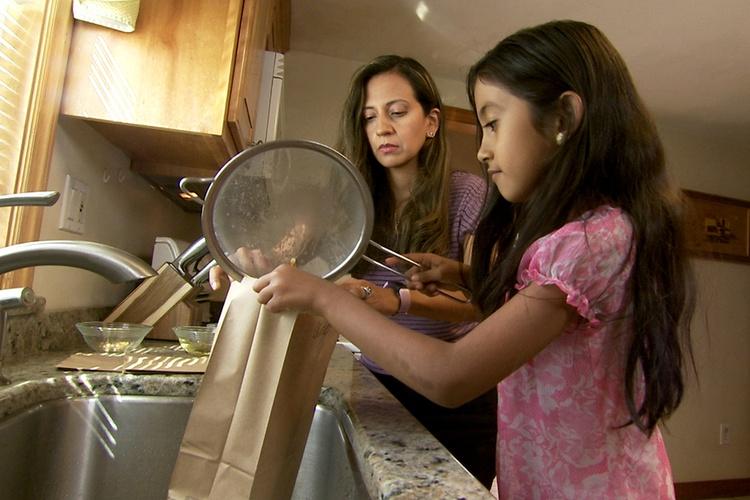
Pour each bag of cooked popcorn into a separate glass bowl. It might be helpful to label the jars “water,” “oil,” and “plain” so that you can tell them apart as you make observations. Be careful! The popcorn may be hot!
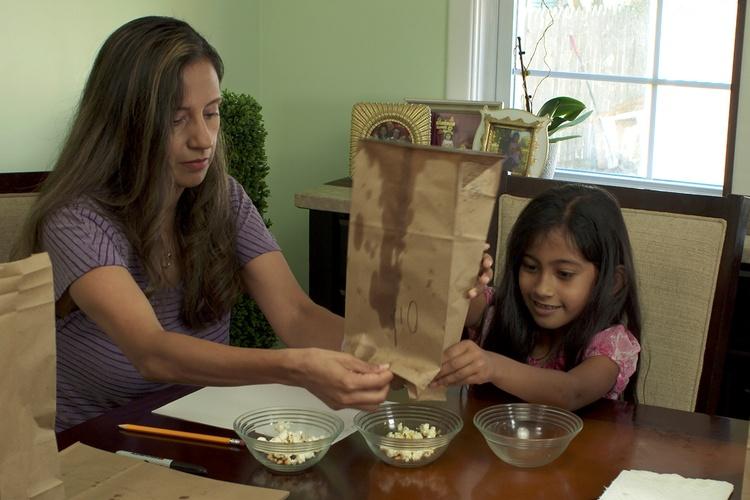
Observe the popcorn in the bowls and ask your child questions about what they notice. Count how many kernels popped. Leave the unpopped kernels in the bowls. Record your observations as you count.
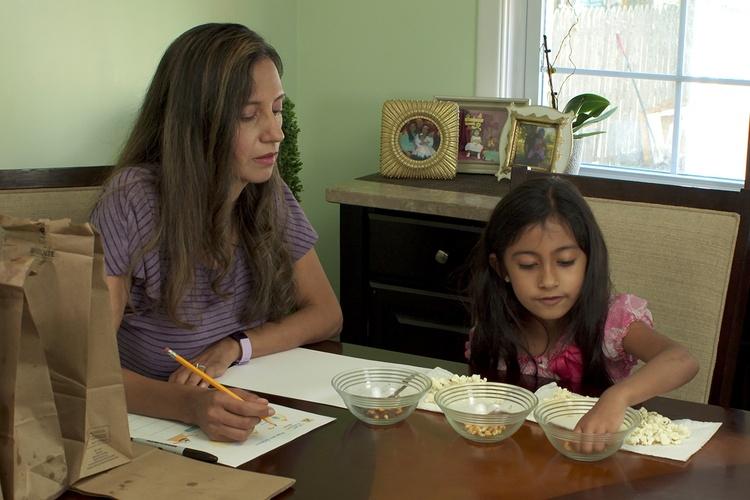
Use the data in your chart to draw a conclusion about which preparation method works best. Does it match your ranking? Ask your child, “What did we learn about making popcorn today?”
Explore Further
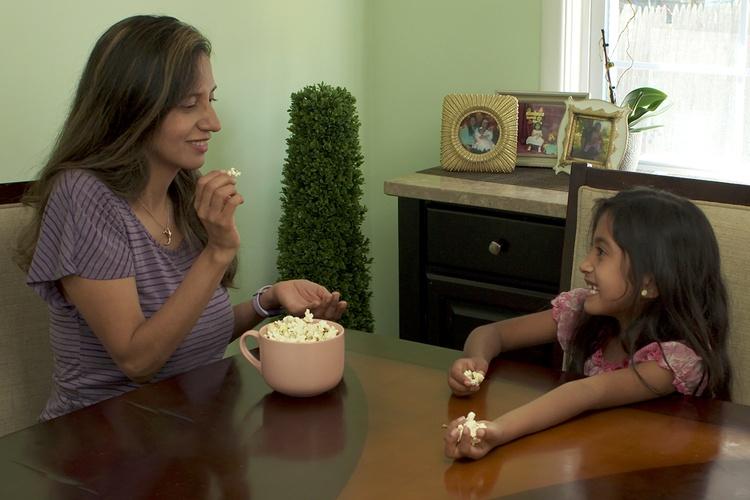
Compare some of the unpopped kernels to the popped kernels. Talk about how food can change when we cook it — for example, soft eggs can become hard, or solid butter can become liquid. As Ruff Ruffman explores in his kitchen, some of these changes are reversible, and some are not. Ask your child, “Is the popped popcorn change reversible?”
 Author:
  Science