
Practice Mindfulness With Belly Breathing


During stressful or intense emotional moments, children may not have the coping skills to calm themselves. Diaphragmatic breathing, also known as belly breathing, is a calming exercise that both children and parents can practice to relax and feel grounded, and one that children as young as three can practice.
What is Belly Breathing?
Diaphragmatic, or belly breathing, is natural to all mammals (including humans). It’s a state of deep breathing that’s controlled by a large muscle in our abdomen called the diaphragm.
When you take air in through your nose, it travels into your lungs. If you take a shallow breath, only the chest cavity expands. Breathing deeply involves more of your body — the diaphragm contracts and both the belly and chest cavity expand. Belly breathing and the “fight or flight” response to stress or anxiety (two feelings we all experience) can’t occur at the same time. When our bodies switch into “fight or flight” mode, we engage in shallow breathing. We’re ready for battle. On the other hand, belly breathing reduces our heart rate and triggers a relaxation response. It slows us down.
Directions
It’s best to start practicing belly breathing when you and your child are already relaxed. This way, your child can build awareness of what being calm feels like. Once your child has the feeling of belly breathing mastered (have her practice it daily), she can apply it to stressful moments.
Start by having your child breathe normally. Ask if your child notices anything about it. What parts of the body move as she breathes? What does it feel like?
Now have your child lie on her back, relax her muscles and place her hands on her belly.
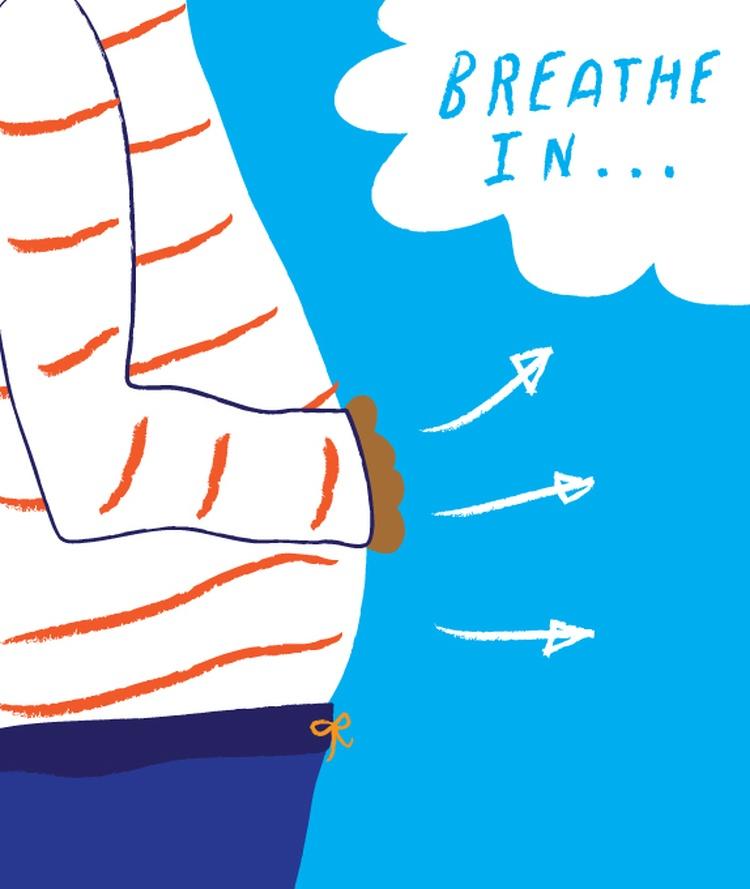
With her mouth closed, have her breathe in for four seconds or until she feels her whole chest fill with air, all the way down to her belly.
Have your child hold in the air for four seconds.
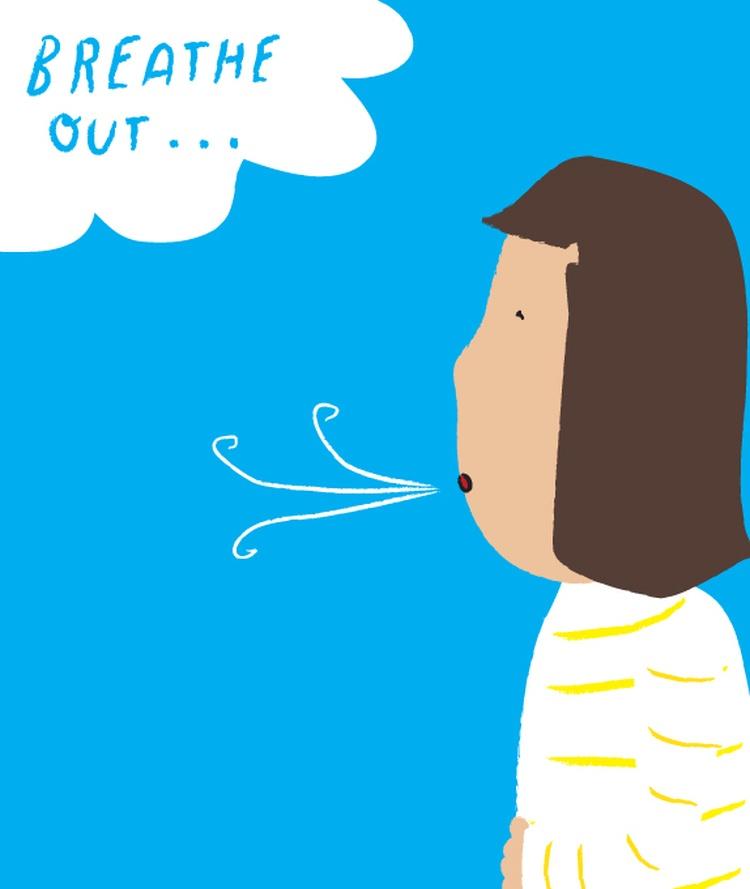
Have your child slowly blow the air out until it’s all gone. If your child is having difficulty breathing slowly, have her exhale through a straw. You can tell your child to pretend she’s snorkeling.
Repeat until the body feels relaxed. Ask your child if they notice anything different from before. What does it feel like?
Include belly breathing as a regular part of your child’s routine, such as bedtime. With practice, it can become a familiar strategy that your child can use at any age.
Jennifer Cooper is the blogger behind Classic-Play.com, an online resource for creative families. Her favorite pastimes include: dancing around her living room, watching the Pink Panther with her kids and daydreaming. She lives in Baltimore, MD with her husband, photographer Dave Cooper, and two children.
 Emotions & Self-Awareness
 Social Skills
 Character
- Activity Type
- Craft
- Topics