

See Sound Waves


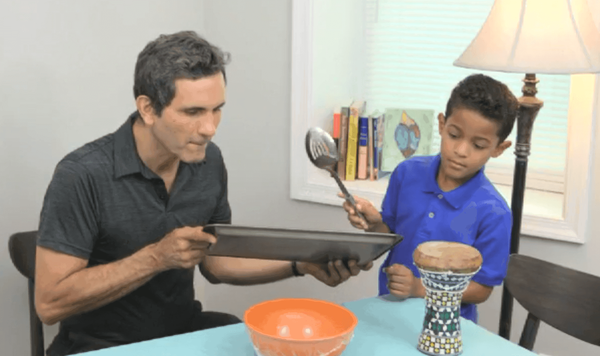
We know we can hear sound made by musical instruments, radios, car horns and voices, but did you know there is also a way we can “see” sound? Sound is a vibration, or wave, that travels through the air. Sound waves are invisible to our eyes; unless we find a way to make the sound waves move something that we can see. In this activity, your child will use different noise-making objects to cause sound waves and make sand visibly move.
Materials
Directions
Before you try this experiment on your own, watch the Ready Jet Go video “Sound Waves” to see astronaut Amy Mainzer demonstrate one way to see sound waves. After watching, talk with your child about what you observed. Which noisemaking objects made the sand move more or jump higher? What did the sand look like when it moved? When did the sand start and stop moving? Are there other noisemaking objects that you think will make the sand move more or jump higher?
Wrap a bowl with the plastic kitchen wrap. Be sure to create a tight cover across the top of the bowl as if you were creating a drum.
Gently sprinkle about ¼ teaspoon of sand onto the kitchen wrap.
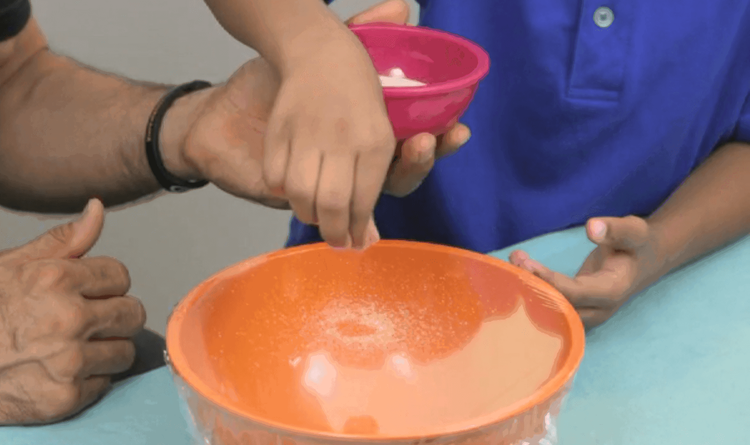
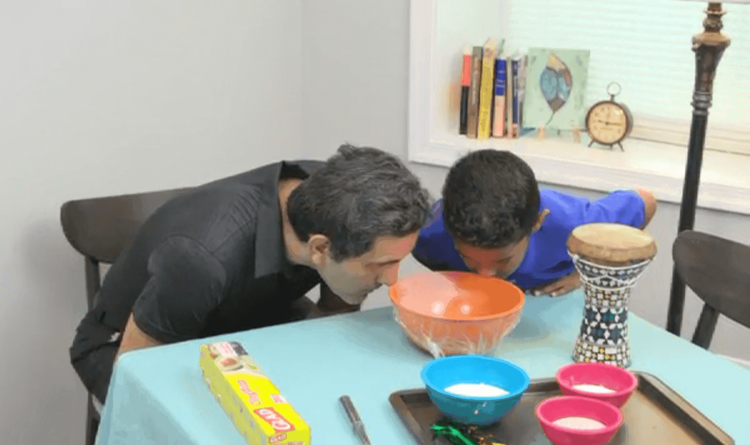
Put your mouth near, but not on, the bowl. Make humming noises. Does the sand move?
Try making noise with other items such as a banging on a metal baking pan with a spoon. Remember to place the object very near to, but not touching the bowl. Does the sand move?
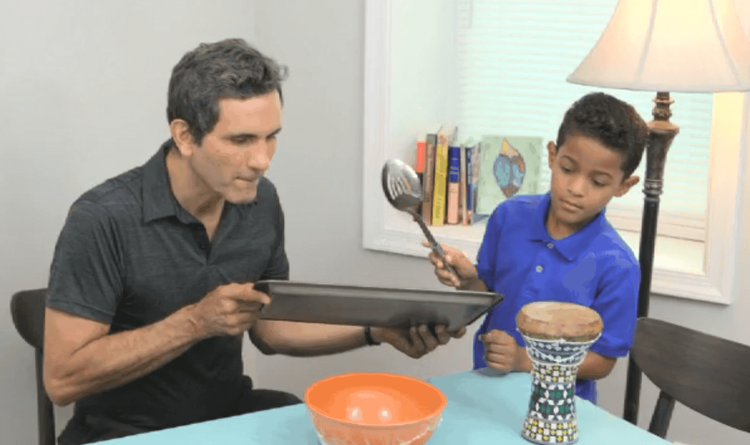
Try the experiment with various noise making objects from around your house such as a noise maker/party blower or a musical instrument.
 Science