

Waste Audit


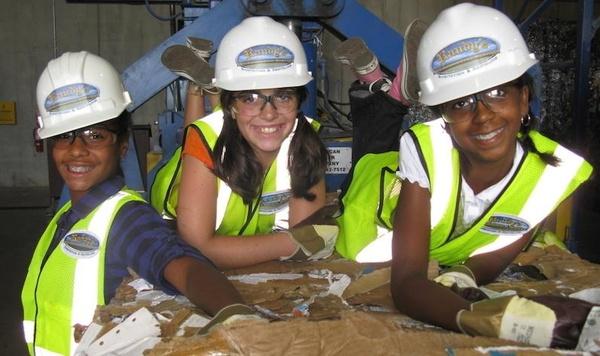
Your child can learn more about recycling by sorting a day's worth of trash from your home into different categories and then graphing what percentage can be recycled vs. true trash.
Sort a day's worth of trash from your home into different classes and graph what percentage can be recycled vs. true trash to make greener choices.
Materials
Directions
Your challenge is to conduct a waste audit with your kids and use your findings to make a plan for reducing the amount of trash in your home. Before you begin, get a copy of the local recycling guidelines so you know what should and should not be in the trash.
Gather one day’s worth of trash from your home and empty it onto a tarp. Begin sorting (or classifying) items into piles (cardboard, food waste, plastics, etc.).
Visually eye the volume of each type of trash. If the total amount collected is 100%, you can guesstimate the percent of each type of waste. Graph it to see which type of waste makes up most of the trash.
Clean up! Return non-recyclables to garbage cans, sort recyclables into recycling bins, and compost perishables, if possible. Don’t forget to wash your hands!
Did you find any items that could have been recycled, composted, or simply reused instead of thrown away? Brainstorm ideas to reduce the amount of waste in your home: make a poster of what can and cannot be recycled and hang it up in your kitchen; choose products with the least amount of packaging; start a compost bin; or opt for reusable containers to pack your lunch. Be creative!
 Science