
3 Questions for Teaching Young Kids About Money


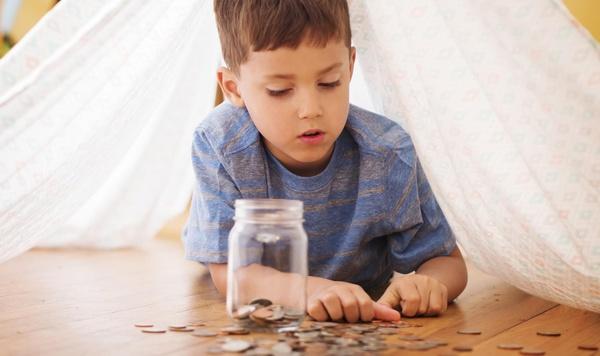
“Look mom, I found a penny!” Any time one of my kids finds a forgotten penny lying around, it’s a pretty big deal. After they get a chance to admire their new treasure, I encourage them to put it in their piggy bank.
Learning the basics of money in an age-appropriate way is important for kids, so our family has been trying to include it in daily life for our preschoolers. Just like learning to add and subtract or telling time, between the ages of 3 to 6, money is another basic math concept they can start to understand. By the time a child is 5 years old, the Consumer Finance Bureau recommends children start learning:
Why you need money
How you earn money
Waiting for things you want
The difference between needs and wants
I hope to guide my kids toward healthy habits with money, learning both from my examples and even my mistakes. Having open, regular conversations now helps our children grow in their understanding of money for the future.
Here are three questions to think about when teaching kids about money.
1 What is the value of a coin or bill?
A good place to start is by naming what each coin and bill is and then talk about how many dollars and cents each item represents. Add the visual of 10 pennies next to a dime or five nickels next to a quarter. It may take awhile to understand the different values, but continued familiarity makes it easier to grasp over time.
As kids get older, value can be assigned more concretely. Throughout the show “Odd Squad,'' characters are learning how to use money in its various forms. When throwing a budget party, Agent Otis and Agent Olympia have to trade a dollar for four quarters in order for them to split the cost of something. Try letting your kids exchange their piggy bank change for different but equal value coins and dollar bills. Using actual money allows kids to see, touch, and feel it. This helps them better connect with money carrying value, which can be hard to visualize otherwise.
When my son wanted a basketball to play with at the park, we got out his piggy bank of coins and dollar bills from various chores and past gifts. He spread it all out on the table so we could count it up together. We stacked quarters and grouped pennies, nickels and dimes to make it easier to add up. He was so excited once he had enough to buy the basketball, and now he’s having fun saving for something else.
2 What do we use money for?
Why do we need money? What’s it used for? How do we get it? These are all good questions to talk about with your kids.
“One thing about talking with preschoolers about money is, at that age, you really have so much of your child’s attention and enthusiasm,” said Tracy Frizzell, Executive Director of the Economic Awareness Council in Chicago. “A lot of the key life skills that center around money — delayed gratification, setting goals, and working to achieve them — are key learning points developmentally for kids at that age.”
One way to explain the different ways to use money is by having three jars: one for spending, one for saving, and one for sharing:
Spending can be used for small items and things wanted in the short-term.
In the savings jar, Frizzell recommends helping your child save for something reachable they want, but is also something they can work for (teaching delayed gratification).
The sharing jar is used to give something to others, be it a birthday present for a friend or a donation to a charity.
3 What is a budget?
Whether choosing what to wear, what to eat, or what to play, our days are filled with making decisions. In “Sesame Street,” Elmo gets to decide how to spend one dollar, but needs to choose between one mango or two apples. After talking with Frizzell, I tried giving my kids similar choices when going grocery shopping by letting them pick which cereal to buy.
As kids get older, this decision-making process with money is called a budget. A budget is how much money you have to spend. In “Odd Squad,” Agent Otis and Agent Olympia learn that choosing the more expensive option changed how much money was left over for the remainder of their training budget when preparing for a mission. Buying one thing often means you can’t buy another, regardless of how big your budget is. Frizzell wants parents to remember, “It’s OK to sometimes have to say, ‘We don’t have enough money for X. Here’s all the things we’re doing, and that’s just not in our budget right now.’”
Learning about money is an invaluable life skill for our kids. Even though my kids are still young and have a lot to learn, they love getting a chance to interact with money. Finding fun ways to talk about it and being intentional about creating good habits with money now will pay off in the future, in more ways than one.
 Author: