
3 Ways Kids Can Be Heroes in Real Life


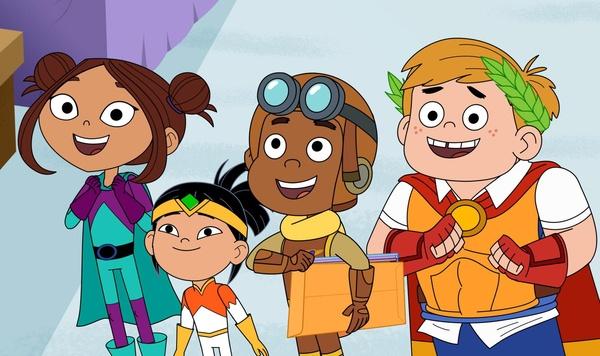
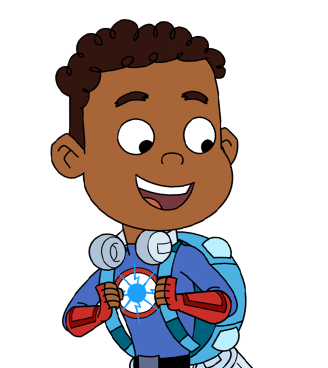
“Sparks’ Crew to the rescue!” We love to watch Lucita Sky, AJ Gadgets, Sara Snap, and Benny Bubbles head out to save the day in “Hero Elementary.” But what does it take to be a hero? And how can you help your child take heroic action?
Humans are social creatures. As grown-ups go about our everyday lives, we teach our children about relationships and cultures. Dr. Roni Ellington, an equity and culture expert who advised “Hero Elementary,” said we have the power to think intentionally about who we want our kids to be. As parents, we can give our children experiences that help them learn to be kind, caring, helpful, and courageous in the world.
Here are three ways your child can be a hero:
1 Heroes work together!
In the episode “First Day of School (Part 2),” our heroes couldn’t catch the baby hamster until they pooled their skills, shared ideas, and worked together. Teamwork is valuable for children. Felicia Orozco, a former elementary teacher who helped develop “Hero Elementary,” said, “Children build teamwork and collaboration skills over time. Children need to know that they can be helpers and add value to a group. When children work together, they have a sense of belonging and build community.”
Teamwork often happens when children play together. While building a tower, children figure out how to share the blocks. They talk about how to build. They take turns and direct each other naturally. And teamwork often happens at home, when children work with family members to do daily tasks.
You can help your child build teamwork and collaboration skills by encouraging them to work and play with friends and family members. Help your child learn to share toys, take turns, share their ideas, and listen to what others have to say.
2 Heroes keep trying!
In the episode “First Day of School (Part 1),” it was hard for Sparks’ Crew to catch AJ’s backpack. They tried chasing the backpack through the air, running after the backpack, and bouncing the backpack before they finally came up with a plan that worked.
Perseverance — continuing to try even when things are difficult — is key to creativity and problem solving. Dr. Armando Orduña, a “Hero Elementary” trainer and advisor, said, “It was perseverance, more than genius, that perfected the rocket to launch the first person into space. Behind every advancement in engineering, sciences, and the arts, there is perseverance.”
You can help your child learn to keep trying. Give them time when they are trying something new; don’t be too quick to step in. Give encouragement rather than praise to help children gain the confidence to keep trying when something is hard. For example, describe what your child accomplished: “I noticed you set the table all by yourself.” And acknowledge your child’s efforts: “You certainly worked hard on that drawing!”
3 Heroes help their community!
There are many ways to help the community. In “First Day of School (Part 2),” Sparks’ Crew helped Citytown by catching the baby hamster before she caused any more trouble. Then they helped the baby hamster by adopting her to be their super class pet!
As adults, we sometimes forget that even young children can make a difference in their community. By helping their community, children build a sense of belonging and discover that they are capable of doing valuable things. Connecting with their community can reduce children’s distress, develop a positive sense of who they are, and help promote positive behavior.
Dr. Ellington encourages parents to be intentional about their child’s community involvement. “What do you want your kids to learn from helping their community?” What is the impact on your child?” There are many ways to contribute to the community. Dr. Ellington’s students who succeed in math and science go into these fields with the intention to make a difference for their communities. And they do make a difference!
How many ways can you and your child be heroes? You can be heroes in your family, in your neighborhood, and beyond.
 Author:
The Sparks' Crew use their superpowers of science to help investigate, observe, and figure out solutions.