

7 Activities That Help Kids Communicate With Others


Having a conversation and communicating effectively can sometimes be tough for kids — and adults, too! It's important to think about what words to use for each situation. You must consider who you are talking to and what the other person is doing and saying. Plus, you need to balance both talking and listening. It's a lot to keep track of!
Thankfully, the show "Tiny Time Travel" has fun examples to help kids learn how to communicate in different situations. In this show, best friends Tony and Tyler use their time machine to go back in time — just a tiny bit — so they can fix problems by helping people communicate better.
Playful activities, along with watching “Tiny Time Travel,” can help your child communicate with other people. Here are seven communication activities kids can explore with friends and family.
1 Charades
Facial expressions and body language are ways to communicate ideas. They are also clues to a person’s thoughts and feelings.
Charades is a fun game that helps kids figure out what a person is doing, thinking, and feeling by looking at face and body movements. Try to guess how a person feels based on whether they are smiling, frowning, or laughing.
To help kids think about body language in real conversations, pause different parts of the “Tennis Talk” episode. When Janelle hogs the ball and Danielle frowns, you can ask your child, “How do you think Danielle feels? I think she feels sad.” Or say, “Did you see Danielle turn her head away? She looked mad!”
2 Twenty questions
Questions are important for learning more information. They can help people understand each other’s thoughts and feelings.
In “Dance Contest,” Cammy had an idea for a dance move, but Evalynn was upset about it. They could have understood why if they had asked each other more questions. Later, the girls learn that gestures like head patting can be positive or offensive, depending on a person’s culture.
Twenty Questions is a fun game that helps kids practice asking questions to learn more information. Think of an object, and have your child ask yes-or-no questions until they figure it out.
3 Simon Says
The right volume and tone of voice depends on where you are and who you talk to. In a library, you should use a quiet voice to talk to a teacher. But when you root for friends at a basketball game, clapping and shouting are great ways to show excitement.
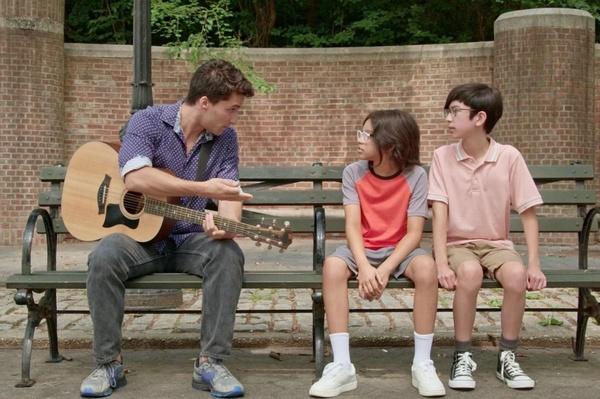
In the “Guillermo’s Guitar” episode, Tony and Tyler learn when to use their loud and quiet voices. Cheering loudly can be distracting, but being too quiet might seem unsupportive during a performance.
Kids can practice changing the tone of their voice by turning Simon Says into a communication game. If Simon says, “Shout hello while jumping!” or “Whisper good night while tiptoeing,” try to follow those rules.
4 Role-play
In the “Emily and Parrots” episode, the kids learn to be honest without hurting someone’s feelings. The advice, “Try telling the truth in a different way,” is one kids can practice with family and friends — or even toys.
Try role-playing with stuffed animals. Each stuffed animal can practice communicating with different words and tones of voice. The stuffed animals can repeat or summarize what they heard. They can ask questions to make sure they understand each other.
Role-playing is also a great way to practice explaining topics at different learning levels. For example, use simple words when someone looks confused.
5 Art and Music
Drawing and writing are creative ways to communicate. For example, if you want to say “I’m sorry,” express your feelings by making a card or drawing a picture. Older children can tell someone they care by writing a letter.
Singing is a helpful way to communicate, too. In the “Welcome to Tiny Time Travel” episode, Tony and Tyler use music to explain how the time machine works. Invite kids to make up a song to express their thoughts and ideas.
6 Multiple Meanings
In “Food Fail,” Tony and Tyler learn that words can sound the same but mean different things. This can be confusing!
Words like bat, bark, and watch have more than one meaning. It's like a puzzle! How can you help someone know which meaning you are trying to communicate? What other information should you share to help them understand?
For example, "bat" could mean a flying animal or something you use to play baseball. "Bark" might mean the outside of a tree or the sound a dog makes. And “watch” could mean looking at something or a clock on your wrist. Adding more context makes the meaning more clear.
Turn this into a game by thinking of more words with different meanings.
7 Telephone
The telephone game is a fun way to practice following directions and taking turns. Here’s how to play while exploring communication skills:
Gather your friends in a circle. The more, the merrier!
Whisper a sentence to the person next to you.
The person you whispered to then whispers what they heard to the person next to them, and so on, until the message has been whispered to everyone.
The last person shares what they heard.
Sometimes, the message gets mixed up because someone didn’t hear or repeat it correctly. Kids might also discover that complicated messages are harder to pass along compared to simple, short messages.
Remember that learning is lifelong.
Talking and listening can be tricky, no matter your age! Adults need help with sharing their thoughts and feelings, just like kids. These communication activities can help everyone practice.
As Tony and Tyler point out, the world would be a better place if people tried to understand each other. Learning how to communicate is a lifelong journey.
Watch the new series, “Tiny Time Travel,” streaming free on PBS KIDS!
 Author:
Time travel with Tony and Tyler as they learn how to communicate and solve social problems.