
9 Things to Say During Potty Training


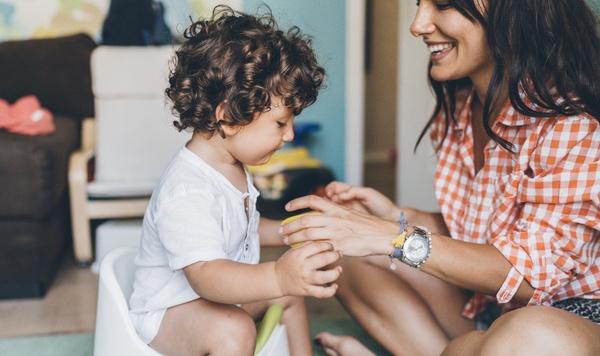
Congrats! You’ve made it to potty training! Potty training is a major milestone for both children and adults, and knowing what to say during this journey is important. As a clinical psychologist with an expertise in child development and positive parenting, and a mom of two young children, I know how daunting potty training can be! Luckily it doesn’t have to be this way. Like any other milestone our children will face, potty training can be embraced and celebrated.
One way to make potty training a little easier is to focus on the language you use during this process. As a parent or caregiver, your language is important as it influences your child’s perception of their body and the potty process. Your primary role is to empower and appeal to your child’s healthy desire for independence — without starting a power struggle or causing feelings of shame or failure. You create the structure and routine and then your child decides what they do with their body.
To make the process easier for both you and your child, here are some recommendations on what to say during potty training.
- “It’s time to go potty.” While your child decides if they will use the potty, it’s up to you to provide the structure. Your child is likely to respond with a simple, “No” if you ask them, “Do you need to go potty?” Instead, set yourself up for success by telling them that it’s time to sit on the potty.
- “Would you like to go potty in two minutes or five minutes?” Young children have a healthy need for control and independence. Avoid power struggles by giving your child choices about when to go potty. Pick two choices you are equally fine with (2 minutes or 5 minutes, for example), and then allow them to choose. Giving your child a sense of control over when and where they potty can be extremely empowering.
- “We’re about to eat dinner. Let’s go potty before we eat.” Transitions are your friend when potty training. Teach your child to sit on the potty before and after transitions early on. You can also use when/then statements to communicate what you want and what your child can expect after potty time. For instance, “When you sit on the potty, then we can go play at the park!”
- “Be sure to go to the potty when you get the potty feeling.” Help your child recognize their body’s cues by giving them a simple reminder to sit on the potty when they need to go. Have a discussion with your child about bodily sensations associated with needing to go. Recognizing your child’s cues (such as the “potty dance”) and pointing out the cues in the moment are also great ways to teach your child how to associate bodily sensations with the need to go.
- “Be sure to keep your underwear (or character) dry. They like feeling dry and comfortable.” When your child starts to wear underwear, you can encourage them to keep their favorite characters dry and comfortable. This will help empower your child and give them a sense of autonomy and control if they feel they’re responsible for taking care of their favorite characters.
- “I’m so proud of you for keeping (character on underwear) dry!” Shower your child with praise during this process. Be as specific as possible when you compliment your child so that they can learn exactly what behaviors are appropriate and encouraged.
- “You’re such a big kid! You’re going potty just like I do!” As mentioned above, young children tend to have a healthy need for independence and control. Praising them for being a “big kid” is a great way to appeal to their desire for greater autonomy. Your child also loves imitating you, so acknowledging the ways in which they are behaving just like you can be extremely encouraging. Keep in mind, however, that this form of praise might not work for every child. Saying they are a big kid makes some children anxious, because they want to continue being treated like a baby. Always keep your unique child in mind.
- “Thanks for letting me know you had an accident. You are working so hard to learn to go potty. Let’s clean you up and try again later.” As messy as they are, accidents are inevitable and a natural part of the process. They are actually the best way your child will learn how to go on the potty, because it provides them with the natural consequences of being wet and uncomfortable. When accidents happen, focus on staying positive and getting your child involved in the clean-up process.
- “Let me know when you have to go potty.” As your child becomes more aware of their bodily cues and sensations and begins to initiate potty time, tell them to let you know when they need to go, especially when out in public. This again empowers your child and encourages greater potty independence.
Remember, your language and overall approach during potty training are essential to potty training success. Try to keep your language clear, consistent, and positive throughout this process.
Want to learn more about the signs of potty training readiness? Snag Dr. Jazmine McCoy’s checklist of the common developmental signs your child may be ready to begin potty training, as well as the 9 handy phrases to use while potty training! Click HERE to download the checklists.
Also, check out her new book, The First-Time Parent’s Guide to Potty Training, as well as her Instagram and YouTube, for more support and guidance along your potty training journey.
 Author: