



Connecting Children to Their Neighborhoods: Deepening a Sense of Belonging


Understanding the places we live and the people we live with are important to our sense of belonging. For children, this begins with having strong family connections. These secure and loving relationships are key to social, emotional, physical, and cognitive growth. A positive and healthy sense of belonging helps to shape who children are and who they can become. From here, children can connect more readily to extended families and friends, cultural groups, neighborhoods, and communities.
Meeting and getting to know the people in their neighborhood can help children feel that their community is a safe and friendly place. Seeing themselves reflected in the images they see or within the spaces that welcome them (such as grocery stores, playgrounds, and doctor’s offices) helps give children a sense of place in the wider world, too.
So, how can we help children connect with their neighborhoods? We can be more intentional about guiding them into, through, and beyond their surroundings.
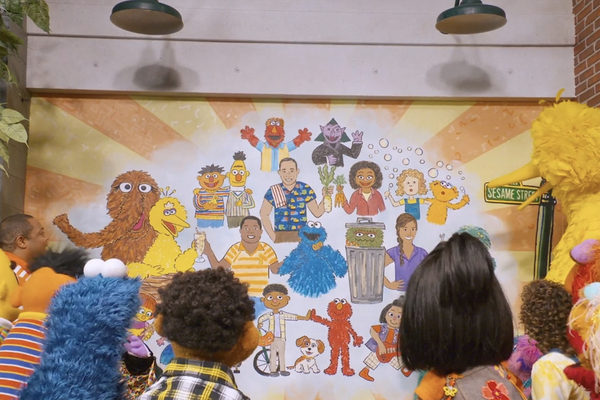
In the Community Mural episode of “Sesame Street,” Grover discovers an empty wall in their neighborhood. Elmo, Abby Caddaby, Tamir, and Ji-Young are excited about everything they could transform the wall into. Trusted neighbor and grown-up Nina, encourages and guides them through the creative process of representing themselves on a new mural. This increases the friends’ confidence as they take learning risks while exploring their different skin colors and interests.
While all communities might not have the opportunity to work together on a shared mural, you can build our children’s sense of belonging and connectedness in lots of easy, everyday ways. Here are a few ideas to get you started:
Start a recipe notebook. Deepen connections to your extended family and friend groups by starting a simple notebook of family recipes. As you make and share meals or dishes together, talk about where the recipe comes from. Perhaps name the dish after a family member, such as “Aunty Carol’s Banana Bread.”
Walk around the block together. As you walk around your neighborhood, pause to point out positive images and places. For example, model saying “hello” or waving to trusted neighbors and pause to introduce yourself to the local firefighters as ways to create a sense of belonging.
Plan a playdate. Invite your child’s friends or the new child in the classroom to a playdate at the community playground. Doing so is a casual way to get to know other families, including those who may not live nearby.
Get involved. Taking your child to vote with you or to volunteer in your community provides your child with opportunities to connect with other people who are working together.
Set aside time for “cozy chats.” Create a space and time to talk openly with your child about fair and unfair incidences and about which places and grown-ups have your trust and why.
Remember: It’s important for your child to feel safe around people in their community. Talk about which places and grown-ups have your trust and why.
When kids feel safe and seen in their communities, and learn that the people in their communities care about them, their sense of belonging grows — and their social, emotional, physical, and cognitive skills do, too!
We may be different on the outside, but as we see on “Sesame Street,” we are the same in at least one way: We can all be kind neighbors who care for one another.
 Author: