Authentically Including Diversity In Hero Elementary


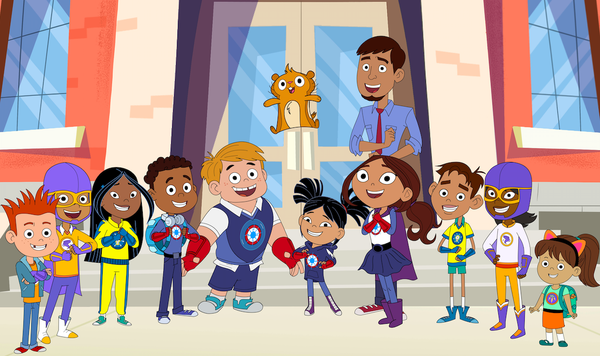
As a BIPOC (Black/Indigenous/Person of Color) parent with biracial kids, it is important for my children to see characters on TV who look like them. As an educational researcher with Hero Elementary, I was able to work with children so their voices could help shape the creation of the characters. Because of this approach, we know that these are not just characters that adults thought kids should see on TV — these are characters that everyday kids saw themselves in and wanted to be friends with on the playground.
There is a lot of research supporting the powerful impact of diverse media representation, especially on children. When children see others that look like themselves in the media, it gives them pride, agency, motivation, and a role model to look up to.
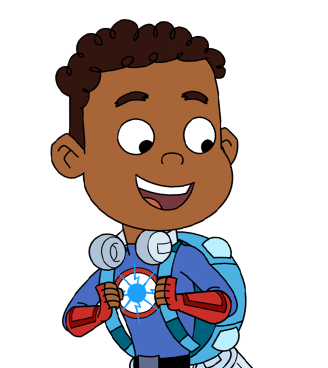
Hero Elementary tightly weaves in diversity, equity, and inclusion throughout its creation. We talked to children, parents, and educators from diverse communities, such as Black, Latinx, Asian, Somali, and American Indian, while we worked on the series. We asked them for their honest feedback of the character names, character art, the story, and the animation. We then incorporated their thoughts and ideas, made changes, and went back to the kids to see if they thought the story was even better. It was a continuous loop that kept the children’s voices heard and included. For example, as we shared our in-progress work and asked kids what they thought about AJ Gadget, one of the main characters, a kindergartener told us “I like his skin color,” and another exclaimed, “He has puffy hair like me!”
We used child-friendly ways to find out children’s feelings and ideas. We also made sure that we captured feedback from children who were shy or did not have the ability to use their words to share their likes and dislikes about the character or the show. Here are some ways we did all that:
- When we were unsure about how children would react to Lucita and Mr. Spark’s speaking Spanish (such as “Excellente!” “Fantastico!”), we showed an episode to groups of Spanish-speaking and non-Spanish speaking children. Some children immediately recognized the Spanish word and proudly shouted “Hey that’s Spanish! I speak Spanish too!” Some children leaned their body in or quietly moved closer to the screen with excitement. When Mr. Sparks said “Uno, dos, tres!” some kids continued to count to 10 in Spanish. Children who were not familiar with the Spanish word would repeat the word and enjoy saying the new word. There is so much information we can learn from just observing children’s behavior.
- I was once visiting an ethnically diverse, urban after school program to share and gather feedback on Sara Snap’s character. At the time, we hadn’t established her specific Asian heritage (we were waiting on casting the talent to make this decision), so I described her as having an Asian father and a white mother. Two second grade girls ran to ask me more about Sara Snap’s background and then excitedly shared how they also had one Asian parent — Vietnamese and Chinese — and which side of their family was white. They were jumping up and down with giddiness as they shared with me why they liked Sara Snap — and this was before we even had animations or even a storybook with the characters!
We knew we were on the right track when a second grade teacher that showed our episodes to her class told us, “Hero Elementary episodes were a great equalizer that created the most equal platform for children with disabilities, English Language Learners, and other abilities to all come together.”
I am grateful we had the time and opportunity to carefully capture and acknowledge these authentic comments throughout the development of Hero Elementary. With the heroic help of thousands of children across the United States, together, we created a team of relatable characters that children are excited to be friends with.
 Author: