
Preparing Your Child for Preschool


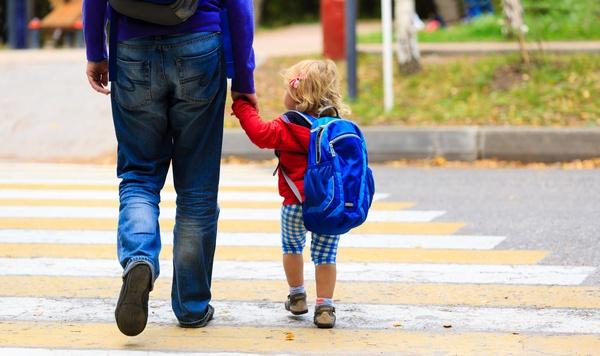
Like a number of Americans, I never attended preschool. So when the opportunity came to send my 3-year-old son to preschool as part of our school district’s speech therapy resources, I had no idea what to expect and no idea how to prepare my son.
If, like me, you’re stressed about what milestones your child needs to hit before preschool, here’s your permission to stop worrying.
“In preschool, the teachers spend the first month or so just figuring out where every child is at,” Sarah Saenz, a Headstart coach in Kent County, Mich., said. “There's nothing that any child needs to have mastered or have knowledge of. That’s the teacher’s job.”
While parents don’t need to ensure that their young child can sing the ABC’s perfectly, there are ways to ease your child’s transition to preschool. Here are several ways to make sure your child is prepared emotionally.
Use media to calm worries and set expectations.
Brittney L. of Hackett, Ark., and her daughter watched an episode of “Daniel Tiger’s Neighborhood” with the song, “Grown-ups Come Back,” to prepare for spending time away from parents. For my family, the “Daniel Visits School” episode helped my son know what to expect those first days.
Books are another resource to help calm nerves. Brittney and her daughter read “First Day Critter Jitters” where each animal faces a different fear on their first day of school. My son carried a kiss from mom on the palm of his hand just like the raccoon in “The Kissing Hand.”
But perhaps the best book for your child is one that features your family. “It’s as simple as getting a photo album and filling it with pictures of your family, home, pets, and friends,” according to Summer R., a former preschool teacher of five years in Temecula, Calif. “When your child is missing you, the teacher can sit down in a cozy spot with him or her and go through their family book.”
Talk about the classroom routine.
If your child is able to meet their teacher or tour the classroom before the first day of school, take advantage of the opportunity. Some kids might feel more comfortable if they arrive early on that first day.
Try to give your child an idea of what the preschool schedule may be. Each school’s routine looks different, but there are things in common between most: circle time, snack break, outside play, individual play, and potty breaks. Some preschools are only for a few hours, while others last all day.
“Teachers are urged to fit their classroom routine and schedule to their students,” Saenz said. “It can change year to year based on the classroom and the teachers that are in it.”
The routine that your preschooler encounters in the classroom will not only ease their mind (there’s a sense of safety in knowing what to expect) but will prepare them for their upcoming school years.
Pack a backpack (and maybe a lovey).
Every school and classroom is different, but my son’s teacher suggested he bring a backpack to help bring artwork and other items home. I stored a clean pair of clothes and an extra face mask in the backpack in case he had an accident or got dirty. Brittney L. packed a stuffed animal for nap time that she had hugged and kissed, so her daughter could get mom’s love any time.
Summer R. suggests packing a change of clothes, extra underwear, socks, an extra pair of shoes, diapers, diaper cream, snacks, a lunchbox and a reusable water bottle.
Teachers typically have a list of items that are useful to bring on the first day of school, such as glue sticks or tissues. Some schools or programs such as Headstart provide all the items that students will need. Check with your teacher or school to determine what can and should be brought to school.
Encourage curiosity.
Perhaps the most important skill for preschoolers is a love of learning. Don’t be surprised if your child comes home with new skills that they’ve picked up from observing their classmates. This kind of learning is well known in the world of early education.
“Kids are extraneously motivated when they’re playing with their peers, and if one of them is developing further along, it kind of pushes them to be able to do that too,” Saenz said.
It’s the preschool’s role to encourage learning and build upon that innate curiosity that children have to set them up for success by exposing them to the classroom environment.
“No child is going to be able to come into a classroom and be able to sit down and learn how to read and write, until they are socially and emotionally prepared,” Saenz said. “And so much of that social and emotional preparedness comes from preschool.”
No matter how much we try to prepare our children (and ourselves), there is no way to account for every scenario. The best way we can help our preschoolers is by partnering with their teacher, listening to the child’s needs, and being flexible.
 Author: