
Encourage Budding Scientists With Lessons from Mother Nature


Think back to your own outdoor discoveries as a child—what did you learn that was truly memorable? No toy or smart device can provide your child with more opportunities for life-long memories, discovery and exploration than the great outdoors. For me, the most powerful and fascinating discovery was that of fireflies. My friends and I would catch a firefly, put it in a jar and watch it light up over and over again. Today parents have the ability to enhance their child’s fascination with nature by using technology to supplement their child’s learning. An assortment of websites and apps provide objective information on the how and why fireflies light up, caterpillars become butterflies, rainbows appear in the sky and a seed becomes a six-foot sunflower.
Although you may never have thought of her in this way, your child is a budding scientist. After all, scientists ask lots of questions and odds are your young child does too. Children are innately curious; they will spend long periods of time at the same task trying to make sense of something that truly intrigues them. Allowing your child the opportunity to discover (e.g., what lives under a rock in the summer, why do worms come out after a rainstorm) all while asking her what she thinks is a wonderful way to promote that curiosity and, perhaps, even pave the wave for a career in Science, Technology, Engineering and Math (STEM).
This summer, try these tips to spark your child’s curiosity about Mother Nature during everyday activities or while on special outings:
1 Ask your child questions.
Zoos and aquariums provide substantial opportunities for summer learning and moments of total awe. Before you head to the zoo or aquarium, visit your library for books such as Life-Size Zoo and Life-Size Aquarium, which include facts and photos. While en route to the aquarium talk with your children about what they hope to learn. While at the zoo, ask your children questions to stimulate their curiosity. For example, “I noticed those two birds look alike but one is much more colorful, why do you think that is?” Or “Why do you think animals (such as a kangaroo, orangutan and humans) carry their babies in such different ways?” Asking your child why she thinks something means you are not asking for the correct answer. Instead, you are facilitating her processing of new information and promoting her critical thinking skills.
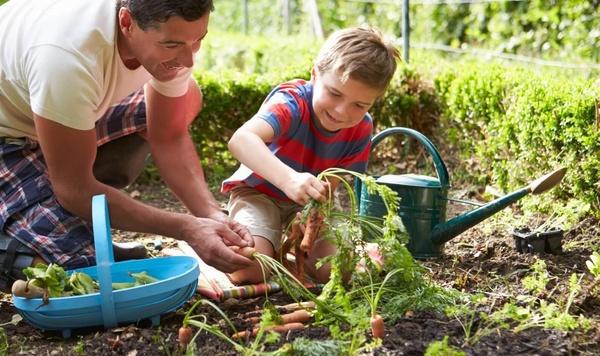
Gardening provides another wonderful and productive learning opportunity for you and your child. As a gardener I know that all plants do not grow. While having that favorite tomato absent from you garden may be disappointing, all is not lost. Ask your child why he thinks some tomato plants produced fruit and others did not. Ask her what she thinks you should do differently next year so that she can hypothesize and understand that her thoughts and opinions are valued. Questions such as these promote your child’s executive function skills.
2 Promote hands-on, multi-sensory experiences.
In fact, gardening also promotes healthy eating, language development, mathematics (measuring and graphing plants based on amount of sun or water), and, of course, science. The American Horticultural Society and KidsGardening.Org provide parents with useful information on gardening with children. Gardening provides children with a hands-on, multi-sensory experience (the feel of the dirt, the smell of flowers/soil, the sights and the tastes of garden fresh vegetables), which have been shown to further children’s understanding of their world.
3 Experiment with objects and activities.
Did you ever think about the connection between physics and rain puddles? After a rainy day, add one adult and one child to the equation, a “1, 2, 3 jump” and physics will dictate how far the water splashes based on the size/weight of the jumper. You can also introduce physics by discovering which objects sink and float in your kiddie pool, which rocks roll the fastest down a hill and how far you can throw water balloons filled with different amounts. The key to all these activities is engaging your child in critical thinking and questioning.
4 Use scientific language.
As a budding scientist, it is also important for your child to hear, learn and use scientific terminology. For example, through careful explanation (supplemented by online resources) children learn that metamorphosis explains the transformation of a caterpillar to a butterfly, reflection inside water droplets causes rainbows and bioluminescence explains how fireflies produce light.
5 Encourage your children to record and share their experiences.
Summer learning experiences can live on with photographs (smartphones make picture taking simple), journaling, drawing, graphing, plaster molds, etc. Apps such as StoryKit allow you and your child to easily create a story/book from the photos you take throughout the summer. Drawings can be displayed and serve as a vehicle for your child to share his experiences with family members and guests. There is an old expression that says, “You never learn anything as well as when you have to teach it.”
Any time your child is able to present information, she is developing her language skills, self-confidence and making connections across learning experiences.
Mother Nature has given us more opportunities to learn than time will ever allow; give your child (and yourself) the gift of discovering nature. Let her dig and get dirty. Let her jump in puddles and watch how far the water will go. Simply let your child experience the great outdoors and you will both be surprised at how much you will learn and the joys you will share.
 Author: