
Encouraging Children to Share and Take Turns


Learning to share can be a challenge for young children. In their minds, they believe what’s mine is mine and what’s yours is mine, too! This is because young children often don’t understand what sharing or taking turns really means. If your child has to give up a toy so a sibling can have a turn, they might feel like the toy is being taken away forever. And sharing things (like cutting a donut in half) is even harder, because something really is being taken away forever!
Here are a few tips for helping children become comfortable taking turns and sharing.
Start with a Daniel Tiger video!
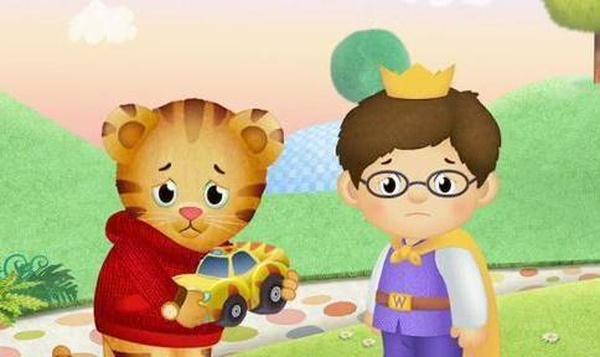
Try asking your child what sharing means and how it feels when he sees someone else using his favorite things. You might discover your child thinks something is being taken away and he won’t ever get it back. In the episode “Daniel Shares His Tigertastic Car,” Daniel learns to share by singing, “You can take a turn and then I’ll get it back.” This simple song can be used as a reminder for your child the next time he’s being asked to share.
Create a “sharing basket.”
Sometimes children get confused about sharing and taking turns. It’s easier for children to take turns than to share something by giving some of it away (like sharing a treat). Before playing with other children, ask your child what toys might be good for taking turns (such as a tricycle, racecar, ball, etc). Put those toys in a special basket, box, or corner of your home. This can help prepare children to share — and maybe even get them excited about it!
Model sharing.
When you find yourself sharing with another family member, point it out and explain how it makes you feel. (“Aunt Rachel shared part of her cookie with me! That makes me so happy. Thank you, Aunt Rachel.”) Be on the lookout for times when your child is kind, shares, or thinks of someone else’s feelings — and point that out as well. (“Oh! You must have remembered that Daddy loves raspberries. That was nice of you to ask if he wanted to share yours.”
Let your child have something that he doesn’t have to share.
Some families find that if their children have certain things they don’t have to share, they may be more willing to take turns with other things.
 Author:
Play, sing along, and learn with Daniel Tiger and his friends in the Neighborhood of Make-Believe.