

Encouraging Your Child to Keep Trying


We don't always succeed in everything we try. Sometimes our determination is enough to make us keep trying, but sometimes we need someone who can encourage us and help us sustain the belief that we can succeed even when we doubt ourselves. We can learn from the strength of the people we trust the most, people who guide us, but do not take over for us. The life-long lesson lies in the willingness to keep on trying.
Persistence is about helping your child move from “I can’t do it” to “I can’t do it yet — I’m learning!” When young children focus on a task, make a plan, and keep trying even when something is hard, they’re learning important lessons about how to persevere, problem solve, and tackle challenges for themselves. “All parents want to see their kids succeed, but it’s just as important to teach your children how to fail,” says Jaime M. Howard, Ph.D, Director at the Child Mind Institute. “Failing can be reframed as trying, practicing, and putting in effort — and it’s nothing to be ashamed of.” In other words, both failing and succeeding take persistence!
Here are a few ways to talk to your child about being persistent, with a little help from Daniel Tiger’s Neighborhood.
Start with a Daniel Tiger video!
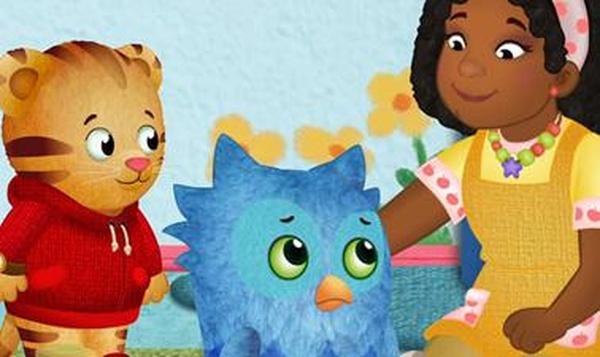
In the episode “O Builds a Tower,” O the Owl tries to build the tallest tower in the world with blocks at school. He struggles, wants to give up, but he doesn’t. Instead he asks for help, figures out what went wrong, tries a new idea, and builds a tall tower that stands steady. The neighborhood friends encourage each other, singing “keep on trying, you’ll get better!”
Have a conversation with your child about things she does really well.
Talking about the things your child already knows how to do can help you point out that she got there with practice. (“How did you get so good at kicking the soccer ball? Oh right! You do it over and over again. That’s called practice. Every time you try to do something again and again and again, you can get better at it.”) For example: riding a tricycle, kicking a ball, jumping, or climbing the slide ladder.
Remind your child to be proud of practicing — not just succeeding.
Learning new skills is hard work — for children and adults! It feels good for that work to be recognized and to be reminded of how far we’ve come. (“How do you think you got so good at climbing the ladder to the slide? I see you climbing up and sliding down a lot. You really seem to like it! I bet it makes you feel proud of yourself when you get to the top.”)
Let your child know you believe she can do difficult things.
Remind your child of things she’s accomplished before and how much she practiced to get there. Encourage her to keep trying, even when something is hard — but don’t underestimate the importance of taking a break sometimes! Here are some helpful encouraging phrases:
- “I know you can do this. Let’s take a break and have a snack. Then you can come back and try again.”
- “I see how hard you’ve been trying. I bet you’ll get it soon.”
- “You figured it out!”
- “What’s another way we might solve this problem?”
- “Let’s think about what we can learn from this mistake. That will help us keep trying!”
Patience and persistence are an important part of learning. When children are trying and problem solving, “let them know that, win or lose, we are proud of them for their effort,” says Kenneth Barish, Ph.D, Clinical Associate Professor of Psychology at Weill-Cornell Medical College. “A child’s feeling that her parents are proud of her may be the deepest and most lasting emotional support we can offer.”
 Author:
Play, sing along, and learn with Daniel Tiger and his friends in the Neighborhood of Make-Believe.