
Exploring New Cultures With Your Child in Let’s Go Luna!


Learning to appreciate new and different cultures helps our children on the playground, in the classroom, and eventually, in the workplace. Understanding that each of us comes from a unique cultural background is the first step toward learning to respect each other’s differences. As children learn to see what makes us similar and respect what makes us different, they begin to develop a deep sense of how we are all connected as people. This is the foundation for building healthy, lasting relationships with friends, classmates and colleagues. So, how do we teach our children to appreciate other cultures and build global awareness?
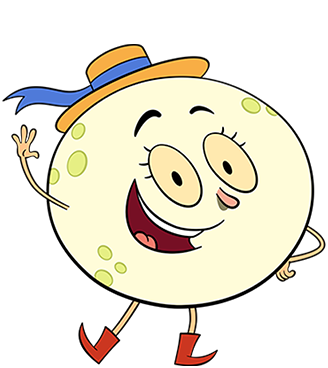
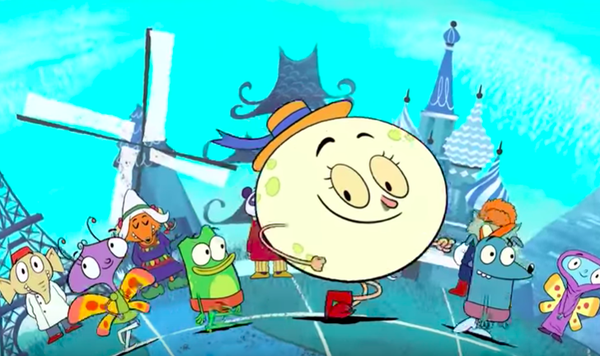
The new PBS KIDS show Let’s Go Luna! is a window to the world. The show features three children who explore the globe as part of a traveling circus with their constant companion, Luna the Moon. Luna knows everybody — she is the moon after all — and introduces Carmen, Andy and Leo to her friends in each city they visit. Through these positive cross-cultural experiences, the children are exposed to new experiences that teach them about the world and its people. Guided by Luna’s openness and enthusiasm, these encounters reinforce three key ideas that will help children learn to appreciate new and different cultures.
Similar but different
When the circus, Circo Fabuloso, visits Delhi, India, Carmen breaks a guitar string while working on a song for her mother’s birthday. In her search for a new string, she meets a young Indian boy named Gaja who plays the sitar. The sitar is similar to the guitar, not just in name, but by the fact that it too has strings and is plucked or strummed. Carmen learns that it differs from a guitar in the number of strings and how it sounds when played. Encountering a new culture provides us the opportunity to look at what we share in common and how we are different. They play music and we play music, but their music may sound different than ours. The sound of the sitar, Carmen discovers, is perfect for her mother’s birthday song. Sometimes, something different is just right.
Different is good
On a visit to Tokyo, Japan, Leo accidentally drops his father’s ceramic bowl. When he takes the broken pieces to a shop in hopes of finding a similar bowl to replace it, he meets Hana who teaches him about the Japanese art of kintsugi: Rather than throw away the pieces of the broken bowl, as Leo intended, Hana teaches him how to repair the bowl using golden lacquer that makes his father’s bowl even more beautiful than before. Just because a treasure is broken does not mean we discard it. Repair it and make it even better than before.
In Juneau, Alaska, Carmen discovers that her new Tlingit friend, Hannah, belongs to a rich storytelling tradition that helps to create and maintain bonds between family members and people in the community. After experiencing a Tlingit storytelling first hand, Carmen asks her mom to tell her a story about her own family rather than read from a book before bed. Learning about other cultures shows us that people around the world do things differently than we do, and that different is good. Leo and Carmen demonstrate how we can learn from cross-cultural experiences and how these interactions enrich our own lives.
We are all connected
When Carmen’s pet hamster Honey escapes her cage and disappears into the streets of Cairo, Egypt, the children give chase. Carmen literally runs into a young butterfly girl like herself, but Egyptian. Leyla, the Egyptian girl, explains that she is searching for her escaped pet parakeet named Sukkar or “sugar” in Arabic. They join the search together and, over the course of the episode, learn that they have more in common than just sweet pet names. At Leyla’s home, Carmen learns that they both have plants in their rooms, they both play instruments, and they both have posters of their favorite performers on their walls. Although they come from different places and have different cultural backgrounds, they also share many of the same interests. Through these shared interests and their experiences together in Cairo, a friendship develops. Leyla and Carmen see themselves in one another and demonstrate for us the ways in which we are all interconnected. Their friendship is a celebration of our shared compassion as people of the same planet.
Bringing the world home
Here are some tips for exploring new cultures with your child:
- Share the Let’s Go Luna! experience with your child. Talking with your child about the episodes provides an opportunity to reinforce a global appreciation. Try reviewing the similarities and differences encountered in the show in a positive and enthusiastic way.
- Explore new cultures from home. Seek out opportunities in your community for cross-cultural experiences. Try a new dish at a local restaurant, scan local papers for community cultural events, and check with museums to see a schedule of traveling exhibits. Positive exposure to new cultural experiences is key to creating an appreciation for global awareness.
- Celebrate your own cultural heritage(s). Teach your child the ways in which your own cultural heritage is unique. Invite your child to imagine Circo Fabuloso comes to your neighborhood. What would you like to show Carmen, Andy and Leo?
Exposure to positive cross-cultural experiences through Let’s Go Luna! is a great first step toward fostering an appreciation for other cultures in our children. By bringing the world home, we hope to encourage our children to engage their world with enthusiasm and openness.
 Author:
Three friends, Leo, Carmen, and Andy, traverse the globe with their guide, Luna the moon.