
Helping Kids Express Themselves Through Music


Last week, three days of cold rain had everyone in our house feeling a bit cooped-up and grumpy. Each morning when I explained to my toddler that it was just too yucky to go outside, she plopped down at the door and cried.
I knew how she felt. I felt that way, too. I tried to play some dance music to cheer us up, but neither of us were really in the dancing mood.
Then the music app on my phone recommended I try a station called “Rainy Day Jazz.” As the soft piano played, my daughter and I snuggled up on the couch and talked about all the things we wanted to do when the rain stopped. Suddenly, our day was much more enjoyable. It turns out Rainy Day Jazz was just the thing we needed.
Here’s how music can be a powerful helper when it comes to understanding and expressing our feelings.
Music is a safe way to feel emotions.
Life — especially life with young children — can often feel hectic and rushed. Adults tend to want to name a big feeling and then move on. One of the great benefits of music is that it offers a safe and dependable place to feel our feelings. “When we are afraid, sad, or really happy, we can invite music in,” said Jenn Horak-Holt, owner and director of Pied Piper Studios –– a community learning hub focused on filling families’ lives with music and creating vibrant early childhood experiences.
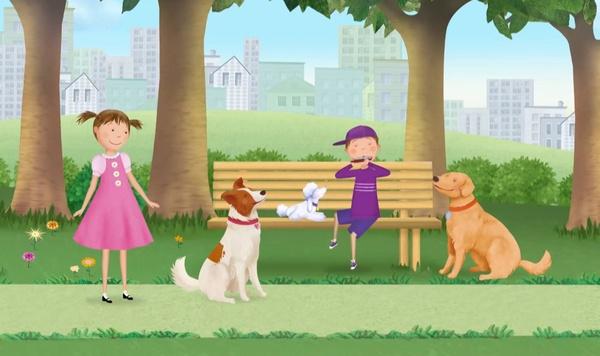
In the “Pinkalicious and Peterrific” episode “Peter’s Blues,” Pinkalicious and Peter explore blues music as a way to help express Peter’s feelings of sadness. As he plays and sings the blues, Peter realizes the music is reflecting his sad feelings and begins to feel better.
“Toddlers and young children can be great at expressing their emotions, but they don’t always have the ability to regulate them and move through them,” Horak-Holt said. When kids engage with music, there is social and emotional work happening behind the scenes. Music increases a sense of emotional security for children, allowing them to feel safer to fully experience their feelings. It also regulates breathing, reduces stress hormones, and increases “happy hormones” in our bodies.
Music creates connection and a sense of belonging.
In “Peter’s Blues,” Peter is eager to share his musical experiences with his family and friends. Together, Pinkalicious and Peter make up their own happy song to sing and play, which cheers up the whole town.
Music has been a community practice throughout human history. This makes sense — music is even more beneficial when it’s shared. Studies show that in early childhood, playing music in groups can increase cooperation skills and a sense of social belonging. Horak-Holt explained, “When we make music with other people, our brain waves and heartbeats create connections that support our emotional health.”
Music is for everyone.
Music, Horak-Holt said, is a language all in itself. And the best part? It’s available to everyone. “Our brains and bodies are wired for music. It doesn’t matter what age you are, your background, or what ability you have. Music is accessible to all human beings.”
Lots of parents and grandparents feel like they don’t have enough talent or skills to “be musical,” Horak-Holt said. She tells them not to worry about it. “I want grown-ups to feel empowered to let go of their insecurities about what they think music should be.” Your kids will love singing, dancing, and playing music with you no matter what it sounds or looks like. As we learn from Pinkalicious and Peter, we don’t even need words — a song can just be a collection of silly sounds.
What’s most important are the emotional connections you’re creating, and the social wellness you’re building.
Ready to rock and roll? Here are three ways your family can interact with music to help identify, express, and regulate feelings.
- Make music accessible. You can empower your child to use music as an emotional support by giving them access to the tools they need. Think of access to music in broad terms. In your home, you can listen to the radio, drum on pots and pans, or hum lullabies before bed. You might take a walk together and pay attention to the rhythm of your feet. Consider placing a music bin where your child can reach it. It’s not necessary to go out and purchase musical toys, Horak-Holt said. “Household items make great instruments!
- Talk about music. You can help your child explore the relationship between music and emotions by talking openly about your own relationship with music. “If I’m having an emotion, it’s really valuable for me to narrate this for my children,” Horak-Holt said. “‘I got good news and I’m so excited — I want to do a little dance!’ Or ‘I’m feeling sad, so I’m going to listen to this sad song.’” You can also notice the music in your child’s world and use it to help create feeling descriptions. “That bell makes a long sound. Sometimes your body is going to need a long time to feel mad or sad,” or “That drum makes a sound so big it feels the whole room. Sometimes your happy feelings are that big, too!”
- Get your bodies moving. Children experience music in their bodies — not just in their minds! “Music and movement are partners,” Horak-Holt explained. “When we make and hear music it invites and elicits movement in our bodies.” Also closely related to body movement? Emotional regulation. So jump, sway, twirl, and clap to your favorite songs — these are natural ways for our bodies to process feelings.
 Author:
Pinkalicious and Peter turn everyday experiences into something extraordinary.