
How to Help Kids Feel Loved and Lovable


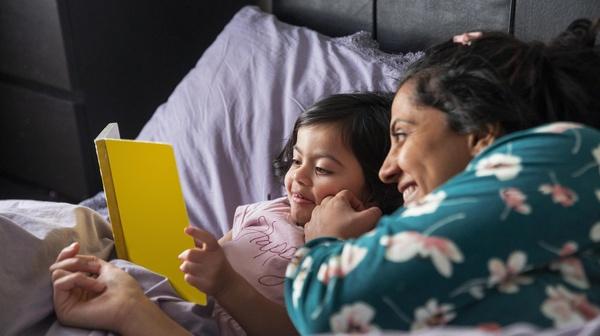
When my oldest was 3 years old, she had one of those epic tantrums — you know, the kind where children’s bones become jelly and they melt to the floor, kicking and screaming. I carried her over to our old rocking chair and, as we snuggled, I told her, “You know, I really love you when you are mad.” She stopped squirming and looked at me, startled.
I continued, “I also love you when you are happy, and I love you when you are sad, and I love you when you are scared. I love you all the time.”
Her body began to settle, and a new ritual was born. Every night before bed, I remind my children that — no matter the ups and downs of the day — I love them all the time. (This ritual became the inspiration for my picture book, “I Love You All The Time.”) A few years later, after a rough morning, this same child turned to me and said, “Mommy, I love you all the time — even when you are cranky!”
Children thrive when their caregivers offer them consistent love and support. Our love offers a safe landing place as they stretch, struggle, and grow. As Fred Rogers said, “Knowing that we can be loved exactly as we are gives us all the best opportunity for growing into the healthiest of people.”
Here are four ideas for helping children feel loved and lovable.
1 Correct with love.
Children look to their caregivers for reassurance that they are valued and valuable. They crave attention when they succeed and understanding when they struggle. While they may not put it into words, children sometimes wonder, “Does my mom or dad still love me when I break something? Will my teacher still love me if I make a mistake?”
As caregivers, we may not love certain behaviors, but we can make it clear that we always love the child. And we can correct their behavior in a way that reinforces this.
Here is what that might sound like:
- When a child is physically aggressive: “I love you, and I’m going to help you use your hands for helping.”
- When a child is learning how to interact appropriately with a peer, a younger sibling, or a pet: “Remember to be gentle. That’s one way we show that we care.”
- When a child is acting out in frustration: “It’s okay to get mad! Everyone gets mad sometimes. It’s not okay to throw your blocks. Let’s take a deep breath and then we can pick them up together.”
- When you circle back to a challenging moment later in the day and emphasize the positive: “Remember when you spilled your milk on the floor this morning but then you helped mop it up? I love cleaning up messes with you! You are such a good helper.”
2 Notice children’s efforts.
Children feel cared for when adults pay attention to the little ways they are growing and learning. One phrase that communicates this loving attention is “I noticed…:”
- “I noticed that you got back up on your scooter after you fell down. That took courage!”
- “I noticed that you shared your treat with your sister. That was kind.”
- “I noticed that you used a lot of colors on the card for your grandma. She’s going to love it.”
- “I noticed that you invited the child playing alone at the playground to play with you. You are a good friend.”
3 Write love notes.
Love notes are a great way to communicate your care — and they get children interested in words! All you need is a pack of sticky notes and a pencil. These notes can be left on lunchboxes, desks, cubbies, backpacks, pillows, or mirrors. They are a delightful surprise and something tangible that children can hold in their hands, even when you aren’t there. Simple notes might read something like this:
- You are a good friend.
- You are a hard worker.
- Thank you for being kind to your sister.
- Thank you for cleaning up the kitchen with me.
- I love your smile.
- I love watching you learn to ride your bike.
And if you can’t think of what to write, you can’t go wrong with “I love you all the time!”
4 Be there.
We will all make plenty of mistakes as we raise and teach children, but the steady love of a caregiver can help children thrive, even when life is challenging. According to research out of Harvard’s Center on the Developing Child, “the single most common factor for children who develop resilience is at least one stable and committed relationship with a supportive parent, caregiver, or other adult.” Children flourish when caregivers are present in their lives — when we get down at eye level and listen to their stories or jokes, when we snuggle with them on a rocking chair, when we read books or play games together, and when our eyes light up when they walk into a room. In other words, sometimes it’s enough just to be there, offering our steady love as an anchor in children’s lives.
Adapted from “I Love You All The Time” by Deborah Farmer Kris, copyright © 2022. Free Spirit Publishing Inc., Minneapolis, MN; 800-735-7323; freespirit.com. All rights reserved.
 Author: