
How to Support Your Outgoing Child


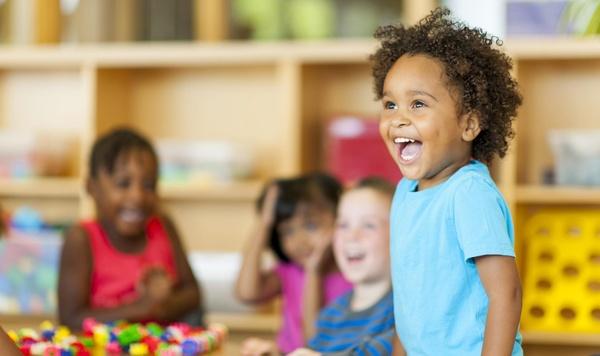
Ever since she could make sounds, my daughter has talked to trees, dogs, cats, bugs, invisible bears, herself and those little white wispy flower-things that waft through the air sometimes (those, by the way, are baby fairies). For the most part, though, she talks to people. From infants to the elderly and everyone in between, she sees each person as a conversation partner. Although many of the people she chats with are enchanted by a nonstop string of questions and declarations from an adorable little person, some folks don’t quite know how to react, including friends and classmates who are themselves learning the art of the conversation.
While my daughter generally understands the concept of “look at the person while you talk” and sometimes “tell them your name and ask theirs,” she also engages in more unfiltered behavior. Long stares, personal space violations, interruptions, asking embarrassing questions and revealing delicate private details about herself and her family, sudden leg hugs and “I love yous” — they’re all in the toolkit of a conversationalist-in-training.
Over the years, my wife and I have done our best to help our daughter learn how to engage with other people in a way that will give her the meaningful connection and interaction she craves, without violating social norms. After all, outgoing children have all kinds of strengths that can be harnessed for good.
Here are some tips from a dad in the trenches:
Coach and role-play certain situations. A gregarious child often can’t discriminate appropriate questions to ask of strangers, because they’re still learning about social norms. See someone with a bandage on their body, and you know a comment is coming? Consider reminding your child that other people’s bodies are not her domain, just like hers isn’t anyone else’s. In a rush at the store? Say “You can talk to the fruits and cheese we’re buying, but let’s just say hello to the humans.” See someone up ahead who looks sad? Tell your child “This person’s sadness is real and important, but we are not going to ask them about it today. We are going to smile and wave but let them walk right by us.” If your child is like mine, they’ll stare longingly at the chat partner that never was, whispering “Why are you sad? I will love you!” while racking their brains for any loophole in your rules. But they will also have learned an important rule about boundaries.
Teach conventions. As kids figure out how to interact, they’ll likely need a lot of help from adults. Things that seem simple, like introducing yourself when you start a new conversation, are actually skills that requires a deep understanding of our cultural norms. Don’t just assume your child will pick up on these conventions- you can help them along by teaching, modeling, and practicing. You can talk about how to introduce themselves: Show them that when speaking to someone new, it’s polite to tell the other person their name and then ask what the other person’s name is. If they know the person already, they can start with a greeting like: “How are you doing today?” The same goes for eye contact, attentive listening and asking related follow-up questions, all of which can be difficult for kids to pick up on their own.
Emphasize and practice turn-taking. Learning how to converse is tricky, in part, because it involves so many subtleties that simply aren’t a developmental reality for kids yet. One of the biggest aspects of a friendly chat is taking turns, which is a precursor to true sharing. Remember, many kids don’t really learn to share (toys, books, time) until around age four or later, and even then it’s a work in progress. What many kids are capable of, however — with adult support — is taking turns. You can help your chatty child by teaching them that a conversation is a series of turns: One person speaks while the other listens, then you switch, then you switch back, and so on. Interrupting can be extremely hard to avoid, but taking turns in a conversation is easy (and fun!) to practice and model at home.
Provide other outlets. My daughter wants to talk more than is realistic or practical over the course of a day. Because of this, she needs other outlets to be social. We play conversation games where we pretend to have just met (these involve a lot of pretending and make-believe), we write stories together, we draw and we talk about who she might want to chat with tomorrow. She also strikes up chats with her stuffed animals and dolls, and sometimes takes care of both sides of the conversations. She’ll almost always prefer the real thing, but these other opportunities allow her to be social in different ways that still nurture this important side of her personality.
Empathize with their frustration. There are times when we simply can’t talk to others, whether it’s because there’s no time, someone else has the floor, or it’s inappropriate given the situation. If your child has raised their hand in class and hasn’t been called on, for example, that might be really frustrating—especially if they forget what they wanted to say. Give them space to be sad, applaud their restraint and recognize how hard that is, and acknowledge their feelings: it’s not easy not to be heard!
Conversation is both a skill and an art, and like anything else, it’s something kids need to practice. How, when and whether or not to engage with someone, and from there, how long, what about, and when to end it are all things that take tremendous experience and learning. So much of our interactions are subtle, especially those little visual and auditory cues that so many adults take for granted. These are lifelong skills that kids will hone and refine, but providing tools, tips, and practice is invaluable. And remember: kids often watch us even more than they listen, so modeling is key.
Once, after telling my daughter (then three-years-old) she shouldn’t chat up the man jogging past us listening to music, she nodded — but proceeded to scream “HEY YOU MAN!” at the fellow so loud that he stopped in his tracks, removed his earbuds, and said “sorry?” to which she screeched “I’M NOT A-POSTA TALK TO YOU!” In short, this is learning that will take time, but once you’ve trained kids, their outgoing nature is truly a huge gift.
 Author: