
How to Talk to Children About Politics


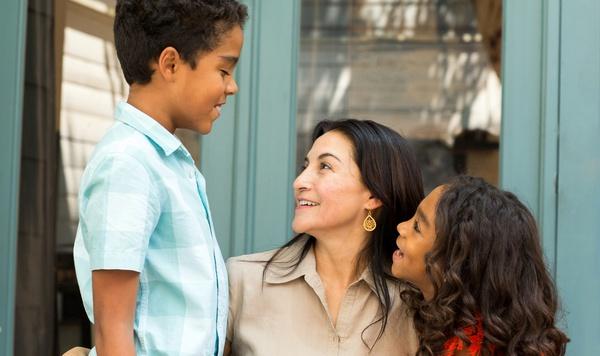
Talking with children about voting, politics, and civic engagement can feel overwhelming. But little minds are like sponges. And as I parent four young kids, I want them to soak up values of curiosity and tolerance as they learn to engage with their communities.
In a heated election season, how can grown-ups foster social awareness and civic-mindedness in even the youngest among us? I talked with a few leaders for tips on how to help kids understand how to be active participants in creating positive change.
Talking about civic engagement
Hoyt Phillips is interim co-director of Teaching Tolerance, which provides anti-bias resources to educators who work with children. I asked him what to keep in mind when having conversations about political and social issues with young kids.
“It’s never too early to talk to your child about politics,” Phillips says. “Kids live in a connected world and are constantly interfacing with political messages, so discussing politics with them is a way to engage authentically. These conversations are also a great way to let them know the value system you use to critically engage the world.”
Points to consider when talking about civic engagement with kids:
- The overall values that drive your political thinking
- The questions you ask yourself when forming opinions about issues and candidates
- Who you voted for and why — especially how your vote connects back to your values
- How you learn more to be better informed
“The overall goal is to normalize these types of conversations and to get kids critically thinking, so that they see themselves as having an active role in our diverse democracy,” Phillips says.
Talking about politics in the media
My kids are in preschool and elementary school. They don’t often see many commercials, but we happened to be watching a special television program together that moved right into what felt like a scary political advertisement — sirens blaring, babies crying, and ultimatums shared. I wanted to grab the remote and turn it off immediately, but instead, I used it as a teaching moment to explore how I discern the facts and fiction of what I see and hear on TV — and how they could, too.
Phillips says this is called developing digital literacy skills — supporting kids by walking through how we grown-ups analyze and understand political messages. “Let them know what questions you ask yourself and what reliable sources you use to learn more,” Phillips says.
When seeing politically-charged media, Phillips suggests helping kids ask these questions:
- Who created this message — and what do they want me to think or do?
- How are they trying to persuade me? Are they using facts, fear, stereotypes?
- How can I learn more so that I can have a more informed opinion?
Teaching Tolerance has a set of lessons that supports the development of digital literacy skills and I’m planning on checking out some of these picture books about voting and elections, too.
Recently, our mailbox has been bursting at the seams with political flyers. I showed my 7-year-old two opposing postcards and explained that both had photos of the same politician. One claimed she was a good candidate, and the other claimed she wasn’t. I asked my son what he thought, which led to a rich conversation that motivated me to research some more myself, too. (Kids ask great questions!)
This is common, Phillips says. “You can practice engaging with these questions together and will most likely find that these questions will lead to more. Hopefully, with time, your child will more readily realize how they are being persuaded and have the desire to actively seek out information to become better informed.”
Talking about community and family values
While kids are naturally curious and often come up with deep questions of their own, it’s important for grown-ups to continue to ask kids thoughtful questions, too. Clementine Foxglove, founder of Curious Parenting, a community that provides social-emotional resources for parents and caregivers, says asking these questions — and then really listening to how kids respond — helps children feel seen and valued.
“When kids tell us something is bothering them, do we listen to them so they know how to listen to others? When we listen to kids, we show them that even the smallest, most vulnerable voice in their community deserves to be heard,” Foxglove says.
Here are some of her questions to ask kids to keep the conversation going:
- What rules do you think are important?
- What things protect you and keep you safe?
- What do you think our leaders should do?
- Do you think this law is a good idea?
- What would you do if you were in charge?
- Does this feel true to you?
- How do you know something is true?
- Are people all bad or all good?
- Why do you think this person would be a good leader?
“It’s so much more than having a few tricky conversations about elections — it’s really about how we respond and react to our kids every day,” Foxglove says.
As I continue to raise kids in a complicated world, I know that I want to raise them to care for their neighbors — and if I’ve learned anything from Daniel Tiger, I know that’s something even my preschoolers can understand. Because I want to stay socially engaged (and vote) not only for myself and my family, but for my neighbors, too.
Foxglove puts it this way: “We’re all a community — and stronger if we’re taking care of each other.”
 Author: