
How to Talk to Kids About a Big Move


Before her first day of first grade, my daughter had a lot of questions. Like many children her age, she was nervous (and curious) about meeting her teacher and riding the school bus. But she also asked what the school building looked like and where she would play at recess.
She wasn’t just starting a new grade. She was going to a new school in a new city, in the third state she had lived in. As a child with a parent serving in the military, she was used to being the new kid. But that didn’t make it easier.
Military families move every two to three years on average. Service members receive orders to move, so they don’t get to choose the next location. That means families like ours have to pack up every few years and start over in a new town.
Military kids often attend several new schools before they’re eight years old. Military parents become pros in preparing kids for a move. I asked other families like mine to share their advice for moving with young children. Their experiences can help you prepare kids for a move, whether or not you’re a military family.
Tips for moving with young children:
Use photos to help kids imagine the new place. It’s common for kids to feel nervous when they don’t know what to expect in a new situation. Showing pictures can help kids cope with a move.
Daniel Tiger’s mom sings the song “When We Do Something New, Let’s Talk About What We’ll Do” to ease him into new situations. Drawing pictures and envisioning a new place helps him feel calm. To prepare kids for a move, show them photos of their new town. Talk about the places they will go.
Answer your child’s questions and let them voice their feelings. Share these photos with your child:
the new home house (from a real estate listing)
the new school (from the school website)
the local area (from Instagram hashtags or Google Maps).
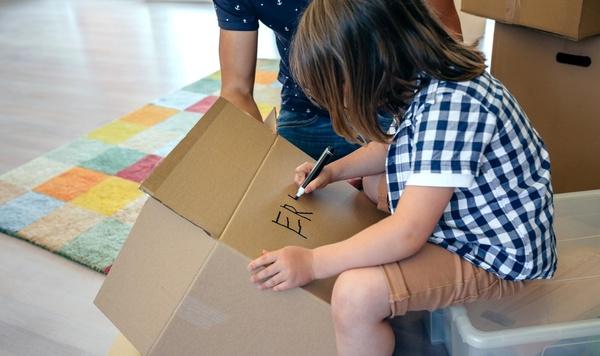
Involve kids in packing. Sure, kindergarteners get easily distracted. But they need to help get their treasures safely to their new house. Joining you in packing their belongings empowers them during what can be a confusing change. Let kids color moving boxes with markers or crayons. (Tip: if they fit IN the box, they may have fun playing in it — keeping them out of the way for a while!) Ask your child to throw their clothes or stuffed animals into a large box that they decorated. Then, when it comes off the moving truck, they’ll be able to spot their special box.
Instead of goodbye, try “see you later.” It can be tough for young children to let go of the only friends they remember. But with video chats and other apps, kids can continue to talk and play together, even after a move! Help kids cope with a move by rephrasing how you talk about it.
Make moving an adventure. Moving with young children is stressful. But it can also be a fun! Military families are pros at finding fun things to look forward to, even during a cross-country move. Here are their strategies:
Plan a moving road trip! Stop and see something (or someone) special on the way to your destination.
Pack the good snacks! Let kids pick their favorite treats for the big trip.
Visit a new playground! Along your trip and after you move, find local parks or playgrounds to explore.
Try new food! Every region is famous for something. Search for popular foods in your area and enjoy a new meal together!
Explore like a tourist. When you get to a new place, take a break from boxes and enjoy your new location. Try a new restaurant or get ice cream. Find a local park, hiking trail, or swimming pool to visit. Not only will these little trips be a relaxing break, but they also show your child they can make new family memories in your new town.
Invite your child to explore with Clifford in the game All Around Birdwell. See if your new town has similar locations to the ones Clifford visits with his friends.
It takes time to feel at home. Moving is an emotional journey. Military families know that moving is about more than unpacking boxes. It helps to find a grocery store, a place of worship, a playground, or a welcoming group of parents. These things help a new home feel comfortable and familiar. It often takes several months for children to feel settled in new routines.
Jodi Platypus learns this in the “Daniel Tiger’s Neighborhood” song when her family becomes Daniel’s new neighbors. Her mom sings, “It takes time to make a place feel like home.” For the Platypus family, feeling settled doesn’t just mean hanging pictures on the walls. It also means meeting the neighbors and making new friends.
When you need to help kids cope with a move, let them talk through their big emotions. Use these tools, songs, and episodes to let your child know that even when moving feels scary, it’s something you will do together as a family. The most important step in moving is being there for each other!
 Author: