
Using Emojis With Kids to Express Feelings


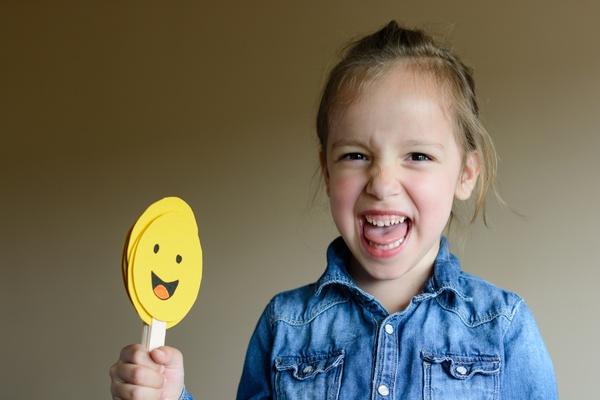
As schools add more social and emotional learning into their curriculum, a move recommended by the American Academy of Pediatrics to support the emotional and behavioral health needs of children and families during the COVID-19 pandemic, I started thinking about how emojis could be used to help kids express emotions while wearing a mask or while remote learning.
What is an emoji? Well, according to my third grader it’s “what you use when you don’t want to write out or say what you feel — like in a text.” In other words, it’s a symbol that takes the place of an abstract concept like a feeling. Those yellow faces are everywhere these days, a familiar language to our little ones in a time when so much of their lives (and ours) is unfamiliar.
What do we know about emoji use in education?
“Students are traditionally not asked if they like what they are doing or if they are being challenged to the point where the experience is stretching them — but not so difficult that it's too frustrating,” says Dr. Lilla Dale McManis, an educational psychologist with over thirty years of experience conducting research on education technology for early learners. “We know from research that using emojis in classroom activities helps students better understand what they have learned — especially in online learning.”
Drawing on findings from her own research and 20 years as an online educator, Dr. Joanna Dunlap, a professor in the School of Education and Human Development at the University of Colorado Denver, says emojis are more applicable than ever during the pandemic. “I’ve talked with teachers at all grade levels since the spring and it is clear that an emotional toll is felt by everyone. If those feelings are bubbling up behind a mask or kids have burning concerns and questions unanswered, it interferes with their ability to learn.”
How can parents and teachers use emojis at home, in the classroom, and online?
Have feelings check-ins at home. It’s hard for kids to say what hurts. Pediatricians use the Wonker-Baker FACES Pain Rating Scale with children 3 and up, which features six emoji faces to rate pain. Dr. Dunlap says parents and teachers can similarly use facial expression emojis as a way of helping children identify how they are feeling. It doesn’t have to be anything fancy — try hand-drawn emoji faces or print outs. If your child comes to you crying and you don’t know why, you might say, “I know you’re upset right now, is it because you’re in pain? Is it because you’re angry? Here’s our faces paper. Point to the one that shows me how you feel.”
Give personalized feedback with a smile. Think about that smiley face or sad face you may have received on a test next to a letter grade. How did it make you feel? Researchers found that when the well-known smiley face emoji accompanies a teacher’s feedback, students feel their teacher is “warm and competent.” Dr. McManis says this makes kids more motivated to improve. So if your child is learning at home, get a pen and write something positive: “Great job staying in the lines!” “Excellent penmanship!” Or, in the words of Daniel Tiger: “Keep trying, you’ll get better!” And don’t forget to add a smiley face!
Ask “What emoji face is behind your mask today?” When used in the classroom setting, especially within younger grade levels, emoji scales can be particularly useful for teaching mindfulness or learning comprehension as they offer students a way to express their thoughts without having to say them out loud. Dr. Dunlap suggests having a scale on each child’s desk or gluing faces on sticks that can be held up. Teachers and students can also create an emoji for “I don’t understand this” or “I need more help?” This allows students to express things like “Gosh, I’m still confused here, but I don't feel confident to say that out loud or ask questions” or “I'm not even sure how to ask the question.”
Use emojis to find the words. My 8-year-old recently had an assignment to “write a funny story about pets.” While I thought it was going to be easy, she was overwhelmed with the open-endedness. Dr. Dunlap says emojis can be a great place to start building the foundation of a story — especially for those still learning to grasp written language. “When emojis are used in an outline, a storyline emerges and can give a starting place for the words,” she says. “This method also works for students learning English and second language learners for other languages, as it helps create a visual bridge between the person’s primary language.”
Sometimes, a picture really is worth a thousand words. Done right, the added social and emotional learning curriculum in schools combined with tools and strategies like emojis has the promise for a long-lasting positive effect during COVID-19 and beyond.
 Author: