
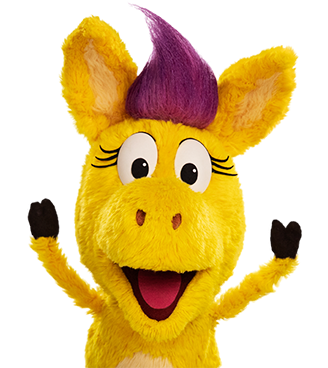
It’s More Fun When It’s Fair: Little Games and Big Feelings with Donkey Hodie


Have you ever been so frustrated playing a game that you considered getting rid of the problem entirely – say by taking a key piece of the game?
I remember the first time I tried to play a board game with all three of my kids. For a little while, everyone was sitting still, taking turns, and following the rules. I remember thinking, “We’ve made it: we’re officially a board game family.”
Then my three-year-old became enamored with the spinner. The clicking, whirring, unpredictable spinner. At first, it was charming. Then came the unthinkable: it was someone else’s turn. He watched his sister reach for the spinner, and in that second, he made a bold executive decision: he grabbed the spinner and ran with it.
The game came to a screeching halt while we negotiated the return of the essential equipment.
That day, I realized (as I have many times since) teaching young kids how to play fairly is often really, really hard. Our first attempt to play a board game together was a perfect snapshot of early childhood development in action: two siblings who desperately wanted the rules to matter, and a tiny human who had no real concept of cheating — only a strong desire to play how he wanted and make his frustration go away.
When Playing Fair Is…Really Hard
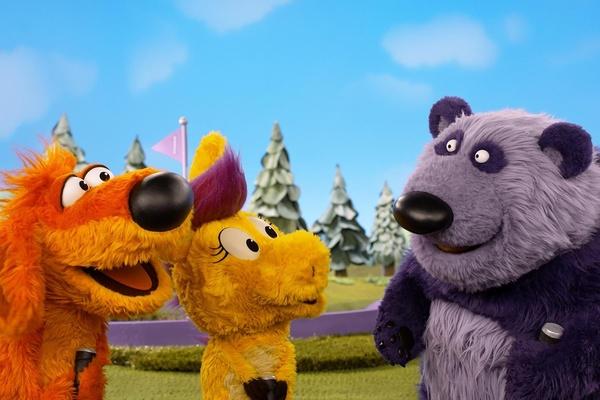
This same set of challenges shows up in Donkey Hodie’s “Purple Putt-Putt" episode. Purple Panda and Donkey Hodie are pros at Panda’s mini-golf-style game, but Bob Dog is playing for the first time. He’s behind, he’s frustrated, and, like many kids in that situation, he cheats to try to catch up.
When kids cheat at a game, it’s rarely about being sneaky or mean; rather, it’s almost always about self-control. The urge to win, keep up with friends, and avoid feelings like frustration or jealousy can be overwhelming. They don’t mean to hurt others’ feelings or break the rules. Their still-developing executive function skills are, well, still developing, and their desire to follow the rules loses out to their desire to feel better immediately. Bob Dog says it best himself, “This is so frustrating!”
What Donkey Hodie Gets So Right
As an advisor for Donkey Hodie — and as a parent of three — I know that “playing fair” is something many families work on.
In “Purple Putt-Putt,” the story shows a few important ideas:
- Bob Dog isn’t a “bad” character. He’s learning, and when he realizes his actions hurt his friends, he genuinely feels bad.
- His first cheat is accidental. He nudges the putt-putt ball into the hole with his nose without meaning to, and he experiences how good it feels to get ahead. That moment helps kids understand how easy it is to slip.
- Fair play is shown as appealing. Purple Panda and Donkey Hodie show pride and joy from succeeding honestly.
- Cheating is clearly defined. Kids learn what cheating is, why it hurts others, and why it doesn’t feel good in the end. As Donkey says, “If you have to cheat to win, that’s not really winning. And it’s not fair to Panda and me. We also want to win.”
The episode shares a simple message that you can share with your own child:
It’s more fun when it’s fair. Everybody’s chances are the same.
It’s more fun when it’s fair, even if you lose the game.
When you cheat, your friends feel sad, and even angry, too!
No one ends up having fun, including me and you!
Winning isn’t winning when it means you have to cheat.
Playing fair and by the rules makes winning much more sweet!
Helping Your Child Learn to Play Fairly
Children start learning to follow simple rules at about 12 months, but developing the impulse control and social awareness necessary to follow more complicated rules takes much longer. Most children will need lots of practice and support from their grown-ups until they are at least 8-10 years old.
Here are ways you can help your child as they learn this important (and tricky) skill:
Build rule-following muscles outside of games. Simple routines, like cleaning up toys in a certain order or following multi-step instructions (get dressed, brush your teeth, and come downstairs), help strengthen the same executive function skills they’ll use during game play.
Practice coping with big feelings. Talk about frustration, jealousy, and disappointment before they happen. Name the feelings, validate them, and brainstorm what helps: taking a deep breath, asking for help, or reminding yourself, “It’s okay to try again.”
Reinforce the power of “yet.” Some skills take time to build. Remind your child, “You can’t do it yet, but you will be able to with practice."
Explain what cheating is, and why it hurts. Keep it simple and concrete., “Cheating means not following the rules to give yourself a better chance of winning. That can make other people feel sad because they want a fair chance.”
Model how to win and lose gracefully. Kids learn by watching us. It’s okay to say, “I’m disappointed. I really wanted to win.” Then show how to move on kindly without breaking the rules. Just as important, model graceful winning! When you do win, it’s natural to feel excited and celebrate — but also important to say, “Good game! Want to play again?”
Progress, Not Perfection
Learning to play fairly takes time. One or two (or 10!) games may not be enough to get the hang of fair play. Like Bob Dog, your child is learning. With patience, practice, and support they’ll gradually build the skills they need to manage their big feelings and discover something important: It really is more fun when it’s fair.
 Author:
Here comes Donkey Hodie! With a hee and a haw, this little donkey can do big things.