Learn a Lot About Science: Simple Activities for Kids


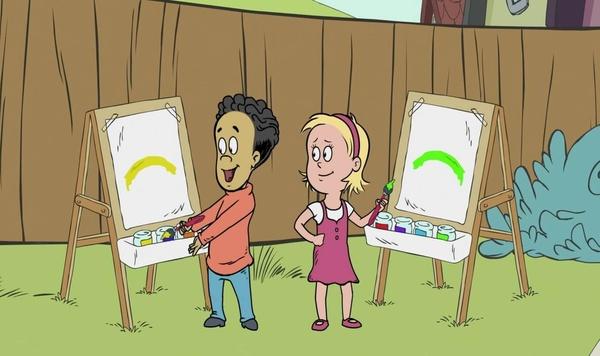
“Can I have a Thinga-ma-jigger, mommy?”
My four-year-old wasn’t asking for a toy replica. She wanted to fly in the real thing, to explore nature, animal habitats, and outer space with The Cat in the Hat.
Thankfully, kids don’t need fancy lab equipment — or a flying Thinga-ma-jigger — to explore science. They just need the curiosity of The Cat and his friends... and perhaps a little guidance from a trusted adult.
Here are a few everyday science activities that can help your kids learn “a lot about that.”
Kitchen Chemists
Cooking is a form of chemistry! Follow a recipe together. Start with something simple like pancakes, and help them pour, mix and measure. Notice how the substance changes each time you add a new ingredient. What happens to flour when it’s mixed with liquid?
Now, what happens when you add heat? Heat turns some solids into liquids — think of melted ice and butter. But it turns other liquids into solids — think of eggs and pancake batter! Why does that happen?
Then, try experimenting with recipes. What will happen if you add a little more water or egg to the pancake mix? Chopped fruit? Chocolate chips? How does the flavor or consistency change? Which variation do you and your child think tastes the best?
Habitat Explorers
You don’t have to live near a farm or zoo to visit animals. Almost every yard, park and neighborhood is home to a variety of insects, mammals and birds. What evidence can we find that tells us animals have been here? A nest? A spider’s web? Tracks?
From pill bugs to centipedes, many interesting little critters live under rocks, leaves or in rotting logs. Wonder aloud with statements like “I wonder how that bug’s shell helps it,” or “I wonder what the ant finds to eat here,” to encourage your child to be curious and think like a scientist.
Tree Investigators
Trees come in many shapes and sizes, have fascinating yearly growth cycles, and even serve as habitats for spiders, squirrels, and birds. Find a tree that is small enough for you and your child to investigate up close. Begin to look for evidence of other living things, such as a nibbled leaf, nests or holes that might double as a creature’s home. Where are the tree’s seeds? In a pod, pinecone, nut, or fruit?
Visit the same tree a number of times over the course of a year and make note of the changes it goes through. What does it look like in each season? What differences does your child notice? Use a camera or notebook to document these changes.
Shadow Detectives
With a piece of chalk and a sidewalk or a driveway, you and your child can watch shadows change over the course of a day. First, trace your child’s feet, then outline their entire shadow. Repeat this process at intervals throughout the day, returning to the same spot and standing in the same place. Pay attention to where the sun is in the sky and how this affects the size of the shadow. Is it longer in the middle of the day or late in the day?
You and your child can explore the same concept indoors! You can set up a scene with blocks or toys: using a flashlight as a sun, shine light toward your blocks or toys to create shadows. When the flashlight is right above a block tower, the shadow will be short. When the flashlight is closer to the ground, the shadow will grow longer.
Airplane Engineers
A few sheets of paper can help kids begin to investigate how things travel through the air. You can find instructions for making paper airplanes online and modify these ideas to create your own design.
Try out different airplane designs. Do they all work equally well? Experiment with different sizes and weights of paper, and with adding paper clips to different parts of the structure.
Airdrop Physicists
For this activity, visit the playground — you need a high perch where you and your child can safely investigate how different items fall to the ground. Bring various materials to drop, such as soft balls, feathers, pieces of paper, etc. Do they all fall to the ground the same way? What do they look like as they fall? If you drop an acorn and a feather at the same time, which arrives first? Does a piece of paper fall the same when it is dropped as an open sheet as it does when crumpled into a ball? How about when folded as a paper airplane?
Talk about two science principles that are at play: gravity and air resistance. Gravity pulls objects to the earth. Air resistance causes objects — such as a large leaf or piece of paper — to fall more slowly than a pebble or a crumpled piece of paper.
 Author: