
Making the Most Out of Screen Time: Conversation Starters


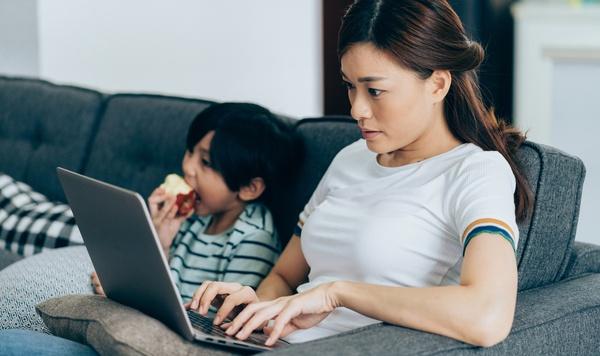
I’ll confess: I just did what many parents in America do at some point. I needed to participate in a work call, so I set the kids down in front of the television to watch Wild Kratts so I could have an uninterrupted 30 minutes. But I did something else, too. I read them two questions to think about while they watched, and they nodded eagerly.
If a parent or grown up engages with the media a child is using — even if that parent just holds a conversation with the child about what they watched — the learning gains of that content will be greater. This is why so many experts have recommended that parents “co-view” TV with their kids, asking questions throughout the show and afterward.
Co-viewing is fun and can be a de-stressor for parents and kids alike. But realistically, it’s not often possible for most families. When parents need an uninterrupted period of time at home while they work, cook dinner or make a phone call, we often use screen time to keep kids occupied. So, how can they still get educational benefits from screen time when parents aren’t watching at the same time as their kids? Parents can make it happen in two simple steps:
- Take a few minutes to choose a show or game that you know will be interesting and/or educational for your child.
- Make time to talk about what your child is watching or playing. Try to make that conversation as specific as possible, and see what other fun activities could come out of it.
This week we’ve been using screen time to spark reading, writing, or art activities. I ask each of my boys what show they would like to watch, then I come up with a few questions for them to think about while they watch. If you have a general idea what a show is about it’s not too hard to come up with relevant questions.
In every episode of "Wild Kratts," I know that the Kratt brothers meet a new animal, and that Chris and Martin share facts about that animal. For my 8-year-old, I can ask him to tell me what the animal is and share three facts, including where that animal lives in the world. I can also make this into a writing activity by asking him to write down these facts in complete sentences in a notebook. My 5-year-old can’t yet read, but that won’t keep him from remembering facts to tell me. He loved that I made this into a physical movement activity yesterday: “How does that animal run/swim/climb/jump/fly? Can you show me? How does the baby animal interact with its mother? Tell me what I should do!”
It’s best to be as specific as possible, but you can also ask more generic questions: “Tell me what happened in 'Daniel Tiger’s Neighborhood' today,” which can lead into: “What happened first? And then what happened?” Telling a story in order is a great pre-reading skill for young children to practice. It’s also great to try to tie the story to your child’s own life: “Can you think of a time when you felt this way?” or “What would you have done if you were Arthur?”
Make sure you have time to talk about the show, ideally within a few hours of watching, while the story is still fresh in your child’s mind. In our home routine, we’re having these conversations during meals. If I know more time will pass, I’m asking them to draw pictures for me right after they watch and leave them on the kitchen table so we can look at them together later.
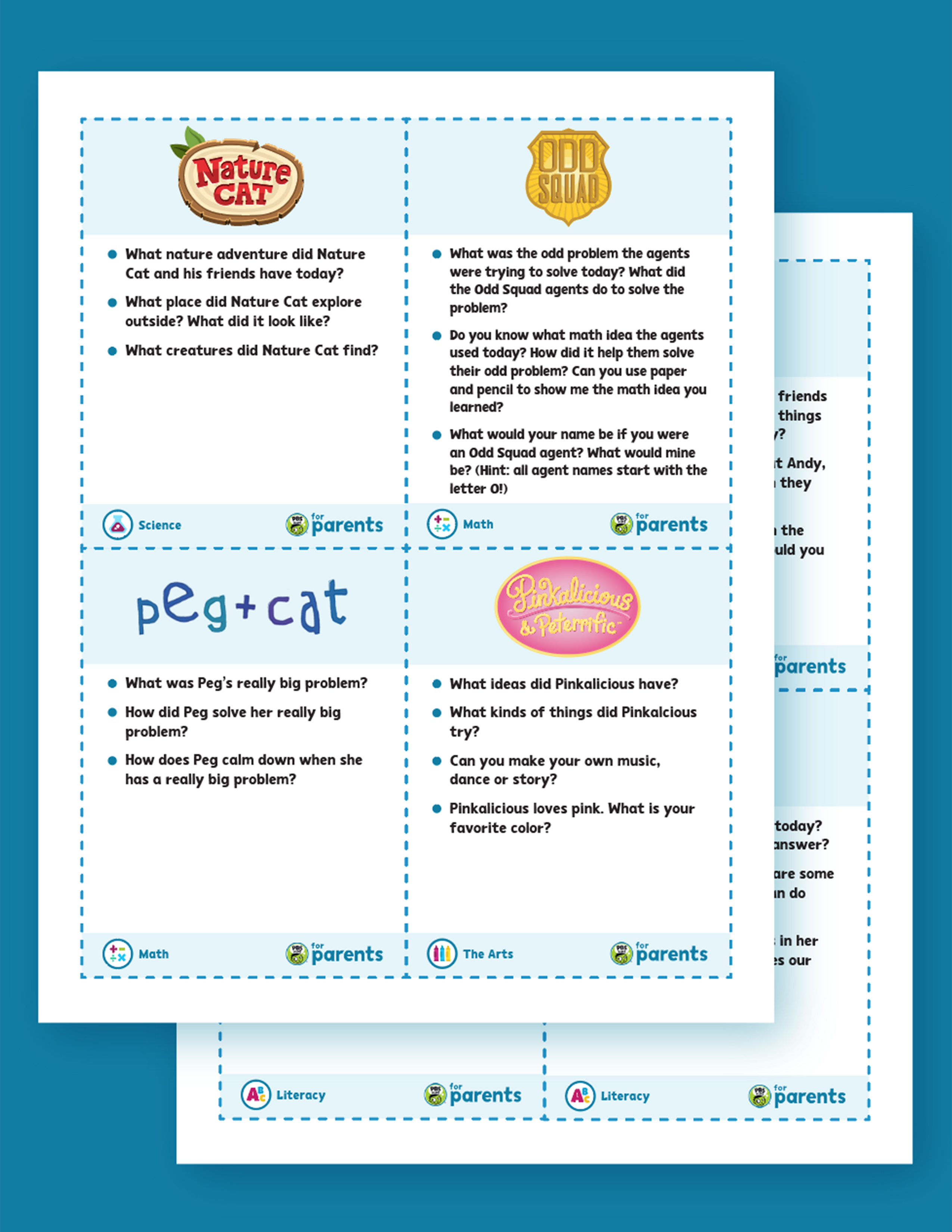
Just knowing the basics of a show is enough to go on. And if your child is a PBS KIDS fan, download this guide for some starter questions and other ideas to help your child get the most out of screen time!
Special thanks to Ben Kramer, Austin PBS and Abby Jenkins, PBS KIDS Digital for contributing to this guide.
 Author: