
Managing Uncertainty in COVID Times


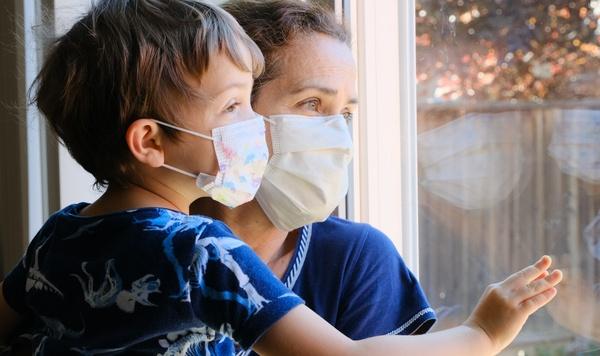
We were all set for an out-of-state visit to celebrate Gramps’ birthday. Two days before we left, New York required visitors from our state to self-quarantine for 14 days. We — my parents, me, my kids — were all taken by surprise. I’m not sure why. Everything about our COVID spring and summer had been filled with uncertainty: plans that constantly changed, long-awaited events canceled, new guidelines replaced by newer guidelines, and ongoing adjustments to daily routines (would the supermarket have toilet paper… or not?).
Like standing at the edge of the ocean and feeling the sand dissolve beneath our feet, our COVID spring and summer (and now, our COVID fall), has left us all feeling uncertain and off-kilter. Little did I know in March that we’d remain in this state of question marks for months, with no end in sight.
How can we help our children feel safe and secure when we’re struggling ourselves? Turns out the same things that help our children feel better help us feel better too. Here are some ideas:
Show empathy and compassion (to you and your littles). This is hard. And if you’re trying to work full-time and care for children full-time, it’s closer to impossible. As parents, we can be really hard on ourselves — for allowing “too much” screen time or offering (yet another) dinner of pasta-with-cheese because it’s easy and the kids eat it. But choosing self-compassion — being kind to ourselves in the midst of a lot of challenges — gives us the emotional energy to be kind to our children. And kind, compassionate responses to little kids’ BIG emotions is the best way to help them make sense of, and recover from, their most intense emotions.
Let it out. While it’s tempting to push through and push down frustrations and worries, give yourself permission to feel all the feelings. The trick is to note and observe those emotions, but not immediately react. Pause and simply say to yourself, It’s a little scary right now because I don’t know what’s going to happen. I don’t know how I’m going to manage everything. Just by noticing and naming how you’re feeling, you create the space for more thoughtful and intentional responses. Not the perfect response — because right now, there are very few “perfect” answers to be found — but a response that takes into account your needs, your child’s needs, and your family’s needs.
Create a peaceful home. There’s a lot going on out there that you can’t control right now. But what you can control is what’s happening inside your front door. Do what you can to make your home a loving, peaceful place you (and your kids) want to be. One mom I know committed to noticing five great things about each of her kids every day. Another decided that they would play outside as a family every day, even if it was just a walk down the driveway before bedtime.
Keep it routine. When COVID restrictions first hit my community, I remember saying to a friend, “Now we know what toddlers feel like when their schedule changes, and they can’t figure out what’s going to happen next.” (Spoiler alert: They feel chaotic, overwhelmed, and out of control.) To help everyone, including you, feel a little more centered, think about creating a daily family schedule. This doesn’t have to be detailed — nobody knows more than a parent that life changes on a dime. So think about big categories: Inside play-time, outside play-time, snack time, screen time, drawing/art time, lunch, rest/reading time, and so on. Creating a (flexible) schedule will help everyone feel like life is — somewhat — on track.
Acknowledge disappointment. Whether it’s a cancelled trip to see the grandparents or discovering the splash park is closed, this has been the season of the unexpected. Make space for your child to be disappointed — it’s a natural response to the ups and downs we’ve all been experiencing. Label this feeling and model ways of coping: I’m disappointed that the splash park is closed too. Sometimes when I feel disappointed, a hug or holding hands makes me feel better. Would you like to try that? Suggest a way to move on, if your child seems ready: Do you want me to set the sprinkler up in our yard? Or do you want me to fill our spray bottles with water and play with those?
Let it go. The house may be a disaster. Things may fall behind (thank you notes, school forms, emails, and more). The kids may still be wearing last summer’s t-shirts and look like adorable sausages coming out of their casings. It’s okay to let the little stuff go while you focus on other, more important things for a while.
Model hope. There have been points when I — and many of the parents I know — have hit bottom this summer, tired and overwhelmed. As my best friend said, “I’m over COVID.” Hope is a partial antidote. When parents make a habit of finding joy in the every day, we show our children how to be resilient too. As your child gets older, you might try a ritual like “roses and thorns” where each day, each family member shares something that made them happy that day (the rose) and something that was tough (the thorn). It’s a good way of normalizing the ups and downs we all encounter in life.
If there’s one gift offered by the last six months, it’s the reminder to live more in the moment. Looking back, there’s been a lot of good in the midst of all the chaos. May we all find a way to tap into the sunny bits, and may there be more sunny bits for all of us to enjoy.
 Author: