

Practicing Water Safety at Every Age


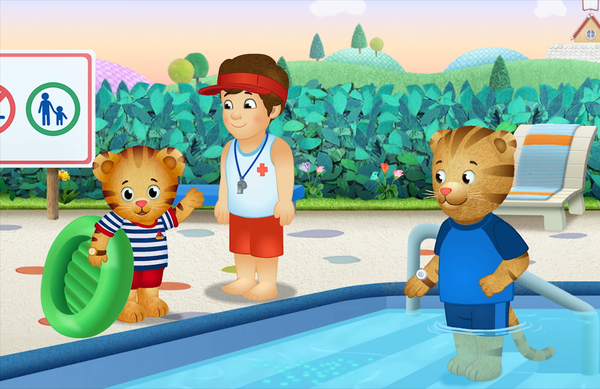
Splashing in the water can be a lot of fun! If your family is like mine, water play is a favorite activity. Teaching your kids about water safety at a young age (and reinforcing it as they grow) helps prevent drowning and water-related incidents. Whether you’re heading to the lake, the pool, the beach, or even the bathtub, we’ve rounded up tips for teaching kids about water safety.
Water Safety Rules
“Water safety education should start early and evolve as the child grows,” said Lindsay Mondick, Director of Aquatics Safety and Strategy at YMCA of the USA. “Parents should always supervise their children near water, never leaving a child unattended for even a moment.”
Make sure you choose a “water watcher”— a responsible grown-up who keeps an undistracted eye on each child in the water. This means no phones, books, or side conversations. The Y often reminds caregivers, “Phones down, eyes up.” (Reviewing safety tips is important for grown-ups, too!)
It is also important to teach kids to ask permission before they go into the water. In the Daniel Tiger’s Neighborhood episode, “Daniel Follows the Rules at the Pool,” Daniel learns: listen to the lifeguard, no running, and always ask a grown-up before getting in the pool. Also, for those who can’t swim yet or are in open water, wearing a life jacket is a must.
Remind your kids about the rules every time you get to the pool or are near a body of water. On Daniel Tiger’s Neighborhood, the song says, “Follow the rules to stay safe at the pool.” This simple reminder can help kids understand why water safety rules matter.
Learning to Swim
Once kids know the rules, the next step is building water skills, a process each child moves through at their own pace. From getting their faces wet to becoming a strong swimmer, kids of all ages and abilities can build confidence in the water with practice.
Here are some of the stages of learning to swim:
Stage 1
Start by helping your child feel comfortable in the water. This can be as simple as splashing in the bath, blowing bubbles, or dipping their face in the water. Spend time in the pool together to show your child that water can be a place for play and fun!
Stage 2
Build your child’s water competency and safety skills. Focus on simple skills like how to get in and out of the pool, and holding onto the pool wall. As they grasp these safety basics, introduce floating on their backs and developing breath control while submerging their face. And of course, give reminders about safety rules, like always asking if it’s okay to enter the water!
Stage 3
As kids grow, they’re more developmentally and physically ready to learn how to swim with coordinated movements, like floating, jumping in and swimming back to the side, and treading water. This is also a great time for group swimming lessons, where kids can learn alongside friends. In “Daniel’s First Swim Class,” Queen Sara reminds Daniel, “Sometimes it helps to watch others go first.” Children may begin to want more freedom in the water, so talk about why water safety is important and remind them never to swim alone!
Stage 4
Once kids have the basics down, like learning to float and beginner strokes, they can work on building endurance and learning more formal swim strokes. This is the stage where they might start swimming longer distances, learning to self-rescue, and trying out different strokes. In “Miss Elaina Swims,” she tries swimming farther in the pool. To get ready, Miss Elaina sings, “If something seems hard to do, try it a little bit at a time.” Challenge your child to add more time and distance by swimming the length of the pool. Then swim to the end and back!
Stage 5
For kids who really love water, this stage is when they might start swimming competitively or even consider becoming a lifeguard or swim instructor, just like Prince Tuesday. Remind your child that even strong swimmers need to practice water safety, especially in open water or areas with strong currents.
Building Competency and Confidence in the Water
Every child moves through these stages at a different pace. If your child is nervous, take your time every step along the way by meeting them where they are. Remind your child that they are safe when they are with you and when they follow the rules. If kids think of the water as a place to play, that can help remove some of the fear they might have. Getting used to the water a little bit at a time and learning to swim will help them feel more competent and confident.
And if you don’t know how to swim, it’s never too late to learn! “A national research study found that when parents don’t know how to swim, there’s only a 13 percent chance that their child will learn to swim, so the Y focuses on ensuring everyone can feel confident in the water by offering lessons for children, teens, and adults,” Mondick said. Knowing how to swim plays a big part in ensuring your kids learn and stay safe in the water. Places like the Y and your local pool often offer swimming lessons for kids, teens, and adults. Some even have scholarships or financial aid.
Playing at the pool, swimming at the lake, and soaking up a day at the beach are fun ways to enjoy the water. Make every water-day a safe one by talking about the rules and practicing water safety, whether you’re splashing at home or swimming at your favorite spot!
 Author:
Play, sing along, and learn with Daniel Tiger and his friends in the Neighborhood of Make-Believe.