
Socialization: Tackling Homeschooling’s “S” Word


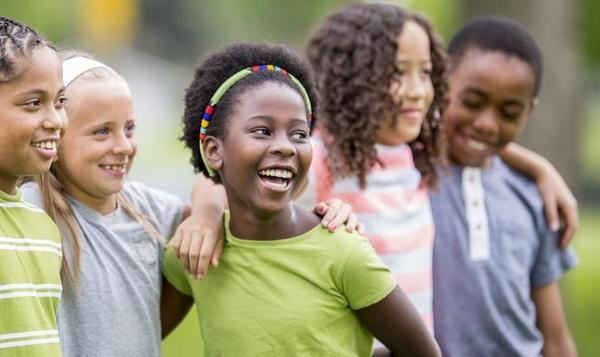
The mainstream perception of homeschool students is that they are an antisocial bunch, toiling away lonely hours at a kitchen table with only their parents for friends. But homeschoolers themselves will tell you that socialization—the “S-word,” as some call it—is really a nonissue.
“Socialization is always the hot topic,” says Kate Fridkis, an adult who was unschooled until she was college age. Fridkis, who blogs about homeschooling at skipping-school.com, says that when she tells people she was homeschooled, they often respond by asking if she had any friends. “People seem to translate the term [homeschooling] literally into ‘school in the home,'” she says. “But you’re actually socializing so much more than your average kid who’s sitting in class all day.”
For Fridkis, homeschooling gave her the freedom to immerse herself in her community—and to develop relationships with people who were outside of her age group. When she was 12, she started visiting regularly with an elderly woman in a nursing home; by 15 she was a lay clergy member in her synagogue and auditing a course at Princeton University.
“People for some reason define socialization for kids as interacting only with kids, but if socialization means only interacting with kids that are exactly the same age as you, then that seems pretty narrow,” says Fridkis.
National Home Education Research Institute president Brian Ray agrees. He says socialization is not a problem for the vast majority of homeschool students, many of whom are involved in community sports, volunteer activities, book groups or homeschool co-ops. “Research shows that in terms of self-concept, self-esteem and the ability to get along in groups, homeschoolers do just as well as their public school peers,” says Ray.
Ray cites a July 2000 study by the Seattle-based Discovery Institute in which counselors watched videotapes of homeschooled and schooled children playing. The counselors, who did not know which children were from each category, noted that the homeschool students demonstrated fewer behavioral problems than their peers—a result that Ray attributes, in part, to homeschoolers’ main role models: “Public school children have, as their main role models, peers, while homeschool students have as their role models, adults,” he explains.
Broadening a child’s peer group may offer some advantages—especially when it comes to avoiding negative influences. Jeffrey Koonce, a school superintendent in Miller County, Missouri, who wrote his doctoral dissertation on how homeschool students fare when they transition into the public schools, says that the students he interviewed were, in many cases, more “socially adept” and mature than their peers. Koonce says that the homeschool students who entered high school would hear “16- or 17-year-old kids talking about getting drunk and who’s sleeping with who, and they’d be like, ‘Get real. Get a life.'”
Fridkis had a similar reaction to some of the students she encountered when she enrolled in college. “The environment was a little bit childish,” she remembers. “So many kids just wanted to drink and party. … I already knew who I was, and knew what I was interested in.”
But Kenneth Bernstein, a high school government and social studies teacher in Prince George’s County, Maryland, says that while some homeschool students possess a maturity that their peers lack, others can be sheltered, especially when it comes to exchanging ideas with people from diverse backgrounds: “It depends upon how their parents approached [homeschooling]. It also depends upon circumstances other than schooling for the opportunity to interact with young people different from them.”
For her part, Fridkis agrees that getting out of the house—and seeking out new experiences and situations—is the key to becoming comfortable in the world. “Homeschooling is a great opportunity to go out all the time,” she says. “I would go insane if I was only with my family.”
 Author: