
Talk About It: Play With Patterns Anywhere


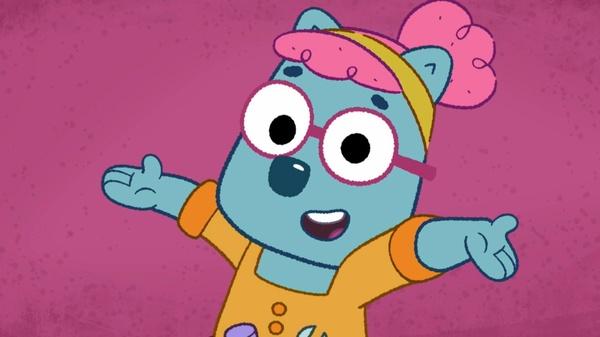
“Lots of things have patterns, patterns can be neat. Patterns have an order, an order that repeats.”
Patterns are all around us. A pattern is when objects, events, or steps repeat in a predictable way. You might spot a pattern in the stripes of a couch or the tiles on a floor. You can also make your own patterns! Make a sound pattern by clapping rhythms. Then make a visual pattern by lining up socks and shoes: sock, shoe, sock, shoe, sock, shoe.
Watch and sing along with this fun song from Work It Out Wombats! Then talk about where you might find patterns in your home or neighborhood.
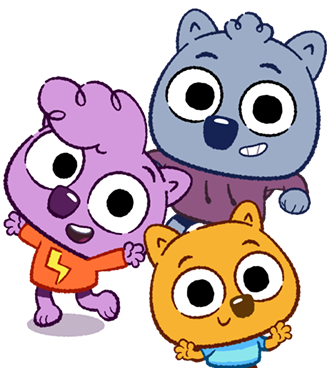
Gramma Super and the Wombats are excellent at spotting patterns. Ask your child to think about the patterns they saw in the video. Then talk about patterns using the questions below or make up your own questions based on the patterns around you.
- What patterns did you see in the video?
- Remember the circle and square pattern? It went: Circle, circle, square. Circle, circle, square. Circle, circle, square. What do you think comes next?
- Let’s go for a pattern walk around our home or yard. What patterns can we find? What would come next if you kept the pattern going?
- Make your own pattern with items you have such as beads, sticky notes, or blocks. What pattern did you make? How long can you make it go on?
Pass the time by playing a pattern finding game! Waiting in line at the store or in the waiting room at the doctor’s office can be long and boring. Use that time to look for patterns in the furniture, on the floor, or even on store shelves. Remember to look for things that repeat in order and then see if that order repeats.
Follow the adventures of Malik, Zadie and Zeke in their fantastically fun Treeborhood.