



Talking to Children About COVID-19
By Sesame Workshop
Mar 8, 2020
Share


Facing a health emergency can bring up feelings of stress, uncertainty, and confusion, especially for young children. While we don’t want to overload them with scary information, we can try to answer their questions honestly. There are simple ways to talk about COVID-19 with young children, and we can always offer comfort:
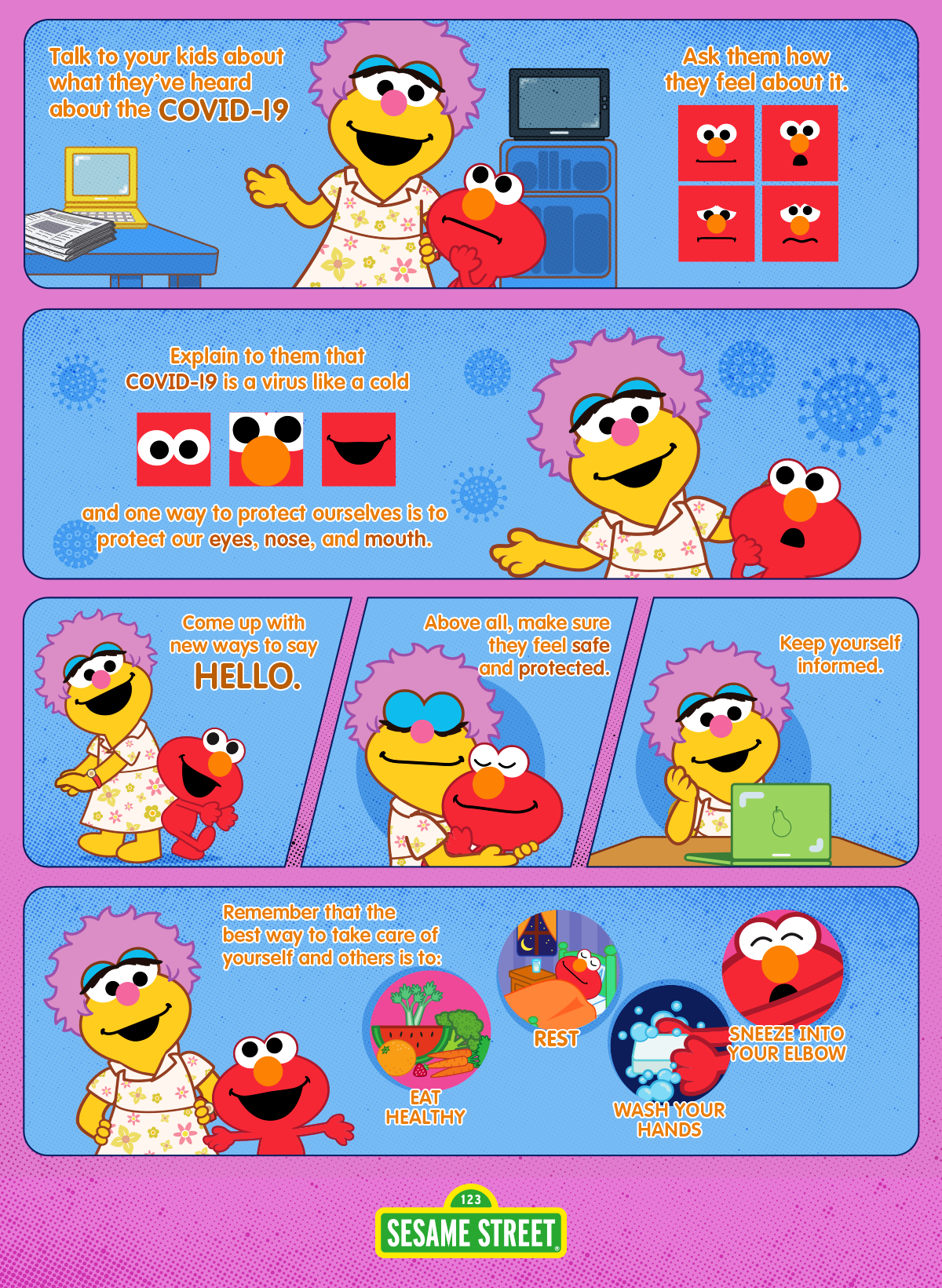
- Ask children what they’ve heard about COVID-19. This will help you share only the information that they need right now. Answer simply and honestly and provide as much reassurance as you can, assuring them that you know how to keep your family safer.
- Ask them how they feel. Let them know that their feelings are okay and that many other people everywhere are feeling those feelings, too. Use words to share your own feelings (anxious, worried, sad and so on).
- Be prepared to answer the same question more than once; repeating the same question may be how your child expresses concerns.
Explain that COVID-19 is a virus. It is so small that it’s invisible, and it can make some people sick. But there are ways to protect ourselves and others: we can wash our hands with soap and water for 20 seconds, say hello in new ways such as waving from afar, sneeze or cough into the bend of our arm, stay indoors and keep a safe distance of six feet from other people.
You Might Also:
- Notice and focus on any kindness or cooperation you see around you, no matter how small. Point out that in every tough situation, there are always people helping.
- Remind children that this situation (and the feelings we’re having) will not last forever, and that this experience can make them, and your whole family, stronger.
And...
- Be aware of your own feelings. It’s normal to feel helpless when you can’t protect your child from changing circumstances; keep in mind that children respond to and learn from your reactions.
- It’s okay take a moment to think about how to respond before answering. It’s also okay to say you don’t know and that you can find out the answers together. It’s important to be honest with your child so you don’t tarnish their trust.
- Listen to your child. Take the time to listen closely to what question they are asking. Remember, less information is best: they want their question answered, but giving them more information than they are ready for or can handle is overwhelming and may raise more unintended questions and fears.
- Trust your instincts. You know your child best. Children of different ages will have different questions and needs, and a wide range of reactions is normal.
- Respect children’s concerns. If they tell you they’re afraid of something, don’t dismiss their fears.
 Author: